Many homeowners believe brighter lighting improves their cinema room experience, yet the opposite holds true. Optimal brightness sits between 10-30 lux, creating visual comfort without glare or eye strain. This article explores selection criteria, lighting types, control systems, design integration, and tailored recommendations to help you create a cinema space that balances sophistication with daily functionality.
Table of Contents
- How to Choose the Right Lighting for Your Cinema Room
- Types of Lighting and Their Role in Cinema Rooms
- Lighting Control Systems: Usability and Integration
- Design Integration: Lighting that Complements Architecture
- Situational Lighting Tips: Tailoring Solutions to Space and Usage
- Summary Comparison and Recommendations
- Enhance Your Cinema Experience with Morgan Wrona Lighting Solutions
Key Takeaways
| Point | Details |
|---|---|
| Optimal brightness | Ambient lighting should provide 10-30 lux to prevent eye strain while maintaining visibility. |
| Three lighting types | Ambient, accent, and task lighting each serve distinct roles in cinema rooms. |
| Smart control impact | 72% of cinema room owners report ease of controls directly boosts enjoyment. |
| Warm colour temperature | LEDs at 2700K-3000K maintain a relaxing, cosy ambiance without harshness. |
| Architectural integration | Subtle lighting placement complements room design and reduces visual clutter. |
How to Choose the Right Lighting for Your Cinema Room
Selecting cinema room lighting requires understanding how brightness, colour temperature, and control flexibility affect your daily experience. The goal is visual comfort during films while maintaining safety and architectural harmony.
Optimal ambient lighting for cinema rooms should provide 10-30 lux through dimmable fixtures. This range allows enough visibility to move safely without compromising screen contrast or causing eye fatigue. Colour temperature matters equally. Warm LEDs between 2700K and 3000K create a relaxing mood that supports long viewing sessions, whereas cooler temperatures feel clinical and disrupt immersion.
Direct light on screens causes glare and reflections that diminish picture quality. Position fixtures to illuminate walls, ceilings, or pathways instead. Dimming capability is essential because different films and times of day require varied lighting levels. You need flexibility to adjust brightness from near darkness during intense scenes to moderate illumination when entertaining guests.
Low-level lighting improves safety without disturbing viewing. LED strips along baseboards or under seating provide enough light to navigate the room safely. This approach prevents accidents while keeping attention on the screen.
Pro Tip: Test lighting positions before finalising installation to prevent glare and eye strain. Walk through the room at different brightness levels to identify problematic reflections.
Key selection criteria include:
- Dimmable fixtures offering 10-30 lux ambient brightness
- Warm colour temperature LEDs (2700K-3000K)
- Indirect positioning to avoid screen glare
- Flexible control for varied viewing needs
- Safety illumination that doesn’t distract
Understanding the role of lighting in home cinemas helps you assess products against these criteria. The right fixtures balance technical performance with how your family actually uses the space. When lighting in cinema rooms is thoughtfully planned, it enhances both film quality and room usability.
Types of Lighting and Their Role in Cinema Rooms
Three distinct lighting types work together in cinema rooms: ambient, accent, and task. Each serves a specific function, and understanding their roles helps you design a balanced lighting scheme.
Ambient lighting provides overall room illumination. Recommended brightness sits at 10-30 lux, enough to see comfortably without washing out the screen. Recessed ceiling fixtures with warm LEDs work well, especially when paired with dimming controls. This base layer of light sets the mood and ensures you can move around safely.
Accent lighting highlights architectural features and adds visual interest. LED perimeter lighting with warm colour temperature creates subtle accentuation without overpowering the room. Wall sconces, cove lighting, and LED strips behind panels draw attention to design details while maintaining low brightness. These elements enhance the room’s character without competing with screen content.
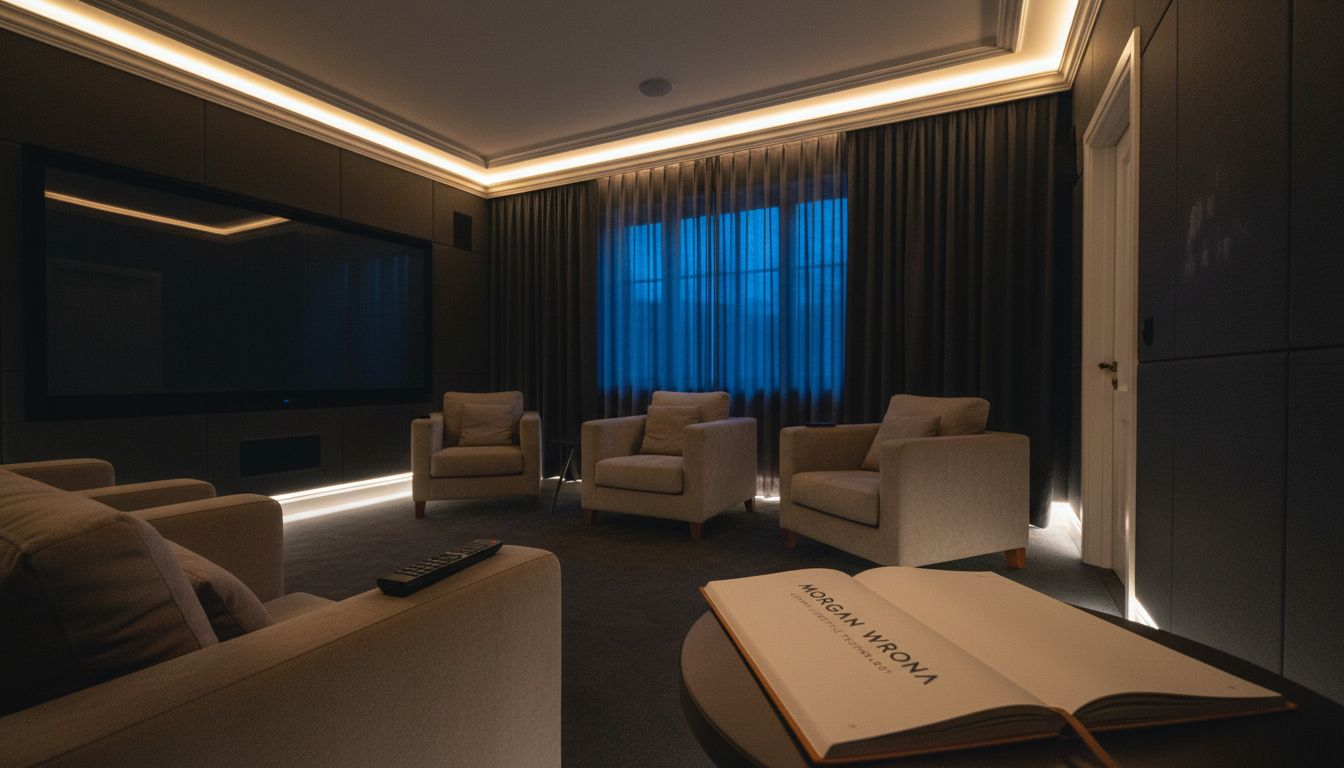
Task lighting focuses on specific areas like seating zones and pathways. Adjustable recessed fixtures above seating or low-level LED strips along aisles provide targeted illumination. This lighting type supports practical activities such as finding seats, reading programme notes, or serving refreshments without flooding the entire space with light.
Indirect cove lighting offers soft, glare-free accentuation by bouncing light off ceilings or walls. This technique creates ambient glow without visible fixtures or harsh shadows. The diffused quality feels sophisticated and comfortable.
Pro Tip: Use LED perimeter lighting with warm tones to highlight design without overpowering the viewing experience or creating distracting bright spots.
| Lighting Type | Recommended Lux | Colour Temperature | Typical Use |
|---|---|---|---|
| Ambient | 10-30 lux | 2700K-3000K | Overall room illumination, base layer |
| Accent | 5-15 lux | 2700K-3000K | Architectural features, perimeter details |
| Task | 20-40 lux | 2700K-3000K | Pathways, seating areas, practical activities |
| Cove (Indirect) | 8-20 lux | 2700K-3000K | Soft ambient glow, ceiling/wall wash |
Exploring types of cinema room lighting in detail reveals how layering these types creates depth and flexibility. Each layer contributes to a cohesive lighting environment that adapts to different viewing scenarios and daily routines.
Lighting Control Systems: Usability and Integration
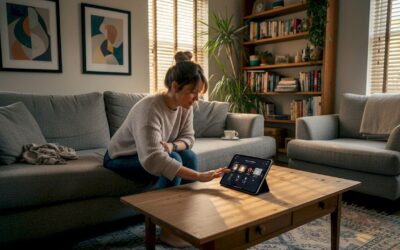
How you control your cinema lighting affects daily enjoyment as much as the fixtures themselves. Smart control systems simplify operation, enable scene presets, and integrate with broader home automation.
Lutron offers smooth dimming, reliable scene presets, and multi-zone control with high user satisfaction. The system remembers your preferred lighting levels for different activities, whether watching films, hosting guests, or cleaning the room. Control happens via wall panels, remotes, or smartphone apps. Dimming quality is exceptional, with no flicker or abrupt transitions.
Control4 provides similar functionality with deeper integration into whole-home automation. If your property uses Control4 for audio, climate, or security, adding lighting creates a unified experience. You can trigger lighting scenes automatically based on time, occupancy, or other system events.
Generic smart bulbs represent a cost-effective entry point but offer less smooth dimming and limited scene memory. They work adequately for basic on/off and brightness adjustments, yet lack the refined control and reliability of dedicated systems. Integration with other smart home devices varies by brand and requires careful compatibility checking.
| Control System | Dimming Quality | Scene Memory | Control Ease | Approximate Cost |
|---|---|---|---|---|
| Lutron | Excellent, flicker-free | Unlimited presets | Intuitive panels/apps | Moderate to high |
| Control4 | Excellent, integrated | Unlimited presets | Unified whole-home control | High |
| Generic Smart Bulbs | Variable, some flicker | Limited (2-5 scenes) | App-dependent, variable | Low to moderate |
A recent survey reveals that 72% of cinema room owners say ease of lighting controls directly impacts their daily enjoyment. When adjustments are effortless, you use lighting more effectively and appreciate the room more.
Benefits of programmable lighting scenes and presets:
- Instant recall of preferred brightness for films, breaks, or cleaning
- Reduced manual adjustments and fumbling with multiple switches
- Consistent lighting experience across different users and times
- Integration with timers, motion sensors, or broader automation
- Enhanced satisfaction through tailored, effortless operation
Understanding lighting control systems helps you choose technology that matches your priorities. The lighting control workflow becomes seamless when systems are designed around how you actually live. Recognising the role of lighting control clarifies why investing in quality automation pays off in daily convenience.
Design Integration: Lighting that Complements Architecture
Bespoke lighting solutions enhance cinema rooms when integrated thoughtfully with architectural features. The aim is subtle harmony that supports both form and function without visual clutter.
Warm LED perimeter and cove lighting can accentuate architectural details subtly without overpowering room design. Recessed fixtures, hidden LED strips, and carefully positioned sconces highlight ceiling coffers, wall panels, or alcoves. This approach draws attention to craftsmanship while maintaining the low brightness essential for comfortable viewing.
Integrate lighting discreetly with ceiling and wall features to avoid visible clutter. Fixtures should feel like part of the architecture, not afterthoughts. Cove lighting concealed in cornices, LED strips behind floating panels, and recessed downlights positioned within ceiling details achieve this integration. The result is a clean, sophisticated appearance where lighting enhances the space without dominating it.
Maintaining subtlety prevents glare and ensures comfortable viewing. Overly bright or poorly positioned lighting distracts from films and creates visual fatigue. By keeping illumination indirect and controlled, you preserve the immersive quality that makes cinema rooms special.
Bespoke installations enhance both function and design. Custom solutions account for room proportions, architectural style, and how you use the space daily. This tailored approach delivers lighting that feels natural and considered, elevating the overall experience.
Best practices for architectural integration:
- Use warm colour temperatures (2700K-3000K) to complement interior finishes
- Select fixtures that match or recede into architectural details
- Position lighting to highlight features without creating bright spots
- Conceal wiring and control equipment within walls or ceilings
- Balance functional illumination with aesthetic subtlety
Exploring design-led cinema lighting reveals how thoughtful integration supports property value and daily satisfaction. Applying lighting design principles ensures your cinema room feels cohesive and intentional, where every element contributes to a refined atmosphere.
Situational Lighting Tips: Tailoring Solutions to Space and Usage
Different cinema rooms require tailored lighting approaches based on size, usage patterns, and homeowner priorities. Practical recommendations help you customise solutions effectively.
Small rooms under 15m² benefit from low-lumen wall sconces and indirect lighting to avoid brightness overwhelm. Limited space magnifies the impact of each fixture, so restraint is essential. LED strips behind seating or along perimeters provide enough light without flooding the room. Focus on soft, diffused sources that maintain intimacy.
Safety lighting like low-level LED strips supports safe movement without distraction. Placed along baseboards, under seats, or at step edges, these fixtures guide navigation during films. Warm colour temperatures and low brightness prevent them from drawing attention away from the screen.
Fixture placement is critical to avoid screen glare in all scenarios. Position lights to illuminate walls, ceilings, or floors rather than directly facing the screen. Angled recessed fixtures, wall-mounted sconces aimed upward, and concealed LED strips achieve this. Testing positions before final installation prevents costly adjustments later.
Multi-purpose cinema rooms require flexible dimmable lighting for varied activities. If the space doubles as a games room, reading area, or entertaining zone, you need higher brightness options alongside cinema-optimised settings. Programmable scenes allow instant switching between modes without manual adjustments.
Situational lighting strategies:
- Small spaces: Low-lumen indirect fixtures, LED perimeter strips, minimal fixtures
- Large rooms: Layered ambient, accent, and task lighting with zone control
- Safety-focused: Low-level LED strips at baseboards, steps, and pathways
- Design-led: Cove lighting, concealed fixtures, architectural integration
- Multi-purpose use: Dimmable fixtures with scene presets for different activities
- Budget-conscious: LED strips and smart bulbs for cost-effective flexibility
Applying lighting tips for cinema rooms based on your specific situation ensures practical results. Understanding common cinema lighting scenarios helps you anticipate challenges and select solutions that address them directly.
Summary Comparison and Recommendations
Synthesising the detailed information into a concise reference supports confident decision-making for your cinema room lighting.
| Feature | Ambient Lighting | Accent Lighting | Task Lighting | Lutron Control | Generic Smart Bulbs |
|---|---|---|---|---|---|
| Primary Function | Overall illumination | Highlight features | Pathway/seating focus | Scene automation | Basic dimming |
| Recommended Lux | 10-30 lux | 5-15 lux | 20-40 lux | N/A | N/A |
| Best Fixture Type | Recessed ceiling | LED strips, sconces | Recessed, LED strips | Compatible dimmers | Smart bulbs |
| Dimming Quality | Excellent (dedicated) | Excellent | Excellent | Excellent | Variable |
| Integration Ease | Moderate | Easy | Easy | High | Moderate |
| Ideal Use Case | Base layer comfort | Architectural detail | Practical activities | Whole-home automation | Budget flexibility |
Key considerations for each lighting type and control approach:
- Ambient lighting sets the foundation; prioritise smooth dimming and warm colour
- Accent lighting adds character; keep brightness low to avoid overpowering
- Task lighting serves practical needs; position carefully to avoid screen glare
- Lutron and Control4 offer superior control but require upfront investment
- Generic smart bulbs suit budget-conscious projects with simpler needs
Recommendations focus on balancing visual comfort, architectural harmony, and usability. For small rooms, indirect LED strips and low-lumen sconces maintain intimacy. Design-focused spaces benefit from bespoke cove lighting and concealed fixtures that complement architecture. Homeowners prioritising ease of use should invest in Lutron or Control4 for reliable, effortless operation.
Situational picks:
- Small rooms: LED perimeter strips, wall sconces, minimal fixtures
- Design-led spaces: Cove lighting, architectural integration, warm LEDs
- Ease of use priority: Lutron or Control4 with scene presets
- Multi-purpose rooms: Dimmable fixtures with flexible scene programming
- Budget-conscious: Smart LED bulbs with basic dimming
Thoughtful balance rather than extremes in lighting and technology choices delivers the best long-term satisfaction. Assess your priorities, room characteristics, and daily usage patterns to select solutions that enhance both film quality and everyday living.
Enhance Your Cinema Experience with Morgan Wrona Lighting Solutions
Applying these cinema lighting principles requires expertise in design, technology, and architectural integration. Morgan Wrona offers bespoke cinema room lighting design and automation tailored to your home, balancing sophisticated aesthetics with effortless daily use.

Expert integration considers your architectural style, viewing preferences, and how the room functions within your broader home. Advanced control systems from Lutron and Control4 create seamless ambience, allowing instant adjustments without complexity. The result is a cinema space that enhances both film enjoyment and property value.
Our approach includes consultation, system design, installation, commissioning, and ongoing support. Each project receives individual attention to ensure lighting complements your architecture and supports how you live. Whether you’re planning a new cinema room or refining an existing space, thoughtful lighting makes a measurable difference.
Pro Tip: Consult Morgan Wrona early in your project for a lighting plan that elevates your cinema space aesthetically and practically, avoiding costly adjustments later.
Explore our lighting automation services to discover how intelligent systems simplify daily use. Learn about home cinema automation and its architectural impact. Review our home lighting workflow guide for insights into creating seamless ambience across your property.
If you would like to discuss how this could work in your home, contact us or download our brochure.
Frequently Asked Questions
What is the ideal brightness level for cinema room ambient lighting?
Ideal ambient brightness sits between 10-30 lux, which balances visibility without causing eye strain or screen glare. This low to moderate level helps maintain an immersive and comfortable viewing environment. Dimmable fixtures allow you to adjust brightness based on film type and personal preference.
How can I avoid glare on my cinema screen from lighting?
Place lighting fixtures to avoid direct line of sight to the screen, using indirect methods like LED perimeter or cove lights instead. Select warm colour temperature LEDs to minimise reflective glare. Testing fixture positions before final installation prevents costly adjustments and ensures optimal screen visibility.
What lighting control options improve ease of use in cinema rooms?
Systems like Lutron and Control4 offer programmable scenes, smooth dimming, and multi-zone control that reduce manual adjustments. These smart lighting controls enable tailored lighting moods and effortless operation, with 72% of users rating ease of use as directly boosting enjoyment. Programmable presets recall your preferred settings instantly.
Should I use warm or cool colour temperature LEDs in my cinema room?
Warm colour temperature LEDs between 2700K and 3000K create a relaxing, cosy ambiance that supports long viewing sessions without harshness. Cooler temperatures feel clinical and disrupt immersion. Warm tones also reduce reflective glare and complement most interior finishes.
Can cinema room lighting be integrated with whole-home automation?
Yes, systems like Control4 integrate cinema lighting with broader home automation including audio, climate, and security. This creates a unified control experience where lighting scenes trigger automatically based on time, occupancy, or other system events. Integration simplifies daily operation and enhances overall home functionality.
Recommended
- Lighting in Cinema Rooms – Enhancing Daily Use
- 7 Types of Cinema Room Lighting Every Homeowner Should Know
- Role of Lighting in Home Cinemas: Enhancing Experience
- Lighting Control in Home Cinemas – How It Shapes Experience