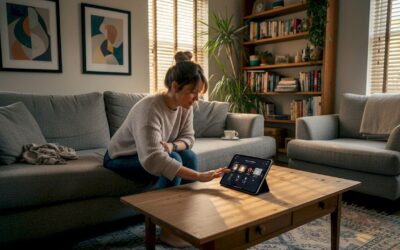
Finding the right lighting can feel surprisingly complicated in a home with distinctive character and bold architectural lines. Every unique ceiling height, window placement, and living pattern changes how light behaves and what your family truly needs. This guide brings human-centric lighting design into sharp focus, showing how to blend your home’s style and routines with intelligent lighting controls for comfort, flexibility, and a sense of wellbeing.
Table of Contents
- Step 1: Assess Lifestyle Needs And Architectural Context
- Step 2: Design Zones And Integrate Lighting Controls
- Step 3: Programme Scenes Aligned To Daily Routines
- Step 4: Test And Adjust For Optimal Comfort And Ambience
Key Takeaways
| Main Insight | Detailed Explanation |
|---|---|
| 1. Assess Your Lifestyle Needs | Understand daily routines and lighting requirements before selection to ensure functionality aligns with living patterns. |
| 2. Organise Lighting into Zones | Group lights by purpose to enhance control and accommodate various activities in each space through intuitive management. |
| 3. Programme Daily Lighting Scenes | Create pre-set lighting configurations that match natural rhythms, enhancing comfort and promoting wellbeing throughout the day. |
| 4. Test and Adjust for Comfort | Evaluate and refine your lighting system by checking functionality and making gradual adjustments based on personal comfort levels. |
Step 1: Assess lifestyle needs and architectural context
Before selecting any lighting control system, take time to understand how your home actually functions and what you need from it. This initial assessment shapes every decision that follows, ensuring your lighting works with your life rather than against it.
Start by observing your daily routines across different seasons and times of day. When do you use each room most? Which areas need flexibility for multiple purposes? A kitchen used for morning coffee and evening entertaining has vastly different lighting demands than a guest bedroom.
Map out your architectural reality. Consider existing daylighting patterns, ceiling heights, wall colours, and material finishes. These elements fundamentally influence how light behaves in each space. Research into human-centric lighting design emphasises that the surrounding architectural context shapes lighting needs profoundly.
Document these factors for each room:
- Natural light exposure throughout the day and year
- How the room’s proportions and materials affect light distribution
- Current lighting challenges or frustrations
- Activities that take place there and when
- Who uses the space and any specific visual or wellness needs
Consider your household composition too. Do you have young children, shift workers, or family members sensitive to light? Understanding the interaction between lighting and human factors helps create systems that support both comfort and wellbeing across different situations.
Think honestly about flexibility. Which rooms need mood changes? Where do you want simplicity versus sophistication in control? Your assessment should reveal patterns rather than force predetermined answers.
Your architectural context and daily rhythms are not constraints to work around, they are the foundation for a system that genuinely serves your home.
Pro tip: Photograph each room at different times of day for several weeks, noting natural light patterns and how you adjust existing controls. This visual record prevents assumptions and guides more accurate system recommendations later.
Here’s a useful summary of how architectural and lifestyle factors influence lighting system choices:
| Factor | Typical Impact | Example Implication |
|---|---|---|
| Ceiling height | Affects light spread and intensity | Tall ceilings require stronger or layered lighting |
| Natural daylight | Influences artificial light needs | Bright rooms need dimmable or sensor controls |
| Household composition | Alters visual and wellness priorities | Children prompt safety-focused controls |
| Room material finishes | Impacts glare and colour quality | Glossy surfaces increase glare risk |
| Activity patterns | Dictate flexibility and control method | Multi-use spaces need changeable scenes |
Step 2: Design zones and integrate lighting controls
Now that you understand your home’s rhythms and architecture, it’s time to organise your lighting into logical zones. Zones are groups of lights controlled together, allowing you to adjust multiple areas simultaneously or independently based on how you actually use each space.
Start by grouping luminaires that serve similar purposes. A kitchen work surface, dining table, and ambient lighting might form three separate zones, each responding to different needs. Bedrooms often benefit from bedside control zones distinct from general lighting. Consider how activities flow through your home and where you’d want independent control.
Match zones to your daily patterns. Morning routines need different lighting than evening wind-down. A sitting room used for reading requires distinct zones from one where you watch films. Designing lighting zones involves grouping luminaires controlled together through occupancy sensors, daylight sensors, or dimmers, balancing energy savings with comfort.
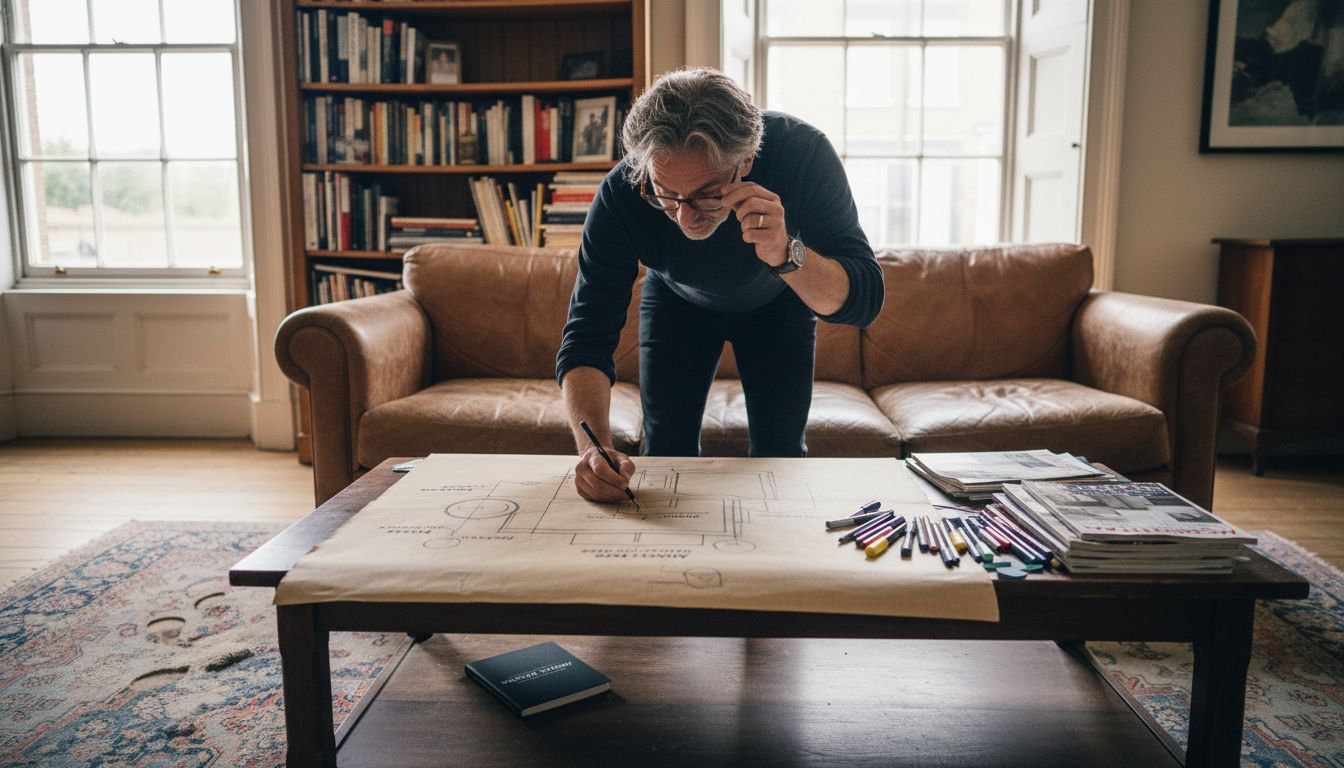
When integrating controls, think about accessibility and ease of use. Can family members adjust zones intuitively without technical knowledge? The best systems feel invisible because they match how you naturally move through your home.
Key considerations when designing your zones:
- Group lights by function, not just location
- Account for seasonal daylight variations affecting each zone
- Plan for future flexibility as household needs change
- Ensure control methods suit each room’s purpose and users
- Consider how zones interact visually across open-plan spaces
Integration means your zones work together coherently. A systematic approach to networked lighting controls allows you to define control objectives and select system architecture that suits your home. This prevents patchy or contradictory lighting as you move between rooms.
Test zone functionality mentally before installation. Walk through your typical day—morning, midday, evening—and visualise how each zone performs. Does natural light eliminate the need for certain zones at certain times? Would a bedroom zone need both task and ambient options?
Well-designed zones feel natural because they reflect how you actually live, not how a generic system thinks you should live.
Pro tip: Create a simple sketch of each room marking proposed zones and their control types (dimmer, sensor, manual switch). Share this with your lighting specialist to refine the design before any installation begins.
To assist your planning, here’s a comparison of common lighting control methods by their advantages and typical applications:
| Control Method | Advantages | Best Application |
|---|---|---|
| Manual switch | Simple and reliable | Guest rooms, less-used spaces |
| Dimmer | Enables mood adjustment | Living areas, bedrooms |
| Occupancy sensor | Boosts energy savings | Bathrooms, hallways |
| Daylight sensor | Responds to natural light shifts | Kitchens, open-plan zones |
Step 3: Programme scenes aligned to daily routines
Scenes transform your lighting system from static switches into something that actively supports your life. A scene is a pre-set combination of light levels, colours, and zones that activates with a single command, matching your needs at different times of day.
Think about your natural rhythm. Morning calls for energising light that signals wakefulness. Mid-afternoon might need focus-enhancing brightness for work. Evening requires a gradual shift toward relaxation. Night-time needs minimal, warm light for safety without disruption. Each transition represents an opportunity for a scene.
Start by mapping your typical day into distinct moments. Programming lighting scenes that align with daily activities supports your circadian rhythms and promotes wellbeing. Consider intensity, colour temperature, and which zones activate for each period.
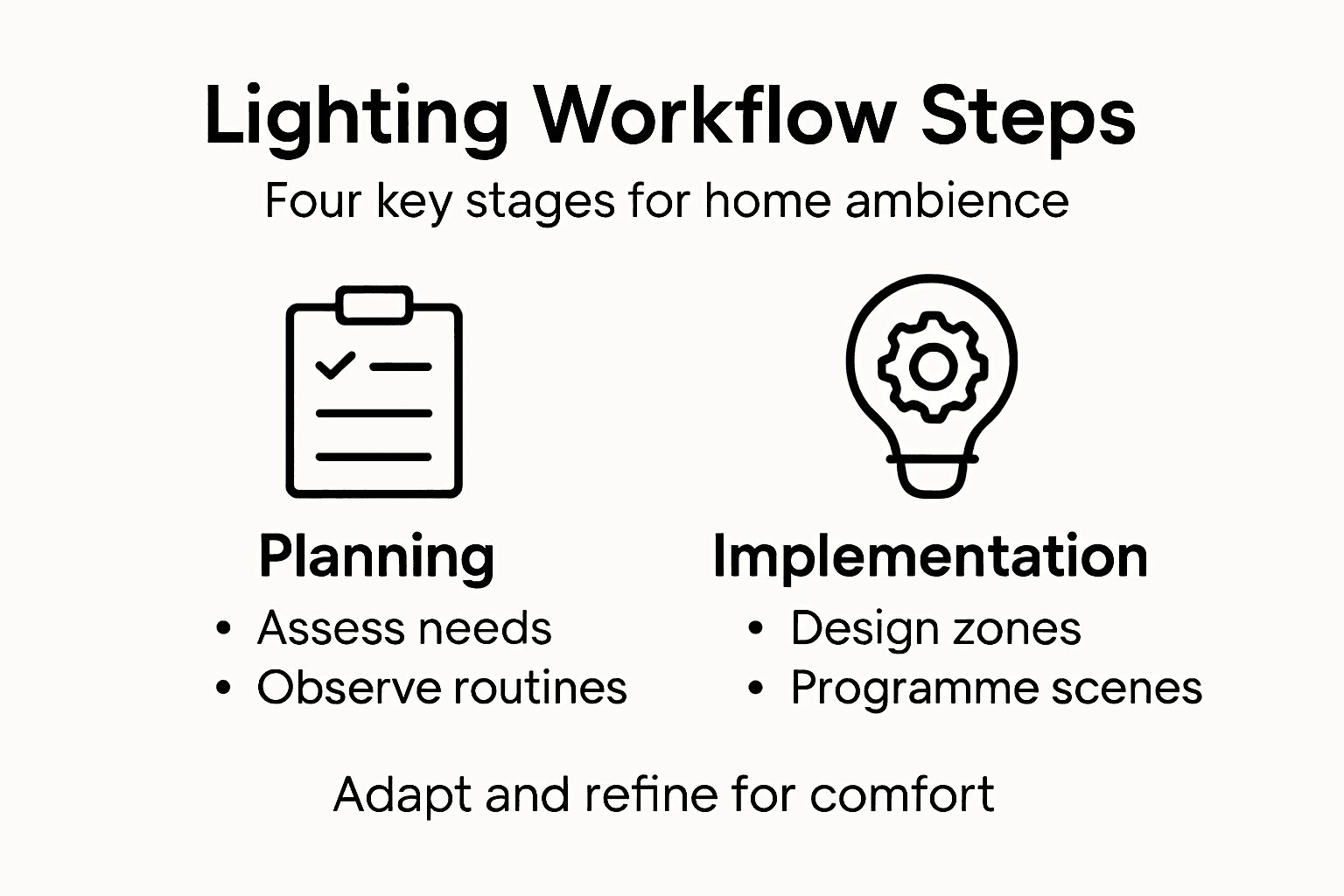
Create scenes that feel intuitive to trigger. Rather than complex names, use descriptive labels: Morning Coffee, Work Focus, Evening Unwind, Bedtime. Family members should understand them instantly without thinking.
Common scenes worth programming:
- Wake-up scene with gradually brightening light in bedrooms and hallways
- Morning routine scene for kitchens and bathrooms with clear, energising light
- Work or study scene with focused brightness where needed
- Lunch or midday scene with balanced, natural-feeling light
- Evening relaxation scene with warmer tones and reduced intensity
- Bedtime scene with minimal, warm light only where necessary
Consider automation alongside manual control. Lighting control sequences can map to occupant activities and daily schedules, integrating sensors that trigger scenes at set times or based on occupancy. However, always retain manual override for flexibility.
Test each scene across different seasons. Winter mornings and summer mornings need different approaches. Scenes that feel perfect in November might need adjustment in June when natural light arrives earlier.
Effective scenes work with your body’s natural responses to light, not against them.
Pro tip: Programme scenes but live with them for at least two weeks before finalising. You’ll discover timing adjustments and refinements that feel natural only after repeated daily use.
Step 4: Test and adjust for optimal comfort and ambience
Before settling into your new lighting system, spend time experiencing it across different conditions. Testing reveals whether your scenes, zones, and automations actually serve your daily life or need refinement. This phase transforms theory into lived reality.
Begin with functional checks of each zone and scene. Do all lights respond to commands? Do sensors trigger appropriately? Can you manually override automation when needed? Walk through your home at different times, observing how natural light interacts with your programmed scenes.
Functional performance checks verify lighting controls are correctly installed and functioning to meet your expectations before full occupancy. Visual inspection ensures equipment placement supports intended performance.
Assess comfort systematically. Does morning light energise you or feel harsh? Does evening lighting help you relax or feel insufficient? Pay attention to glare, shadows, and colour rendition. Notice which zones work intuitively and which confuse family members.
Key areas to evaluate:
- Brightness levels throughout the day in each space
- Colour temperature appropriateness for different activities
- Smooth transitions between scenes and times of day
- Sensor responsiveness and any unwanted triggering
- Visual comfort regarding glare and uniformity
- Energy usage patterns emerging from your actual behaviour
Document what works and what doesn’t. Measurement of illuminance and evaluation of system performance guide adjustments ensuring your lighting performs as intended. Make notes about timing, intensity, and colour preferences.
Make adjustments gradually. Modify one scene or zone at a time so you understand what actually improves comfort. Small refinements often feel better than wholesale changes. Your lighting specialist can help reprogram settings based on your feedback.
Continue testing through seasonal changes. Winter and summer present different natural light conditions requiring scene adjustments. After three months, you’ll have genuine data about what works in your home.
The best-designed system still needs human adjustment because comfort is deeply personal and contextual.
Pro tip: Create a simple testing log noting which scenes you actually use, what times of day feel optimal, and any adjustments you’d make. Share this with your lighting specialist to refine your system before considering it complete.
Creating Lighting That Truly Serves How You Live
Understanding the flow of daily life and the architectural nuances of your home is essential to crafting lighting that adapts with ease. The article highlights the importance of assessing your lifestyle, designing thoughtful zones, and programming scenes that reflect natural rhythms. This approach ensures lighting is not merely functional but supports wellbeing and comfort throughout the day.
At Morgan Wrona, we appreciate how these principles align with delivering bespoke lighting solutions that integrate seamlessly with your home’s design. Through careful consultation, system design, and commissioning, we help transform these insights into a lighting control system that anticipates your needs and remains intuitive for everyone in your household.
Whether addressing natural light variability or creating subtle transitions between daily scenes, our collaborative process ensures your lighting feels effortless and refined. Discover how an architecturally aware lighting strategy can elevate your home’s atmosphere while simplifying everyday use.
If you would like to explore how intelligent lighting systems can adapt to your lifestyle and architectural context, visit our website.
Contact us to discuss how a considered lighting control workflow could enhance your home or call 01793 315930 for a private consultation. You may also find it helpful to download our brochure for a detailed overview of our design-led approach.
Frequently Asked Questions About Lighting Control workflow
How do I assess my lifestyle needs for a lighting control system?
To assess your lifestyle needs, observe your daily routines and document how each room functions throughout different times of the day and seasons. Create a list of activities, natural light exposure, and specific lighting preferences for each space.
What factors should I consider when designing lighting zones in my home?
When designing lighting zones, consider the function of each space, how activities flow throughout your home, and the specific needs of family members. Group lights in a way that mirrors these functions to ensure intuitive control and flexibility.
How can I programme scenes that align with my daily routines?
To programme scenes, identify key moments in your day, such as waking up, commuting, and winding down. Create pre-set combinations of light levels and colours that correspond to these activities, making the scenes easy to activate with descriptive labels like “Morning Coffee” or “Evening Relaxation”.
What steps can I take to test and adjust my lighting system for optimal comfort?
Begin testing by checking the responsiveness of each zone and scene throughout different times of the day. Document your observations on brightness levels, colour quality, and comfort, then make gradual adjustments based on your findings to enhance your overall experience.
How often should I revisit my lighting control settings after installation?
You should revisit your lighting control settings at least every season to assess their effectiveness, as natural light conditions may change. After three months, analyse your usage patterns and make necessary adjustments to ensure the system continues to meet your needs effectively.