Lighting can transform the feeling and function of every room in your architect-designed home, but making sense of where to begin often feels complex. British homeowners increasingly seek ways to balance style, comfort, and practicality within bespoke spaces. Guided by expert collaboration and comprehensive planning, you can achieve harmonious architectural lighting that enhances daily living and brings out the unique character of your property.
Table of Contents
- Step 1: Assess Your Home’s Lighting Requirements
- Step 2: Collaborate With Designers on Architectural Integration
- Step 3: Select Appropriate Automation and Control Systems
- Step 4: Implement Bespoke Lighting Layouts for Daily Ease
- Step 5: Verify Lighting Performance and Harmony Throughout
Quick Summary
| Essential Insight | Clear Explanation |
|---|---|
| 1. Assess Your Lighting Needs | Evaluate each room’s natural light, function, and dimensions to determine adequate lighting types and levels for your home. |
| 2. Collaborate with Designers | Work with professionals to ensure your lighting design aligns aesthetically and functionally with your home’s architecture for optimal results. |
| 3. Embrace Automation | Implement intelligent lighting control systems that adjust automatically to enhance comfort, energy efficiency, and adaptability to your lifestyle. |
| 4. Create Flexible Lighting Zones | Develop distinct lighting areas tailored to different activities, ensuring the environment can shift from work to relaxation easily. |
| 5. Verify Lighting Performance | Conduct thorough checks on illumination consistency and comfort to fine-tune your lighting system for optimal living conditions. |
Step 1: Assess your home’s lighting requirements
Assessing your home’s lighting requirements is about understanding how light transforms spaces and supports your daily activities. This initial stage involves carefully evaluating each room’s unique characteristics and functional needs.
To begin, map out your home’s lighting needs by considering comprehensive lighting scheme approaches. Start by walking through each room and critically analysing the following elements:
- Natural light exposure and existing window configurations
- Primary functional activities performed in each space
- Architectural features and room dimensions
- Colour schemes and surface reflectance
- Time of day and seasonal light variations
Your assessment should focus on three primary lighting layers: general illumination, task lighting, and accent lighting. Each layer serves a distinct purpose in creating a harmonious environment. General lighting provides overall room brightness, task lighting supports specific activities like reading or cooking, and accent lighting highlights architectural features or artwork.
Recommended illumination levels vary significantly between spaces, ranging from 50-150 lux in living areas to up to 750 lux in dedicated work zones.
When evaluating lighting requirements, consider measurement metrics like lumens and lux to ensure precise illumination. Lighting design guides recommend examining room reflectance, glare control, and colour rendering to create comfortable environments.
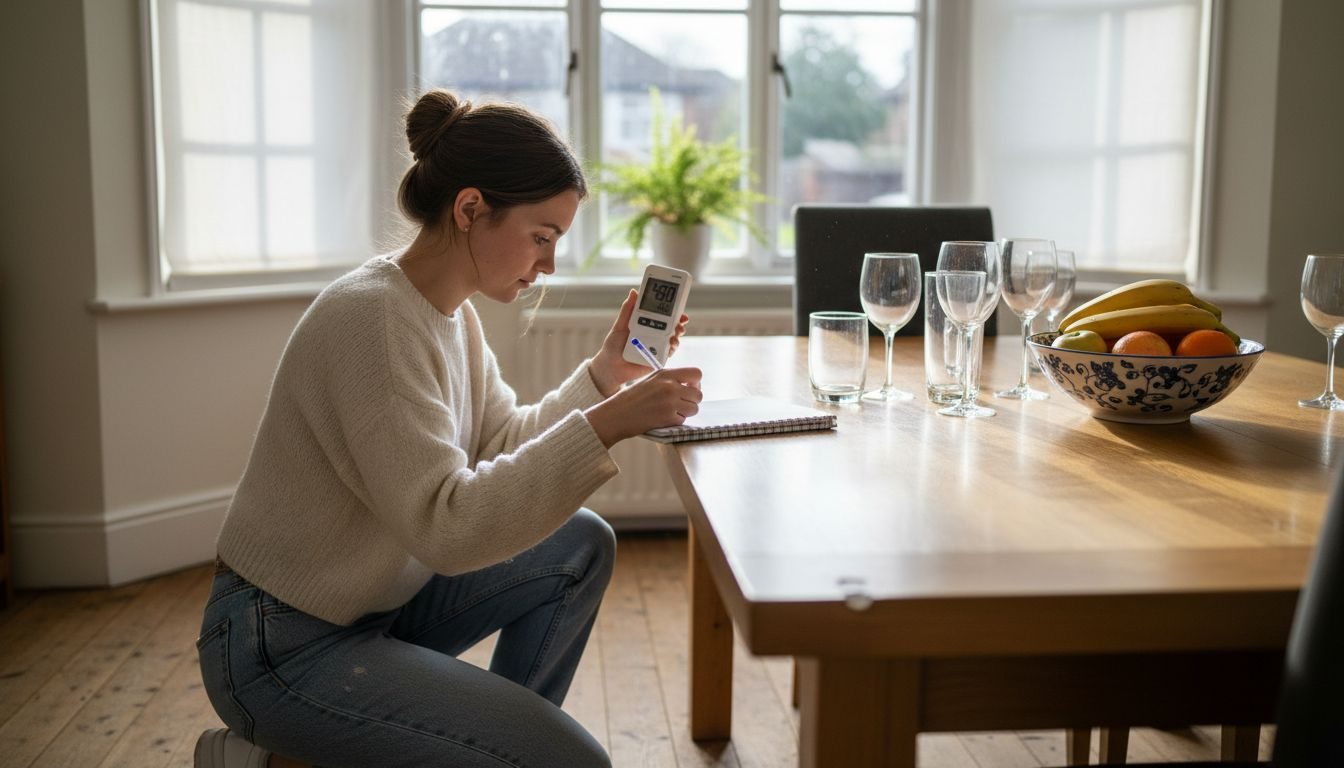
To help clarify common lighting measurement terms, here is a quick reference table:
| Metric | What It Measures | Practical Application |
|---|---|---|
| Lux | Illuminance on a surface | Ensures sufficient brightness |
| Lumen | Total light output | Calculates lamp and fixture needs |
| Colour Rendering Index (CRI) | Quality of light colour reproduction | Chooses lighting for accurate colours |
| Watt | Energy consumption | Evaluates lighting efficiency |
Expert tip: Create a lighting journal documenting each room’s current lighting performance and your desired improvements to track your home’s lighting transformation.
Step 2: Collaborate with designers on architectural integration
Architectural lighting design requires a nuanced partnership between homeowners, architects, and lighting specialists to create truly transformative spaces. This collaborative process ensures your lighting strategy harmonises perfectly with your home’s structural and aesthetic characteristics.
Architectural lighting concepts emphasise integrating light as a fundamental design element, not just a functional necessity. When working with designers, consider these critical collaboration strategies:
- Communicate your lifestyle and spatial usage
- Share detailed architectural plans and blueprints
- Discuss natural light patterns and existing architectural features
- Explore lighting technologies that complement your home’s design
- Establish clear aesthetic and functional objectives
The collaboration typically involves several structured stages of design development. Professional designers will help you navigate complex lighting considerations, translating architectural intent into practical illumination solutions that enhance both form and function.
Effective lighting design merges technical precision with creative vision, transforming spaces beyond mere illumination.
Lighting design collaboration involves comprehensive communication about daylight integration, control systems, and ambient effects tailored specifically to your architectural environment. Expect multiple design iterations and detailed consultations to refine the perfect lighting approach.
Expert tip: Prepare a mood board with images showcasing lighting styles and architectural aesthetics you appreciate to help designers understand your vision more precisely.
Step 3: Select appropriate automation and control systems
Selecting the right home lighting automation and control systems transforms your living environment from static illumination to a dynamic, intelligent network that adapts to your lifestyle. This crucial step involves understanding how advanced technologies can enhance both comfort and efficiency.
Lighting control systems offer remarkable capabilities for managing light intensity, colour temperature, and timing to support your daily rhythms. When evaluating automation options, consider these essential factors:
- Sensor integration for occupancy detection
- Daylight harvesting capabilities
- Scheduling and scene-setting functions
- Mobile and voice control compatibility
- Energy efficiency metrics
Modern lighting control goes beyond simple on/off switches. Intelligent systems respond dynamically to your environment, adjusting brightness and colour temperature based on time of day, natural light levels, and room occupancy.
Effective automation transforms lighting from a utility into an adaptive, responsive element of your home’s ecosystem.
Centralised lighting management allows seamless integration of user preferences, presence detection, and energy conservation strategies. Professional systems can create personalised lighting experiences that support your circadian rhythms and enhance overall well-being.
For a clearer understanding of home lighting control systems, see this comparison table:
| System Type | Key Features | Suitability |
|---|---|---|
| Manual Controls | Wall switches, dimmers | Simple rooms, small homes |
| Automated Sensors | Occupancy, daylight detection | Efficient, busy households |
| App-based | Mobile scheduling, remote access | Tech-savvy users |
| Voice Control | Hands-free operation | Accessibility enhancement |
| Centralised | Full integration, custom scenes | Large, modern properties |
Expert tip: Request demonstration sessions with automation system providers to personally experience how different control technologies might integrate with your specific living spaces.
Step 4: Implement bespoke layouts for daily ease
Creating a truly personalised home lighting layout transforms your living spaces from generic illumination to an intelligent, adaptive environment that seamlessly supports your daily rhythms. This stage is about crafting a lighting strategy that responds intuitively to your unique lifestyle and spatial requirements.
Bespoke lighting design involves carefully mapping light layers to match your household’s specific movement patterns and activities. Consider developing lighting zones that accommodate different functional needs:
- Work zones with task-focused illumination
- Relaxation areas with soft, ambient lighting
- Movement pathways with subtle directional lighting
- Multipurpose spaces with adjustable light intensities
- Architectural feature highlighting
The key is creating flexible lighting environments that can transition smoothly between different modes and moods. Home lighting strategies emphasise the importance of layering light types to support varied activities throughout the day.
Effective lighting design is not about brightness, but about creating the right atmosphere for each moment of your daily life.
By strategically placing different light sources and incorporating adaptive control systems, you can create a lighting layout that feels both sophisticated and effortlessly intuitive. The goal is to make lighting so seamless that it becomes an invisible support to your daily routines.
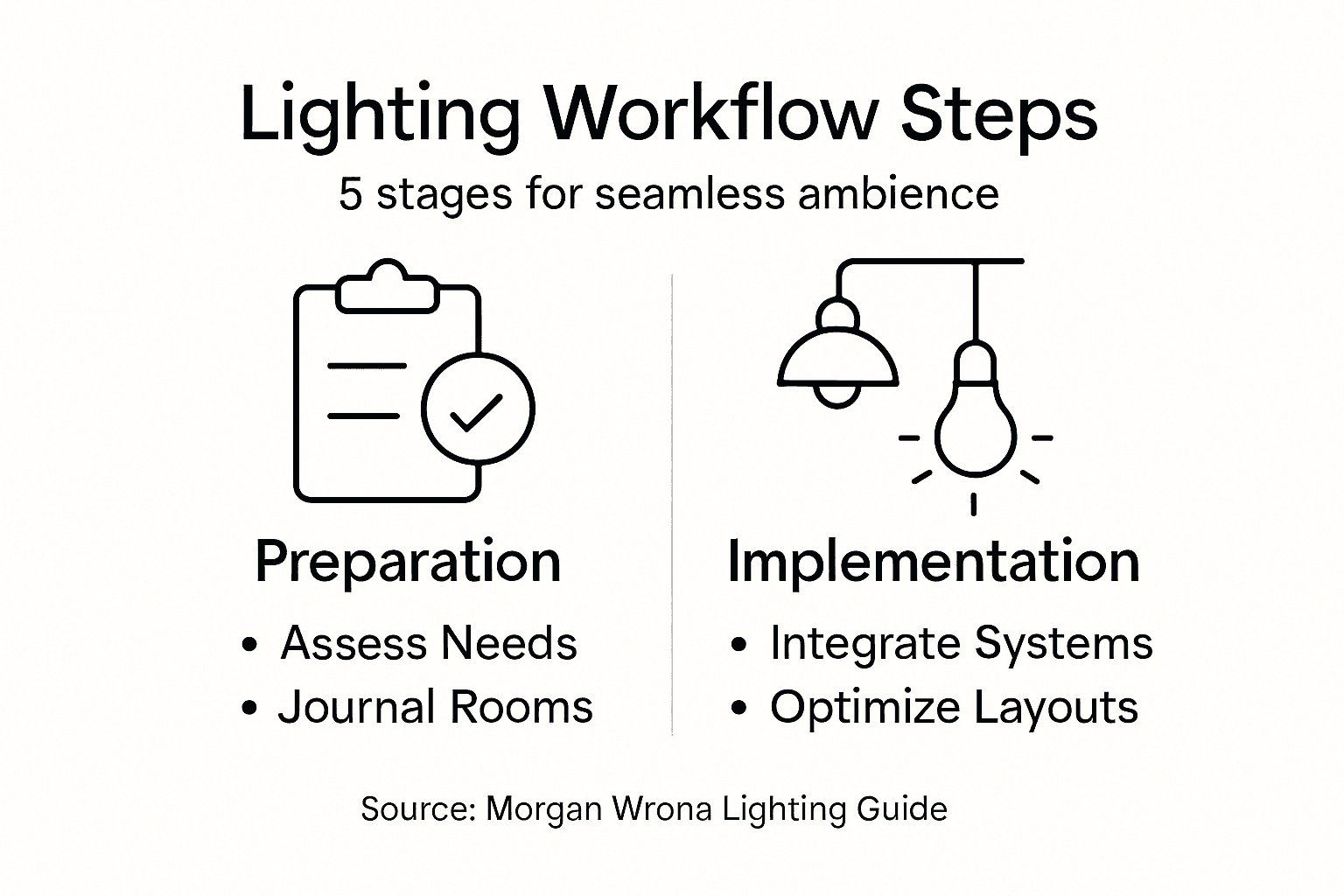
Expert tip: Create a quick sketch of your home’s floor plan and mark potential lighting zones before consulting with a professional designer to streamline your planning process.
Step 5: Verify lighting performance and harmony throughout
Ensuring your meticulously designed lighting system performs exactly as intended requires systematic verification and nuanced fine-tuning. This crucial final stage transforms your theoretical lighting plan into a perfectly calibrated, harmonious home environment.
Lighting system verification demands a comprehensive assessment of multiple performance criteria. Consider evaluating these critical aspects:
- Illumination consistency across different spaces
- Glare control and visual comfort
- Colour temperature uniformity
- Automated control system responsiveness
- Energy efficiency performance
The verification process involves methodical testing and calibration to ensure each lighting zone meets your precise design objectives. Lighting performance assessment requires careful examination of how light interacts with your specific architectural environment.
Technical precision matters, but the ultimate goal is creating an atmosphere that feels effortlessly comfortable and intuitively responsive.
Professional lighting designers recommend conducting daytime and nighttime assessments to capture how light behaves under varying conditions. This approach allows you to make subtle adjustments that enhance the overall sensory experience of your home.
Expert tip: Photograph each room during different times of day to objectively compare lighting performance and identify any subtle variations that might require adjustment.
Achieve Seamless Ambience with Thoughtful Integration
Understanding your home’s lighting needs as outlined in the “Home Lighting Workflow Guide” highlights how light shapes your living experience—offering comfort, functionality and architectural harmony. The challenge often lies in translating those needs into a lighting scheme that responds intuitively to daily routines while complementing your property’s design. Whether considering general illumination, task lighting or smart controls, the goal is a bespoke environment which enhances each space thoughtfully without complexity.
At Morgan Wrona, we approach lighting as an integral part of your home’s architecture. Working alongside you and your designers, we carefully assess your requirements, recommend suitable lighting technologies and develop a tailored plan. This collaborative process includes consultation, precise design, meticulous installation and ongoing support to ensure the lighting not only performs well technically but also feels natural through every moment of your day.
If you would like to explore how a considered lighting strategy could elevate your home’s ambience and ease daily living, visit our website to learn more.
Contact us today on 01793 315930 discuss your project and discover how intelligent lighting can adapt to your lifestyle with unobtrusive elegance.
Frequently Asked Questions
How do I assess my home’s lighting requirements?
To assess your home’s lighting requirements, evaluate each room’s natural light exposure, architectural features, and intended activities. Create a lighting journal to document current performance and desired improvements, and consider the three primary lighting layers: general illumination, task lighting, and accent lighting.
What is the process for collaborating with designers on architectural integration?
Collaborating with designers involves sharing your lifestyle needs, detailed architectural plans, and preferences for lighting technology. Prepare a mood board that illustrates your vision, and communicate clearly about aesthetic and functional objectives to ensure a cohesive lighting design.
How can I implement smart automation and control systems for my home lighting?
To implement smart automation and control systems, assess options that include sensor integration and mobile control. Choose a system that allows for scheduling and scene setting to enhance your comfort and efficiency, effectively adapting to your routines.
What steps should I take to create bespoke lighting layouts?
Creating bespoke lighting layouts requires mapping out different lighting zones to align with specific activities in your home. Consider the placement of light sources to support work areas, relaxation spots, and movement pathways, allowing for flexible environments that adapt to daily changes.
How can I verify the lighting performance and harmony throughout my home?
To verify lighting performance, conduct assessments of illumination consistency, visual comfort, and colour temperature across various spaces. Systematically test each area during different times of the day, making adjustments to optimise your lighting environment for comfort and functionality.