Finding the right balance between beauty and practicality in lighting can be a challenge for homeowners with distinctive architectural homes in London. Thoughtful lighting design shapes daily life, creates atmosphere, and integrates seamlessly with your home’s personality. Explore how layered illumination and energy-efficient lighting principles transform ordinary rooms into extraordinary spaces while supporting both functional needs and aesthetic ambitions.
Table of Contents
- Defining Lighting Design Principles For Homes
- Layered Lighting: Ambient, Task, And Accent
- Mood, Colour, And Well-Being Considerations
- Integrating Lighting With Architecture
- Common Pitfalls And How To Avoid Them
Key Takeaways
| Point | Details |
|---|---|
| Layered Lighting | Integrate ambient, task, and accent lighting to create depth and enhance functionality in each space. |
| Emotional Impact | Consider colour temperature and light intensity to influence mood and well-being effectively. |
| Architectural Integration | Collaborate with designers and architects to ensure lighting is cohesive with architectural aesthetics. |
| Avoid Common Pitfalls | Plan meticulously to prevent inadequate lighting or poor material interactions that can compromise illumination quality. |
Defining Lighting Design Principles for Homes
Lighting design represents far more than simply illuminating a space. At its core, it is about creating environments that support how we live, work, and experience our homes. Residential lighting design requires a nuanced approach that balances technical performance with aesthetic sensibility.
Effective home lighting design centres on several fundamental principles that transform spaces from merely functional to genuinely remarkable:
- Layered Illumination: Creating depth through ambient, task, and accent lighting
- Energy Efficiency: Maximising natural light and using low-consumption technologies
- Adaptability: Designing systems that adjust to changing daily activities
- Emotional Response: Crafting lighting that influences mood and perception
The technical foundation of home lighting involves strategic placement and selection of light sources. Energy-efficient lighting principles recommend matching light quantity and quality to specific functional requirements. This means understanding how different spaces demand unique illumination strategies.
Consider living areas, where lighting must support multiple activities. A well-designed space might incorporate recessed ceiling lights for general illumination, pendant lights for focused reading areas, and subtle floor lamps to create warmth and depth. Each layer serves a specific purpose while contributing to the overall aesthetic.
Architectural integration is equally critical. Lighting should not feel like an afterthought but a seamless extension of the home’s design language. This requires collaboration between lighting designers, architects, and homeowners to create cohesive, responsive environments.
Pro tip: Before finalising your lighting design, create mock-ups using adjustable lamps to experiment with different placements and intensities.
Layered Lighting: Ambient, Task, and Accent
Layered lighting design represents a sophisticated approach to illuminating spaces, transforming rooms from mere functional areas into dynamic, responsive environments. This strategic method involves carefully combining three distinct lighting types to create depth, functionality, and emotional resonance within a home.
The three primary layers of lighting each serve unique purposes:
- Ambient Lighting: Provides overall, general illumination
- Task Lighting: Focuses light on specific work or activity areas
- Accent Lighting: Highlights architectural features or decorative elements
Ambient lighting forms the foundation of any lighting design. These are typically overhead fixtures, recessed lights, or wall-mounted luminaires that create a uniform background of illumination. The goal is to ensure comfortable, even light distribution that allows safe movement and general visibility throughout the space.
Task lighting brings precision and functionality to specific zones. Lighting design principles recommend positioning these lights to eliminate shadows and provide direct, intense illumination where detailed activities occur. In a kitchen, this might mean under-cabinet lights for food preparation; in a study, a adjustable desk lamp for reading.
Accent lighting introduces drama and visual interest, transforming a space from functional to extraordinary. These lights draw attention to architectural elements, artwork, or unique design features. Carefully placed wall washers, picture lights, or strategically positioned floor lamps can create depth, highlight textures, and add a layer of sophistication to your home’s interior.
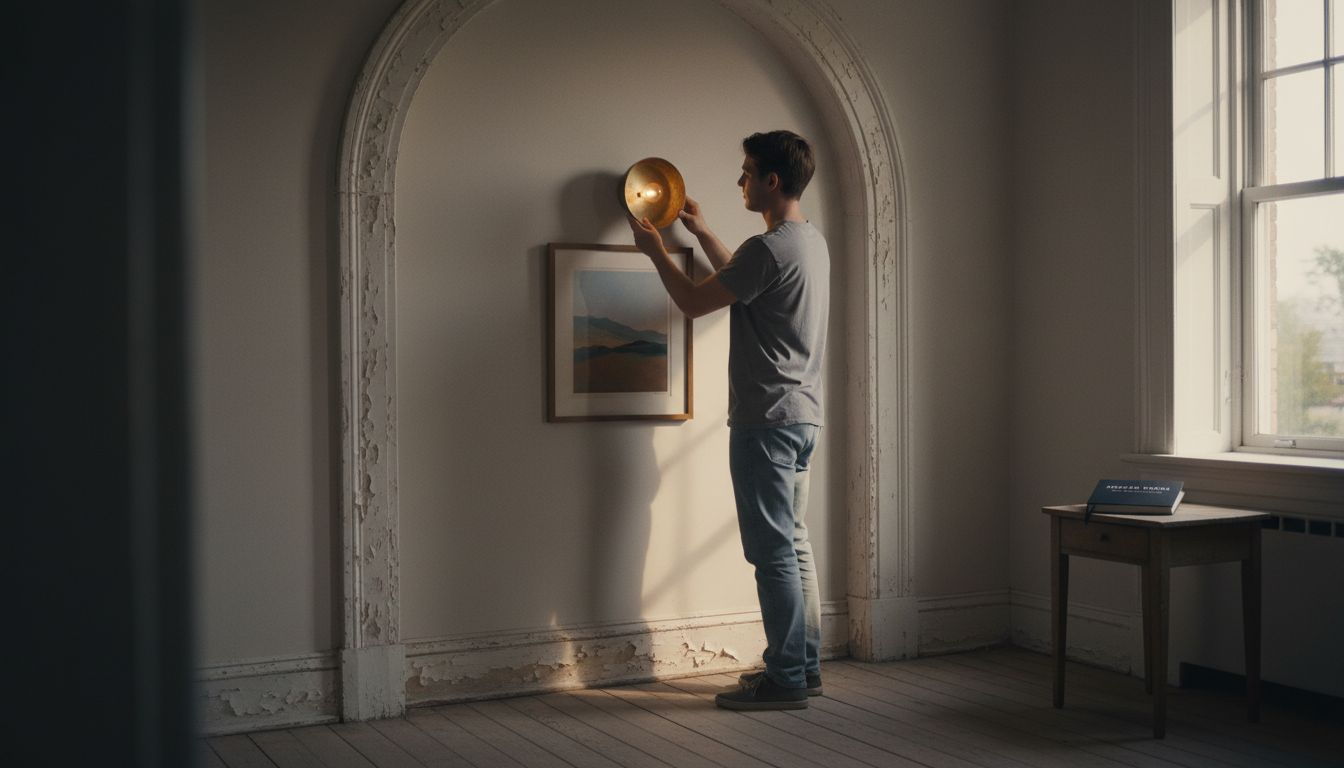
Here is a breakdown of how different lighting types enhance residential spaces:
| Lighting Layer | Key Purpose | Typical Application |
|---|---|---|
| Ambient Lighting | Ensures general room brightness | Ceilings, walls, large areas |
| Task Lighting | Supports focused activities | Desks, kitchen counters |
| Accent Lighting | Adds drama and visual interest | Artwork, architectural detail |
Pro tip: Experiment with dimmer switches to create seamless transitions between lighting layers, allowing your space to adapt to different moods and activities.
Mood, Colour, and Well-Being Considerations
Human-centric lighting design goes beyond mere illumination, recognising light’s profound psychological and physiological impact on human experience. Our perception of space, emotional state, and overall well-being are intimately connected to the quality, intensity, and colour temperature of our environmental lighting.
The psychological dimensions of lighting are defined by several key characteristics:
- Colour Temperature: Influences emotional and cognitive responses
- Light Intensity: Affects energy levels and mood regulation
- Light Duration: Impacts circadian rhythms and sleep patterns
- Spectral Composition: Determines physiological and psychological reactions
Colour temperature plays a crucial role in spatial perception and emotional resonance. Lighting temperature variations create distinctly different psychological environments. Warm tones between 2200K and 3000K generate feelings of comfort and intimacy, making living rooms and bedrooms feel inviting and relaxed. Neutral temperatures (3500K-4100K) provide balanced illumination ideal for home offices and kitchens, supporting focus and functionality.
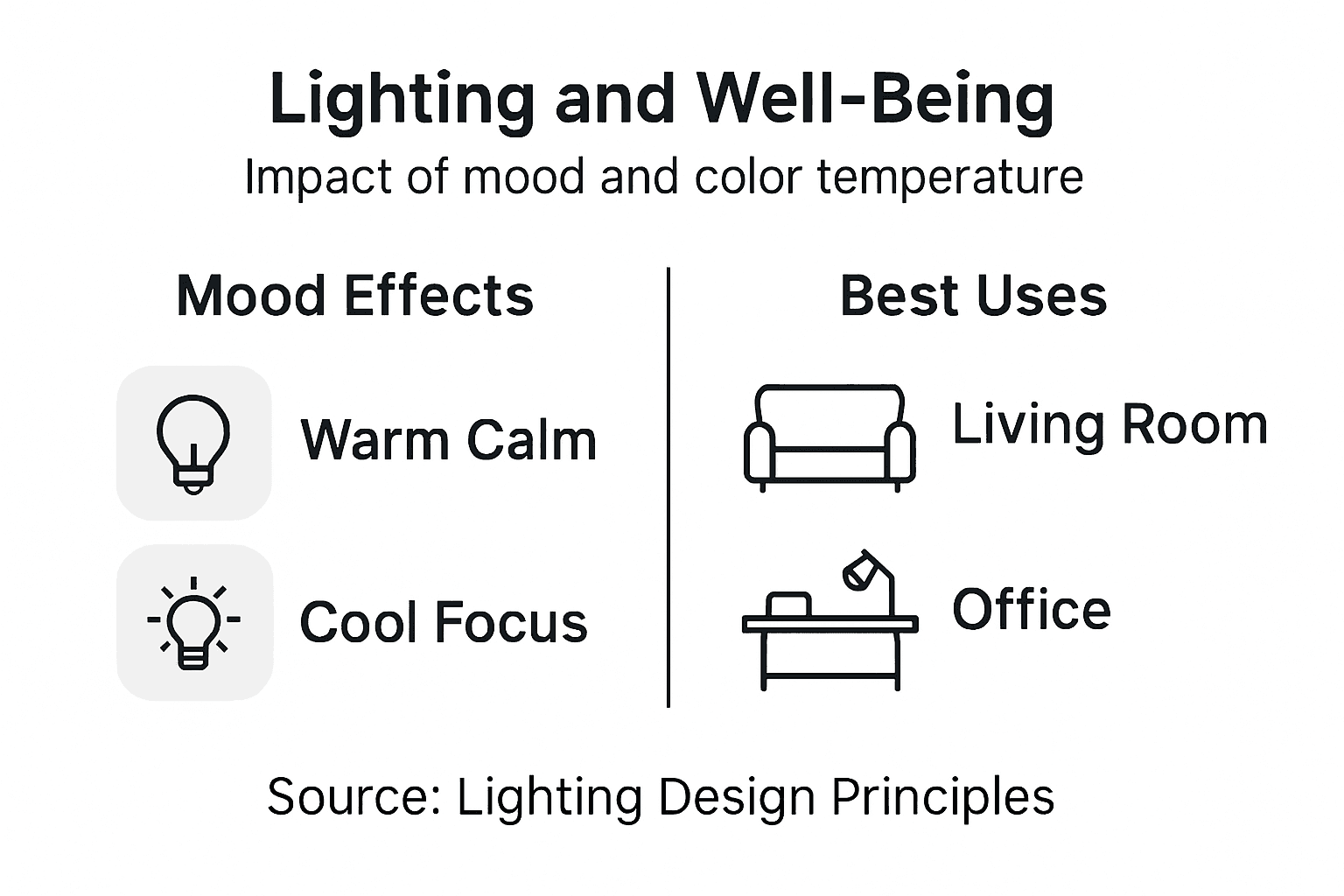
Cool lighting temperatures, ranging from 5000K to 6500K, introduce a sense of alertness and clarity. These higher colour temperatures mimic natural daylight, stimulating cognitive function and enhancing concentration. They’re particularly effective in workspaces, study areas, and rooms requiring heightened mental engagement. Understanding these nuanced relationships allows homeowners to curate environments that actively support their daily rhythms and emotional well-being.
See how colour temperature shapes room atmosphere and function:
| Colour Temperature Range | Emotional Effect | Best Use Cases |
|---|---|---|
| 2200K–3000K | Cosy, relaxing | Living rooms, bedrooms |
| 3500K–4100K | Balanced, neutral | Kitchens, home offices |
| 5000K–6500K | Energetic, focused | Studies, workspaces |
Beyond colour temperature, lighting design must consider individual preferences, daily activities, and personal circadian requirements. The interplay of natural and artificial light creates a holistic approach to illumination that transcends mere visibility, transforming spaces into responsive, supportive environments.
Pro tip: Use adjustable colour temperature smart bulbs to dynamically adapt your lighting throughout the day, supporting your natural energy cycles.
Integrating Lighting with Architecture
Architectural lighting design transcends mere functional illumination, representing a sophisticated dialogue between light, space, and human experience. The most compelling environments emerge when lighting is conceived not as an afterthought, but as an integral component of architectural expression.
Successful architectural lighting integration requires careful consideration of several key elements:
- Spatial Geometry: Understanding how light interacts with architectural forms
- Material Characteristics: Recognising how different surfaces reflect and absorb light
- Functional Requirements: Balancing aesthetic and practical illumination needs
- Cultural Context: Responding to specific architectural and regional design traditions
Whole-building lighting design demands a holistic approach that seamlessly blends natural and artificial light sources. This means carefully positioning windows, selecting luminaires, and incorporating intelligent control systems that adapt to changing environmental conditions. The goal is creating spaces that feel both purposeful and emotionally resonant.
Consider how light can sculpt architectural volumes, emphasise structural details, and create visual hierarchy. A well-designed space uses light to reveal textures, highlight transitions between areas, and guide visual perception. Recessed lighting can wash walls, creating depth; strategically placed spotlights can draw attention to architectural features; indirect lighting can softly illuminate ceilings, expanding the perceived volume of a room.
Beyond aesthetics, integrated lighting design must address technical considerations such as energy efficiency, glare reduction, and occupant comfort. Modern architectural lighting embraces technologies that allow dynamic, responsive environments – systems that adjust colour temperature, intensity, and distribution based on time of day, occupancy, and specific activity requirements.
Pro tip: Collaborate with both lighting designers and architects early in the design process to ensure lighting becomes a fundamental design element, not a superficial addition.
Common Pitfalls and How to Avoid Them
Lighting design challenges are often subtle, emerging from seemingly minor oversights that can significantly compromise the overall quality of a home’s illumination. Understanding these potential pitfalls allows homeowners and designers to create more intentional, responsive lighting environments.
The most critical design challenges include:
- Inadequate Layer Planning: Failing to incorporate multiple lighting types
- Overlooking Colour Temperature: Ignoring the psychological impact of light
- Neglecting Surface Interactions: Misunderstanding how materials reflect light
- Poor Control Integration: Not implementing flexible lighting management systems
Lighting system design errors frequently stem from a lack of comprehensive planning. Many homeowners approach lighting as an afterthought, selecting fixtures based on aesthetic appeal rather than functional requirements. This approach leads to spaces that feel either dramatically over-illuminated or disappointingly flat, with harsh shadows and uncomfortable glare.
Technical considerations are equally crucial. Proper lighting design requires understanding how different surfaces interact with light, how colour temperatures influence perception, and how control systems can create adaptable environments. For instance, dark surfaces absorb more light and may require additional luminaires, while light-coloured walls and ceilings can help distribute illumination more effectively.
Communication between designers, architects, and homeowners becomes paramount in avoiding these pitfalls. Each space has unique requirements that demand a tailored approach, considering factors like natural light availability, room function, and the specific activities performed within the space. Successful lighting design is not about installing more fixtures, but about creating a thoughtful, nuanced illumination strategy.
Pro tip: Conduct a comprehensive lighting audit of your space, mapping out activities, noting natural light sources, and identifying areas that require focused or ambient illumination.
Bringing Thoughtful Lighting Design Into Your Home
The journey from understanding the principles of lighting design to experiencing their impact in your home can be an enriching process. This article highlights the importance of layered lighting, colour temperature, and architectural integration — all central to how light shapes mood, function, and atmosphere. For homeowners aiming to move beyond standard illumination and create spaces that respond naturally to daily routines and architectural intent, these insights offer clarity and reassurance.
At Morgan-Wrona we specialise in delivering intelligent lighting solutions that adapt to how you live, making daily life simpler and more comfortable. By collaborating closely with architects and designers we ensure lighting flows cohesively with your home’s form and materials, optimising ambience while carefully considering energy and well-being. Every stage from consultation through to support is tailored to your home’s unique needs, addressing concerns such as glare management, flexible control, and evolving light preferences.
Experience how meticulous lighting design enhances not only aesthetic quality but also how your home feels across different moments of the day. Learn more about our integrated systems and refined design process at Morgan-Wrona or explore our approach directly through our lighting design services. If you would like to discuss how this could work in your home, contact us or call 01793 315930.
Frequently Asked Questions
What are the key principles of lighting design for homes?
Effective home lighting design revolves around layered illumination, energy efficiency, adaptability, and emotional response. These principles help in creating aesthetically pleasing and functional spaces.
How can layered lighting enhance the functionality of living spaces?
Layered lighting combines ambient, task, and accent lighting, allowing for a versatile environment. Ambient lighting provides general illumination, task lighting focuses on specific activities, and accent lighting highlights architectural features, creating depth and interest.
What role does colour temperature play in lighting design?
Colour temperature influences mood and perception. Warm tones create comfort in living areas, neutral tones maintain focus in workspaces, and cool tones enhance alertness in studies. Selecting the appropriate colour temperature can significantly affect the emotional atmosphere of a room.
How can homeowners avoid common pitfalls in lighting design?
To avoid pitfalls such as inadequate layer planning and poor control integration, homeowners should conduct a comprehensive lighting audit, consider the interplay of surfaces and light, and ensure communication with designers and architects throughout the process.