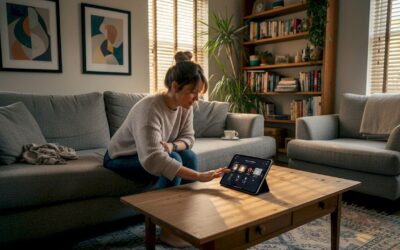
Finding lighting systems that respect both architectural intent and evolving daily needs can be challenging for homeowners in London. Intelligent lighting control transforms static rooms into spaces that adapt in real time, improving energy efficiency and comfort. Research shows that integrating dynamic lighting adjustments with natural light harvesting significantly enhances visual comfort and sustainability, supporting your architect’s vision while creating a more responsive home environment.
Table of Contents
- Lighting Control In Architect-Designed Homes
- How Lighting Control Shapes Daily Living
- Integration With Architectural Design
- System Types And Key Distinctions Explained
- IoT And Networked Systems
- Integrating Lighting Control With Daily Life
- Creating Seamless Daily Routines
- Real-World Responsiveness
- Collaboration In Design And Installation Process
- The Design Phase Collaboration
- Installation And Commissioning Dialogue
- Future-Proofing And Ongoing Support Considerations
- Designing For Adaptability
- Ongoing Support And Evolution
Key Takeaways
| Point | Details |
|---|---|
| Intelligent Lighting Control | Adapting lighting systems to user behaviours enhances comfort and energy efficiency, aligning with architectural design. |
| Integration with Daily Life | Effective systems respond to changing natural light and occupancy, creating seamless daily routines without manual intervention. |
| Collaboration in Design | Early collaboration between architects, designers, and specialists ensures optimal placement and functionality of lighting controls. |
| Future-Proofing Strategy | Choosing open standards and scalable systems ensures adaptability as needs and technologies evolve over time. |
Lighting control in architect-designed homes
Architect-designed properties demand lighting systems that respect the designer’s vision whilst adapting to how you actually live. Intelligent lighting control transforms your home from a static environment into a responsive space that shifts throughout the day, matching natural light, occupancy, and your mood.
In contemporary architect-designed residences, lighting control goes beyond on-off switches. It’s about creating systems that work invisibly, responding to daylight availability, time of day, and whether rooms are occupied. This approach aligns with the careful spatial design your architect envisioned.
Research demonstrates that integrating dynamic lighting adjustments with natural light harvesting significantly improves both energy efficiency and visual comfort in contemporary homes. These systems coordinate daylight and artificial lighting intelligently, avoiding wasteful overlap whilst maintaining aesthetic quality.
Key benefits of proper lighting control in your home include:
- Reduced energy consumption through automated adjustment based on occupancy and daylight
- Enhanced visual comfort by synchronising artificial light with natural conditions
- Greater flexibility to adapt spaces for different activities without manual adjustment
- Seamless integration with your home’s architectural aesthetic
- Improved sustainability outcomes aligned with modern design principles
How lighting control shapes daily living
Consider a typical morning in your architect-designed home. Rather than waking to harsh overhead lights, a controlled system gradually increases brightness in your bedroom, mimicking sunrise. The lighting responds to actual daylight entering through your windows, preventing overexposure whilst supporting your circadian rhythm.
Later, when you’re working in a study, the system maintains optimal illumination without glare on screens. If you step away, occupancy sensors quietly reduce lighting in that space. When evening arrives and natural light fades, artificial lighting gently increases to maintain consistent visual comfort.

This isn’t about complexity for its own sake. Coordinating daylight and artificial lighting through sensor technology prevents the inefficiencies that occur when systems work against each other. Your home becomes more energy-efficient whilst feeling more naturally responsive.
Integration with architectural design
The best lighting control systems disappear into your home’s architecture. They work through subtle, carefully positioned elements that won’t interrupt sightlines or detract from design features. Rather than visible controls throughout rooms, centralised systems manage lighting through simple interfaces or voice commands.
When designing control strategies for architect-designed homes, professionals consider:
- Placement of sensors and controls to maintain clean aesthetic lines
- Integration with existing lighting fixtures rather than replacement
- Zoning that reflects how spaces actually function, not arbitrary room divisions
- Compatibility with architectural materials and finishes
- Long-term flexibility as your needs evolve
Intelligent lighting control should enhance your architect’s vision, not override it. The system adapts to your life whilst preserving the carefully considered design of your space.
Pro tip: Start with zoning your most-used spaces—bedrooms, kitchens, and studies—before expanding throughout your home. This focused approach delivers immediate comfort gains whilst you understand how the system responds to your daily patterns.
System types and key distinctions explained
Lighting control systems exist on a spectrum, from simple manual switches to fully automated networks that learn your preferences. Understanding the differences helps you choose what actually suits your home, rather than defaulting to the most complex option available.
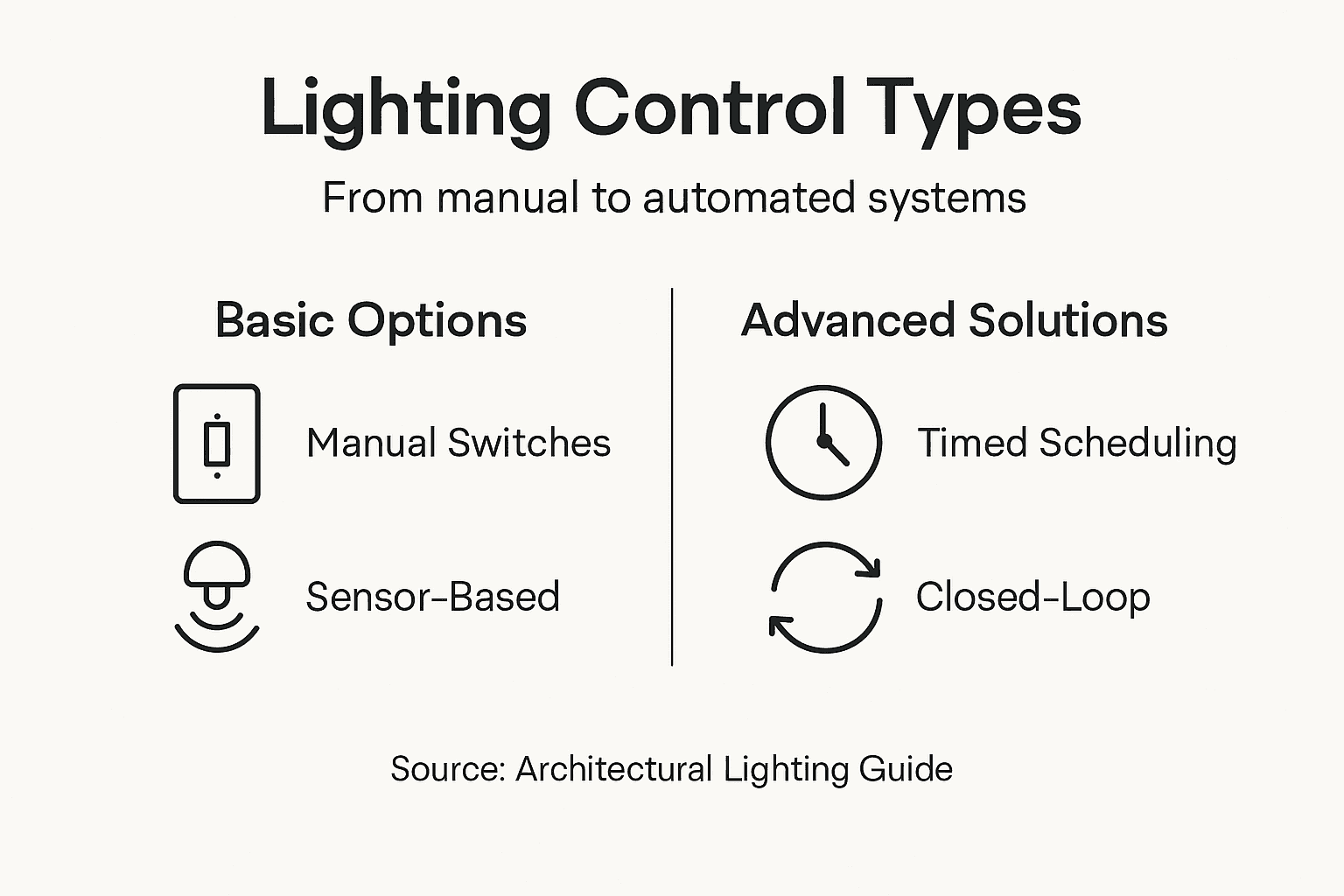
At the foundation, basic manual controls remain valuable. They offer simplicity and direct user agency—you choose exactly when lights turn on or off. However, they provide no energy savings or adaptation to changing conditions.
Sensor-based automatic systems represent the next step. These respond to occupancy and daylight levels without requiring your input. A motion sensor turns lights on when you enter a room and off when you leave. Daylight sensors dim artificial lighting as natural light increases, maintaining consistent brightness while reducing energy waste.
More advanced systems employ timed scheduling and automation. Lights follow pre-programmed patterns based on time of day, supporting your routine. Your bedroom might gradually brighten at wake-up time whilst living areas shift to evening modes automatically. These systems require initial setup but operate independently once configured.
Closed-loop lighting control systems use continuous feedback from sensors to fine-tune lighting in real time. They respond dynamically to actual conditions rather than following fixed schedules. This precision delivers superior comfort and energy efficiency, though the complexity requires professional design and installation.
Open-loop systems operate differently. They measure ambient light and occupancy once, then adjust accordingly. Whilst simpler and less expensive than closed-loop alternatives, they offer reduced accuracy and responsiveness.
Key differences between system types include:
To help distinguish lighting control system options, here is a concise comparison:
| System Type | Automation Level | User Interaction | Installation Complexity |
|---|---|---|---|
| Manual Controls | None | Direct switch operation | Minimal wiring required |
| Sensor-Based Automatic | Responds to occupancy, daylight | Passive, automatic | Sensors plus wiring |
| Timed Scheduling | Scheduled automation | Initial setup, then automatic | Moderate; requires programming |
| Closed-Loop System | Real-time feedback, adaptive | Limited manual intervention | High; professional design needed |
| Open-Loop System | One-time adjustment | Minimal future adjustment | Simple; basic sensors only |
- Automation level: manual, sensor-triggered, scheduled, or continuous feedback
- Energy efficiency: ranges from none to substantial savings through intelligent adjustment
- User interaction: direct control versus passive responsiveness
- Installation complexity: simple additions versus whole-home integration
- Ongoing flexibility: fixed programming versus adaptive learning
IoT and networked systems
IoT-enabled and software-based systems connect lighting to broader home automation platforms. Your lighting communicates with security systems, climate control, and entertainment setups. You control everything through unified interfaces—apps, voice commands, or centralised panels.
These systems offer remarkable flexibility. Scenes adjust multiple parameters simultaneously—dinner mode might dim overhead lights, brighten task lighting, and warm colour temperature. Away mode activates security lighting while minimising energy use. Morning routines automate gradual brightening, coffee brewing, and news feeds through single commands.
The right system matches how you actually live, not the most sophisticated option available. Complexity should serve your needs, never complicate them.
Pro tip: Discuss your daily routines and priorities with specialists before selecting a system type. Understanding whether you value energy savings, flexibility, or simplicity determines whether a basic sensor system or full networked solution makes sense for your home.
Integrating lighting control with daily life
The most sophisticated lighting system fails if it doesn’t fit naturally into how you actually live. True integration means the technology adapts to your routines, not the other way around.
Consider how lighting shapes your day without you thinking about it. Morning coffee tastes better under gradually brightening light that mimics sunrise. Working at your desk feels effortless when brightness adjusts to eliminate screen glare. Evening relaxation improves when warm light gently dims as your bedtime routine begins.
These aren’t isolated moments—they’re interconnected experiences where intelligent lighting control systems enhance daily living through adaptive brightness responding to occupancy, ambient light, and personal preference. Your system learns patterns and anticipates needs rather than requiring constant manual adjustment.
Creating seamless daily routines
Practical integration starts with understanding your actual schedule. Professional installers observe how you move through your home—where you spend time, what activities matter most, which spaces need flexibility.
This informs how zones are configured and which automation rules make sense. Your home office lighting might maintain consistent, energising brightness during work hours, then shift to warmer tones for afternoon calls. Your kitchen adjusts brightness based on time of day and natural light availability, ensuring good visibility whilst minimising energy waste.
When designing your system, consider:
- Morning routines that support gradual waking and breakfast preparation
- Daytime activities requiring consistent, glare-free illumination
- Afternoon transitions as natural light changes throughout the day
- Evening modes supporting relaxation and wind-down routines
- Night-time navigation with minimal, warm lighting for safety
Real-world responsiveness
Sensor-based automation and adaptive brightness control mean your lighting responds to actual conditions rather than following rigid schedules. Rain darkens your living room mid-afternoon? The system automatically increases artificial light. You’ve stepped away from your study? Occupancy sensors gradually reduce brightness, saving energy whilst remaining available instantly when you return.
This responsiveness creates environments that feel intuitive. You’re never fumbling for switches or squinting at inadequate light. The system simply adapts as circumstances change, almost invisibly.
Key integration benefits include:
- Reduced decision-making—systems respond automatically to conditions
- Enhanced energy efficiency through continuous optimisation
- Better visual comfort across different times and activities
- Flexibility to adjust routines without reprogramming
- Improved wellbeing through lighting aligned with circadian rhythms
Successful integration means lighting serves your life, not interrupts it. The best system is one you stop noticing because it works perfectly.
Pro tip: Start by tracking your current lighting preferences for one week—when you adjust brightness, what activities trigger changes, and which areas feel poorly lit. This data guides specialists in creating zones and automation that align with your genuine patterns rather than assumptions.
Collaboration in design and installation process
Lighting control systems succeed when your architect, designer, and installation specialists work together from the beginning. This isn’t a handoff process—it’s a genuine collaboration where each voice shapes the outcome.
Your architect understands your home’s spatial logic and design intent. They know sight lines, material finishes, and how spaces connect. Lighting specialists bring technical expertise about what systems can actually achieve. You provide essential insight into how you genuinely live and what matters most to your daily comfort.
Collaborative approaches integrating human input with dynamic controls bridge the gap between what’s theoretically possible and what truly works in your specific home. This ongoing dialogue throughout design and installation enhances system adaptability and user satisfaction.
The design phase collaboration
Effective collaboration starts early, before any equipment arrives. Initial conversations map your daily patterns, priorities, and the home’s architectural character. Your architect or designer walks specialists through spatial relationships and identifies zones that need different lighting strategies.
This phase includes:
- Understanding how natural light flows through different seasons
- Identifying activities and areas requiring consistent, quality illumination
- Discussing aesthetic preferences and how systems integrate visually
- Reviewing existing architectural features that inform placement
- Establishing energy and comfort priorities for the overall system
These conversations prevent costly mistakes—installing controls in the wrong locations or choosing systems incompatible with your home’s character.
Installation and commissioning dialogue
Multidisciplinary collaboration and iterative feedback during installation optimises how systems actually perform once they’re operational. Real conditions often differ slightly from planning assumptions. Light levels, colour temperature, and automation timing might need fine-tuning based on how spaces actually feel when lived in.
Commissioning isn’t a checkbox process—it’s interactive. You experience how different scenes and automations feel. Specialists observe your responses and adjust settings. This iterative approach ensures the installed system matches your genuine preferences rather than theoretical predictions.
Key collaboration points during this phase include:
- Testing scenes and automations under different daylight and weather conditions
- Adjusting timing and brightness levels based on your feedback
- Fine-tuning sensor placement and sensitivity
- Ensuring integration between zones works intuitively
- Establishing clear guidance for future adjustments
True collaboration means specialists listen as much as they direct. Your comfort and preferences guide every decision, supported by their technical knowledge.
Pro tip: Document your preferences during commissioning—photograph settings you like, note times when lighting feels optimal, and keep records of any adjustments made. This creates a baseline that guides future refinements and helps new specialists understand your system’s logic.
Future-proofing and ongoing support considerations
A lighting control system installed today should serve your home well for years ahead. Future-proofing means building flexibility into your design so the system adapts as your needs evolve, technology advances, and building standards change.
Architect-designed homes often remain lived-in for decades. Your lighting system should support this longevity without requiring complete replacement. This requires thoughtful choices during initial installation that create room for expansion and adaptation.
Consider how your family might change. Children grow. Working patterns shift. You might add a home gym or convert a study into a guest suite. A future-proof system accommodates these changes through scalable architecture rather than rigid, single-purpose design.
Designing for adaptability
Integrating multi-technology combinations with AI and IoT supports system scalability and adaptability to evolving building needs and energy standards. Rather than locking yourself into one proprietary system, modern installations use open standards allowing new components to integrate seamlessly as technology improves.
This approach reduces long-term costs. You’re not forced to replace everything when upgrading; new elements work alongside existing infrastructure. Your initial investment protects itself through flexibility.
Key future-proofing strategies include:
Future-proofing your lighting control system becomes easier with these considerations:
| Future-Proofing Strategy | Benefit | Risk if Neglected |
|---|---|---|
| Open standards adoption | Easy upgrades, avoids vendor lock-in | Costly replacements needed |
| Scalable infrastructure | Supports changing home layout | Limits adaptability over time |
| Both wired and wireless | Flexible additions, technology evolution | Difficult expansion |
| Dimmable fixtures | Compatibility with new controls | Fixed lighting, limited flexibility |
- Choosing systems based on open standards rather than proprietary-only platforms
- Installing infrastructure supporting both wired and wireless technologies
- Planning zones generously to accommodate future space divisions or reconfiguration
- Selecting dimmable, compatible fixtures rather than fixed-function lighting
- Designing for continuous performance monitoring and adjustment
Ongoing support and evolution
Hybrid lighting control systems combining wired and wireless technologies achieve flexibility and seamless integration whilst reducing life-cycle costs. This balanced approach means you’re not dependent on a single technology that might become obsolete.
Ongoing support matters more than most homeowners realise. Your specialist shouldn’t disappear after installation. Regular check-ins identify opportunities for optimisation, address any emerging issues, and keep your system current with available improvements.
Support services typically include:
- Periodic system reviews assessing performance and identifying optimisation opportunities
- Software updates maintaining compatibility with new standards and technologies
- Troubleshooting and adjustments as your usage patterns evolve
- Guidance when you add new spaces or change how existing areas function
- Documentation enabling future specialists to understand your system’s logic
A good lighting control system grows with your home. It adapts, improves, and becomes more valuable over time rather than becoming outdated.
Pro tip: During initial commissioning, ask your specialist about update policies, support response times, and any annual maintenance they recommend. Understanding long-term support arrangements before you need them prevents surprises and ensures your system remains optimised throughout its lifespan.
Intelligent Lighting That Respects Your Home’s Design and Your Daily Life
For architect-designed homes, the challenge lies in marrying aesthetic intent with practical living. Intelligent lighting control that adapts to natural light, occupancy, and your routines matters because it transforms your environment into one that is responsive yet unobtrusive. This means your home offers comfort and energy efficiency without ever disrupting its carefully crafted spatial harmony.
By focusing on subtle integration and bespoke zoning, your lighting can gently support daily activities — from gradual wake-up brightness to work-friendly illumination and evening relaxation. This thoughtful approach reduces complexity, eases decision-making, and reflects the long-term thinking necessary to accommodate evolving needs and architectural features.
If you would like to explore how intelligent lighting might enhance your daily living while preserving your home’s character, visit Morgan Wrona to learn about our consultation and design process.
Contact us for a considered conversation about lighting control that seamlessly fits your lifestyle and home, or call us on 01793 315930. We can guide you through design, installation, commissioning and aftercare to ensure your system serves you well for years to come.
Frequently Asked Questions
What are the benefits of using lighting control systems in architect-designed homes?
Proper lighting control systems enhance energy efficiency, improve visual comfort, provide flexibility for different activities, seamlessly integrate with architectural design, and contribute to sustainability.
How does lighting control adapt to daily living in a home?
Lighting control systems adjust brightness according to natural light, occupancy, and time of day, creating a more responsive and comfortable living environment.
What types of lighting control systems are available for my home?
Available lighting control systems range from basic manual switches to sensor-based automatic, timed scheduling, and advanced closed-loop systems that react dynamically to conditions.
How can I ensure my lighting control system is future-proof?
Choose systems based on open standards, ensure scalable infrastructure, and opt for both wired and wireless options. This approach allows for easy upgrades and adjustments as your needs evolve.