Many homeowners with architecturally designed properties struggle to create lighting schemes that complement their spaces. The challenge lies not in brightness alone, but in achieving balance between atmosphere, function, and architectural sensitivity. A well-designed lighting scheme layers ambient, task, and accent lighting to create adaptable environments that respond to daily life. This guide walks you through designing a bespoke lighting scheme that honours your home’s architecture whilst meeting practical needs, from understanding fundamental concepts through to verifying successful implementation.
Table of Contents
- Understanding The Fundamentals Of Layered Lighting
- Preparing Your Home For A Bespoke Lighting Scheme
- Step-By-Step Guide To Designing Your Lighting Scheme
- Common Mistakes And Verifying Your Lighting Scheme’s Success
- Discover Our Expert Lighting Solutions For Your Home
- How To Design Lighting Scheme Frequently Asked Questions
Key takeaways
| Point | Details |
|---|---|
| Layer three lighting types | Ambient, task, and accent lighting create balanced schemes that adapt to different activities and moods. |
| Use warm white LEDs | Specify 2700-3000K colour temperature in living spaces to create inviting, comfortable atmospheres that feel natural. |
| Install dimmers throughout | Dimming circuits from 100% to 10% or lower allows precise mood control and reduces eye strain during evening hours. |
| Avoid uniform spotlight grids | Highlight architectural features selectively rather than creating flat, symmetrical ceiling patterns that diminish spatial character. |
| Comply with UK regulations | Understanding building regulations ensures safe, effective lighting design that meets legal standards for your property. |
Understanding the fundamentals of layered lighting
Creating a successful lighting scheme begins with understanding how three distinct lighting types work together to shape your home’s atmosphere. Each layer serves a specific purpose, and their combination determines how comfortable and functional your spaces feel throughout the day.
Ambient lighting forms the foundation of any scheme. This base layer provides overall illumination, allowing you to move safely through rooms and establishing the general brightness level. In architecturally designed homes, ambient lighting typically comes from ceiling-mounted fixtures, wall lights, or floor lamps that distribute light evenly without creating harsh shadows. The key is selecting fixtures that respect your room’s scale and ceiling height, avoiding the temptation to over-light spaces.
Task lighting addresses specific activities that require focused illumination. Reading, cooking, working at a desk, or applying makeup all benefit from dedicated task lighting that reduces eye strain and improves visibility. In kitchens, this might include under-cabinet strips illuminating worktops. In studies, adjustable desk lamps provide directional light without disturbing ambient levels. The goal is functional precision without overwhelming the space.
Accent lighting adds the final layer of sophistication. This selective illumination highlights architectural features, artwork, or textures that deserve attention, creating visual interest and depth. Picture lights, track spots, or recessed adjustable fittings can draw the eye to specific elements whilst maintaining overall balance. Used thoughtfully, accent lighting transforms flat spaces into dynamic environments.
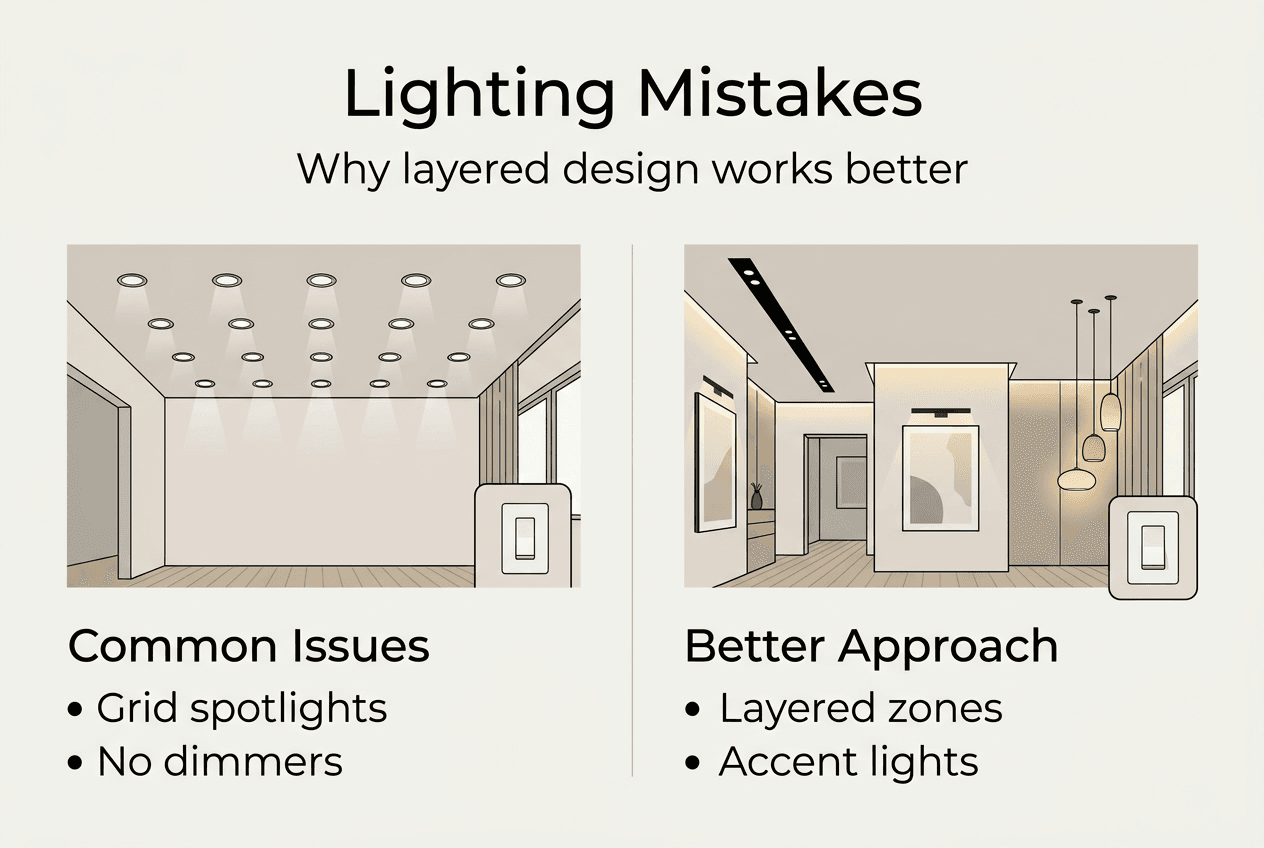
The most common mistake homeowners make is creating symmetrical grids of spotlights across ceilings. This approach flattens spatial character and ignores architectural features that could be emphasised. Instead, consider how light interacts with materials, textures, and volumes. A well-designed scheme feels invisible, working quietly to enhance atmosphere rather than announcing its presence.
Pro Tip: Walk through your home at different times of day, noting where natural light falls and which activities occur in each space. This observation informs lighting decisions that complement rather than compete with daylight.
Preparing your home for a bespoke lighting scheme
Before selecting fixtures or positioning lights, assess your home’s architectural characteristics and regulatory requirements. This preparation phase prevents costly mistakes and ensures your lighting scheme integrates seamlessly with existing structures.
Start by evaluating each room’s physical attributes. Ceiling height significantly affects fixture choice and light distribution. Rooms with high ceilings require different approaches than standard-height spaces, as ambient lighting varies based on room size and shape. Note architectural features worth highlighting: exposed beams, alcoves, textured walls, or bespoke joinery. These elements inform where accent lighting should focus.
Understanding UK building regulations is essential for compliance and safety. Building regulations set minimum standards for electrical installations, ventilation, and energy efficiency. Part L addresses energy efficiency, requiring LED fittings in most applications. Part P covers electrical safety, mandating that certain work must be carried out or certified by qualified electricians. Part B includes requirements for window designs and emergency egress that may affect lighting placement near openings.
Identify your lighting goals for each space. Consider how rooms are used throughout the day and what atmosphere you want to create. Living rooms might require adaptable lighting that shifts from bright family activities to subdued evening relaxation. Kitchens demand excellent task lighting for food preparation alongside ambient light for dining. Bedrooms benefit from gentle ambient light with focused reading lights beside beds.
| Room type | Primary function | Ambient approach | Task requirements |
|---|---|---|---|
| Living room | Relaxation, entertaining | Layered ceiling and floor lamps | Reading lights, picture lighting |
| Kitchen | Food preparation, dining | Recessed ceiling lights | Under-cabinet strips, pendant over island |
| Bedroom | Rest, dressing | Soft ceiling or wall lights | Bedside reading lamps, wardrobe lighting |
| Study | Working, concentration | Even ceiling distribution | Adjustable desk lamp, bookshelf lighting |
| Bathroom | Grooming, bathing | IP-rated ceiling lights | Mirror lighting, shower lighting |
Pro Tip: Consult with approved building control inspectors early in your lighting design workflow to clarify any regulatory questions specific to your property. This prevents redesigns later in the process.
Create a simple room-by-room lighting checklist documenting current fixtures, desired improvements, and regulatory considerations. This document becomes your reference throughout the design and installation process, ensuring nothing is overlooked.
Step-by-step guide to designing your lighting scheme
With preparation complete, follow this structured approach to create a cohesive lighting scheme that balances all three layers whilst maintaining architectural sensitivity.
-
Select ambient fixtures that establish your base illumination level. Choose fittings appropriate to ceiling height and room proportion. In rooms with standard 2.4-metre ceilings, recessed downlights or flush-mount fittings work well. Higher ceilings accommodate pendant lights or chandeliers that bring light sources closer to living areas. Avoid over-lighting; ambient light should feel comfortable rather than clinical. Position fixtures to provide even coverage without creating harsh shadows or bright spots.
-
Add task lighting where specific activities occur. In kitchens, install under-cabinet LED strips to eliminate shadows on worktops. Position pendant lights above islands or dining tables at appropriate heights, typically 75-80cm above surfaces. In studies, place adjustable desk lamps that direct light onto work areas without causing screen glare. Bedside reading lights should be positioned to illuminate books without disturbing partners. Each task light should be independently controllable, allowing you to use only what you need.
-
Incorporate accent lighting to highlight architectural features and create visual interest. Use narrow-beam spotlights to graze textured walls, revealing material depth. Picture lights or adjustable recessed fittings can emphasise artwork or bespoke joinery. In living rooms, consider uplighters that wash light across ceilings, creating indirect ambient glow whilst drawing attention upward. Accent lighting should feel subtle, never overwhelming the space.
-
Install dimmers on every circuit to enable precise control. Every circuit should dim from 100% down to 10% or lower to suit different activities and times of day. This flexibility transforms how spaces feel, allowing bright illumination for cleaning or detailed tasks, then dimming to create intimate evening atmospheres. Choose dimmer types appropriate to your lamp technology and control preferences.
| Dimmer type | Best for | Benefits | Considerations |
|---|---|---|---|
| Leading edge | Incandescent, halogen | Smooth dimming, reliable | Not suitable for most LEDs |
| Trailing edge | LED, low-voltage | Compatible with modern lamps | Slightly higher cost |
| Smart dimmers | LED, integrated systems | Remote control, scheduling | Requires compatible ecosystem |
| Rotary | Simple installations | Intuitive operation | Manual control only |
-
Specify warm white LED bulbs exclusively in living spaces, using 2700-3000K colour temperature. This warmth creates inviting atmospheres that feel natural and comfortable. Cooler temperatures (4000K+) suit task-focused areas like workshops or garages but feel clinical in living rooms, bedrooms, or dining areas. Consistency matters; mixing colour temperatures within visible sightlines creates visual discord.
-
Review your complete scheme using lighting design principles that prioritise balance and flexibility. Ensure each room has multiple light sources that can be controlled independently. Check that task lighting adequately serves its purpose without creating glare. Verify that accent lighting enhances rather than dominates spaces. Consider how the scheme works at different times of day and for various activities.
Pro Tip: Create lighting scenes that combine different layers at preset levels. A “relaxing evening” scene might dim ambient lighting to 30%, turn off task lights, and set accent lighting to 50%. This lighting control workflow makes daily adjustments effortless.
Common mistakes and verifying your lighting scheme’s success
Even well-planned lighting schemes can suffer from implementation errors or oversight. Understanding common pitfalls helps you avoid them, whilst knowing how to verify success ensures your scheme performs as intended.
The symmetrical spotlight grid mistake remains surprisingly prevalent. Homeowners often request evenly spaced downlights across entire ceilings, creating flat illumination that ignores architectural features. This approach wastes energy, diminishes spatial character, and fails to create atmosphere. Instead, position lights strategically where illumination is needed, leaving some areas deliberately softer to create contrast and depth.
Another frequent error is neglecting dimming capability. Fixed-brightness lighting cannot adapt to different activities or moods, forcing you to accept whatever level was initially set. This inflexibility becomes frustrating quickly, particularly in multi-purpose spaces. Installing dimmers costs relatively little during initial installation but becomes expensive to retrofit later.
Poor colour temperature choices undermine otherwise good schemes. Cool white LEDs (4000K+) in living spaces create unwelcoming atmospheres that feel institutional rather than residential. Similarly, mixing colour temperatures within the same room creates visual confusion. Maintain consistency within visible sightlines, using warm whites throughout living areas.
Once your scheme is installed, verify its effectiveness through systematic testing:
- Test each lighting layer independently to confirm proper coverage and intensity
- Assess dimming functionality across the full range, ensuring smooth operation without flickering
- Observe how light interacts with architectural features, materials, and finishes
- Check for unwanted glare from exposed lamps or reflective surfaces
- Evaluate shadows in task areas, ensuring adequate illumination without harsh contrasts
- Experience the scheme at different times of day, noting how it complements natural light
- Live with the lighting for several weeks, identifying any adjustments needed for daily use
Successful lighting schemes feel effortless. You should notice the atmosphere and functionality they create rather than the fixtures themselves. If lights draw attention through glare, inappropriate positioning, or inadequate control, something needs adjustment.
“Lighting should work quietly in the background, enriching atmosphere and enabling activities without announcing its presence. When you notice the space rather than the lights, the scheme succeeds.”
Document any issues during your verification period and address them promptly. Small adjustments to dimmer levels, lamp positions, or colour temperatures can significantly improve how spaces feel. Avoiding common lighting design mistakes from the outset saves time and expense, but remaining open to refinement ensures your scheme truly serves your needs.
Pro Tip: Photograph your rooms at different lighting levels and times of day. These images reveal how the scheme performs and provide reference points for future adjustments or extensions to other areas.
Discover our expert lighting solutions for your home
Designing a bespoke lighting scheme requires careful planning, technical knowledge, and architectural sensitivity. Whilst this guide provides a solid foundation, many homeowners benefit from professional support to realise their vision fully.

We specialise in creating integrated lighting automation for architecturally designed homes throughout London and the UK. Our approach combines technical expertise with design sensitivity, ensuring your lighting scheme enhances rather than compromises your property’s character. From initial consultation through to commissioning and aftercare, we guide you through every stage of the process.
Our lighting automation solutions integrate seamlessly with your home’s architecture, providing intuitive control that adapts to how you live. Whether you are planning a complete refurbishment or enhancing existing spaces, we can help you achieve lighting that transforms daily experience.
If you would like to discuss how bespoke lighting could work in your home, contact us or call 01793 315930. Alternatively, download our brochure to explore our approach and recent projects.
How to design lighting scheme frequently asked questions
What is the difference between ambient, task, and accent lighting?
Ambient lighting provides overall illumination that allows safe movement through spaces, forming the base layer of any scheme. Task lighting focuses on specific activities like reading or cooking, delivering concentrated light where needed. Accent lighting highlights architectural features or artwork, creating visual interest and depth.
How do I choose the right colour temperature for my home lighting?
Use warm white LEDs between 2700-3000K for all living spaces including bedrooms, living rooms, and dining areas. This temperature range creates inviting, comfortable atmospheres that feel natural. Reserve cooler temperatures (4000K+) for task-focused areas like garages or workshops where clinical brightness serves functional purposes.
Are dimmers necessary for a good lighting scheme?
Dimmers are essential for creating adaptable lighting that responds to different activities and times of day. Installing dimmers on every circuit allows you to adjust brightness from full intensity down to 10% or lower, transforming atmosphere whilst reducing eye strain. This flexibility makes spaces significantly more comfortable and functional throughout daily use.
How can I ensure my lighting design complies with UK building regulations?
Consult approved building control inspectors early in your planning process to clarify requirements specific to your property. Use qualified electricians for installation work to meet Part P electrical safety standards. Specify LED fittings to satisfy Part L energy efficiency requirements, and consider Part B regulations affecting lighting placement near windows or emergency exits.
What are cost-effective ways to add ambience and focus with lighting?
Start by installing dimmers on existing circuits, which immediately increases flexibility without replacing fixtures. Add affordable LED strip lighting under cabinets or shelves for task illumination and accent effects. Use table and floor lamps to create layered ambient light without expensive ceiling work. Focus investment on high-use areas like kitchens and living rooms before extending schemes to secondary spaces.