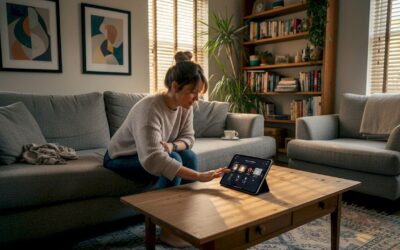
Lighting in architect-designed homes shapes far more than visual appeal. Research shows that architectural lighting reduces eye strain by 40%, directly influencing comfort and wellbeing. As 2026 unfolds, new lighting innovations offer homeowners sophisticated tools to enhance both the functionality and ambience of their spaces. This guide explores the key trends transforming how light interacts with architecture, helping you make informed decisions that complement your home’s design while supporting how you actually live.
Table of Contents
- Why Lighting Trends Are Critical For Architect-Designed Homes In 2026
- Core Lighting Innovations Defining Trends In 2026
- Layered Lighting And Workflow Strategies For Seamless Ambience
- Integrating Smart Lighting Control For Daily Living And Home Cinemas
- Explore Advanced Lighting Solutions For Your Architect Home
- Frequently Asked Questions About Lighting Trends 2026
Key takeaways
| Point | Details |
|---|---|
| Automation is central | Lighting automation and control systems define 2026 trends for architect homes. |
| Layered approach works | Combining ambient, task, and accent lighting creates versatile, elegant environments. |
| Smart integration saves | Home automation platforms optimise energy use while enhancing ambience seamlessly. |
| Technology meets design | Innovative fixtures blend advanced capabilities with architectural sensitivity. |
| Workflows matter | Understanding lighting workflows ensures effortless transitions between functional and relaxing modes. |
Why lighting trends are critical for architect-designed homes in 2026
Architect-designed properties demand lighting that respects and enhances the considered lines, materials, and spatial relationships that define them. Unlike standard residential spaces, these homes feature deliberate architectural gestures that lighting must complement rather than compete with. When done well, lighting becomes invisible yet transformative, guiding the eye and shaping how spaces feel throughout the day.
The right lighting approach addresses several practical concerns. Poor lighting creates eye strain, disrupts circadian rhythms, and can make even beautifully designed spaces feel uncomfortable. Conversely, thoughtful lighting reduces fatigue, supports natural sleep patterns, and allows architectural features to reveal themselves properly. The innovations emerging in 2026 help homeowners balance these wellness considerations with aesthetic integrity and energy efficiency.
Key benefits of staying current with lighting trends include:
- Reduced energy consumption through intelligent controls and efficient LED technology
- Enhanced comfort via adaptive lighting that responds to natural daylight patterns
- Preserved architectural clarity by integrating lighting unobtrusively
- Improved property value through considered, future-ready installations
- Greater flexibility to adjust ambience for different activities and times of day
The challenge lies in achieving this integration without compromising design intent. Many lighting solutions feel intrusive or visually cluttered, particularly in spaces where clean lines and material honesty matter. The trends shaping 2026 address this tension directly, offering technologies that deliver sophisticated control whilst remaining architecturally sympathetic.
Pro Tip: When evaluating lighting for your home, consider how fixtures and controls will appear five or ten years from now. Timeless design matters as much in lighting as it does in architecture itself.
Core lighting innovations defining trends in 2026
Several technological advances are reshaping what’s possible with residential lighting, particularly for homes where design quality matters. These innovations move beyond simple on/off functionality to create responsive, adaptive environments that align with how you actually use your spaces.
Smart lighting automation stands at the forefront of 2026 trends. Systems now incorporate sensors that detect occupancy, measure natural daylight levels, and adjust artificial lighting accordingly. This responsiveness means your home anticipates needs rather than requiring constant manual adjustment. Studies confirm that smart lighting systems cut energy use by up to 30% whilst simultaneously improving ambience, making them both practical and environmentally sound.
Advanced LED fixtures have evolved considerably. Modern units offer tuneable colour temperatures, allowing you to shift from cool, focused light during daytime work to warmer, relaxing tones for evening. The fixtures themselves have become more architecturally refined, with slimmer profiles and concealed mounting options that preserve visual clarity. Many now integrate directly with home automation platforms like Control4 or Lutron, enabling centralised control without additional visible hardware.

Integration capabilities represent another significant shift. Rather than operating in isolation, lighting systems now communicate with heating, audio, blinds, and security systems. This coordination enables sophisticated scenarios where multiple systems adjust together. Arriving home might trigger pathway lighting, adjust interior ambience, and open blinds, all from a single automation routine.
| Technology | Key Features | Primary Benefit |
|---|---|---|
| AI adaptive sensors | Learns patterns, adjusts automatically | Effortless optimisation without manual programming |
| Tuneable LED arrays | Adjustable colour temperature and intensity | Supports circadian rhythms and task-specific needs |
| Unified control platforms | Single interface for all lighting zones | Simplified operation across complex homes |
| Energy monitoring | Real-time consumption tracking | Informed decisions about usage and efficiency |
These innovations work together to create lighting that feels intuitive. Rather than managing individual switches or remembering complex sequences, you interact with your home through simple commands or preset scenarios that handle the details automatically.
Pro Tip: When specifying smart lighting, prioritise systems with open protocols that allow future expansion. Proprietary systems may limit your options as technology evolves.
Layered lighting and workflow strategies for seamless ambience
Creating effective lighting environments requires thinking beyond single fixtures or sources. A layered approach combines different lighting types, each serving specific purposes whilst contributing to an overall composition. This strategy proves particularly valuable in architect-designed homes where spatial quality and flexibility matter.
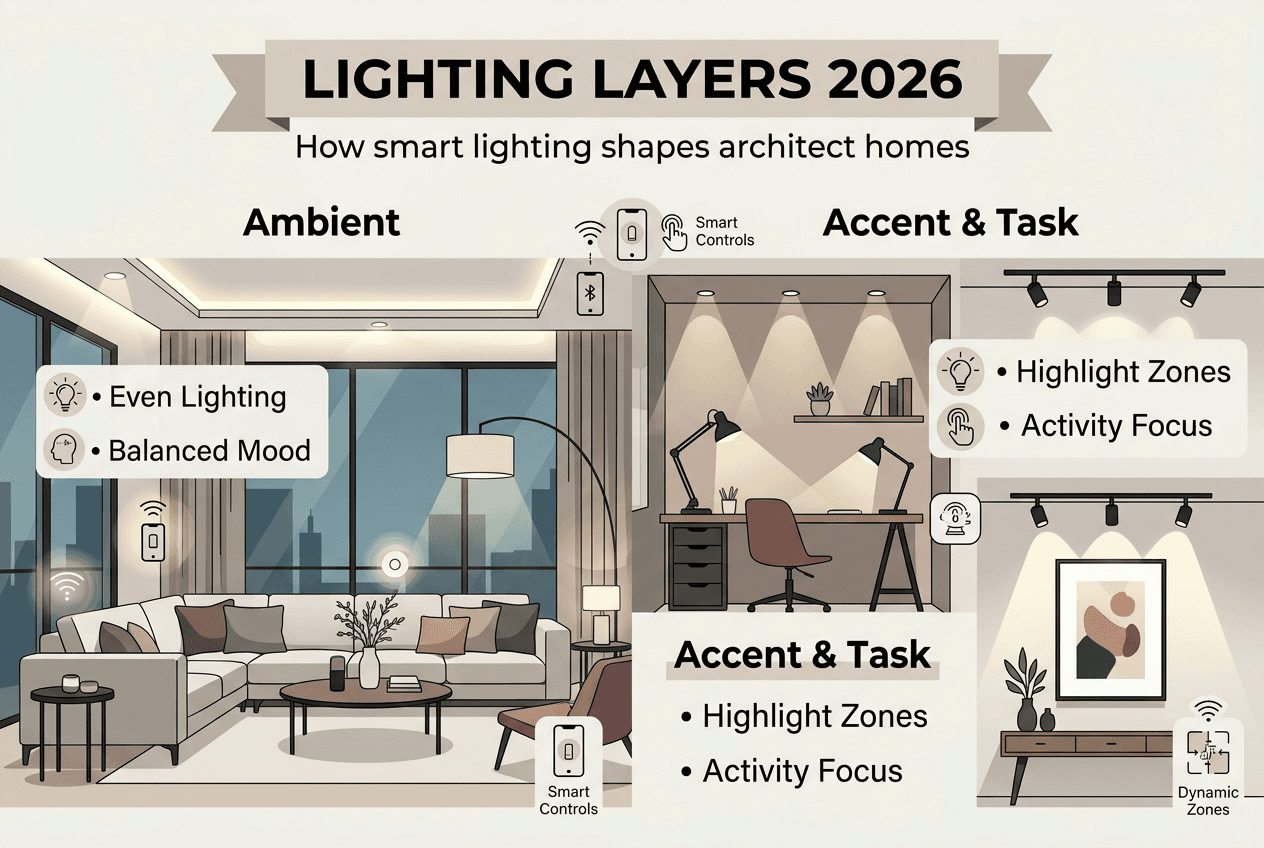
Three fundamental layers form the foundation:
Ambient lighting provides general illumination, establishing baseline visibility throughout a space. This might come from recessed ceiling fixtures, cove lighting, or carefully positioned uplights that wash walls and ceilings. The goal is even, comfortable light that doesn’t create harsh shadows or bright spots.
Task lighting addresses specific activities like reading, cooking, or working. These fixtures deliver focused illumination exactly where needed, reducing eye strain and improving functionality. Under-cabinet lights in kitchens, adjustable reading lights in living areas, and desk lamps in studies all serve this purpose.
Accent lighting highlights architectural features, artwork, or materials you want to emphasise. Narrow-beam spotlights, picture lights, and grazing fixtures that reveal texture fall into this category. Used judiciously, accent lighting adds depth and visual interest without overwhelming spaces.
Designing an effective lighting workflow involves several considered steps:
- Map how you use each space throughout the day, identifying different activities and moods you want to support.
- Determine which lighting layers each activity requires, noting intensity levels and colour temperatures that feel appropriate.
- Group fixtures into logical zones that can be controlled together, considering both architectural divisions and functional relationships.
- Create preset scenarios that adjust multiple zones simultaneously, making transitions between activities effortless.
- Test and refine these scenarios over several weeks, adjusting timing, intensity, and combinations based on actual use.
This workflow thinking, as detailed in the home lighting workflow guide, ensures your lighting system adapts to life rather than constraining it. The result feels natural because the system responds to genuine patterns rather than theoretical ideals.
| Layer Type | Advantages | Considerations |
|---|---|---|
| Ambient | Provides comfortable baseline, reduces harsh contrasts | Can feel flat if used alone, requires careful positioning |
| Task | Improves functionality, reduces eye strain for specific activities | May create isolated pools of light if not balanced with ambient |
| Accent | Adds visual interest, reveals architectural character | Overuse can feel busy, requires restraint and clear intent |
The most successful lighting schemes balance these layers thoughtfully, allowing each to contribute without dominating. Control systems make this balance accessible, letting you shift emphasis as needs change throughout the day.
Pro Tip: Coordinate lighting transitions with natural daylight patterns. Gradual adjustments that mirror sunrise and sunset feel more harmonious than abrupt changes.
Integrating smart lighting control for daily living and home cinemas
Smart lighting control transforms how you interact with your home, making sophisticated adjustments accessible through simple interfaces. Rather than managing individual circuits or remembering complex sequences, you work with intuitive controls that handle technical details automatically. This ease of use proves particularly valuable in architect-designed homes where multiple zones and varied activities create complexity.
Personalised scenes form the foundation of effective control. A morning scene might gradually increase light levels to support waking naturally, whilst an evening scene dims ambient lighting and emphasises warmer tones for relaxation. These scenes can be triggered manually through wall panels or smartphone apps, scheduled to activate automatically, or linked to other events like arriving home or starting a film.
Energy management becomes straightforward with smart controls. The system tracks consumption across zones, identifies opportunities for efficiency improvements, and can automatically reduce lighting in unoccupied spaces. This monitoring provides clear visibility into usage patterns without requiring constant attention.
Key benefits of integrated lighting control include:
- Enhanced convenience through voice commands and smartphone access from anywhere
- Improved ambience via precisely calibrated scenes for different activities and times
- Greater safety with automated lighting that responds to movement or security events
- Reduced energy waste through occupancy sensing and daylight harvesting
- Seamless integration with other home systems for coordinated automation
Home cinema environments particularly benefit from sophisticated lighting control. Proper cinema lighting enhances immersion by eliminating distracting reflections and glare whilst maintaining enough visibility for safe movement. As explained in guidance on the role of lighting control in smart homes, coordinated lighting dramatically improves viewing comfort and engagement.
When you start a film, the system can automatically dim room lighting, activate subtle floor-level guidance lights, and adjust any accent lighting to avoid screen reflections. This happens instantly and consistently, without manual adjustment or compromise. Between scenes or during intervals, lighting can increase slightly for conversation or refreshments, then return to cinema mode seamlessly.
Modern control interfaces work across multiple platforms. Wall-mounted keypads provide tactile control without requiring phones or tablets. Smartphone apps offer detailed adjustment and scheduling when you want more control. Voice assistants like Alexa or Google Assistant enable hands-free operation. The system responds consistently regardless of which interface you choose, making the technology accessible to everyone in your household.
The sophistication lies not in complexity but in how naturally the system responds to your needs. Morning routines, evening relaxation, entertaining guests, or watching films each have distinct lighting requirements. Smart control makes moving between these modes effortless, allowing your home to adapt rather than requiring you to adapt to it.
Explore advanced lighting solutions for your architect home
Transforming how light works in your home requires both technical expertise and design sensitivity. Morgan Wrona specialises in lighting automation tailored specifically to architect-designed properties, where preserving architectural integrity whilst delivering sophisticated functionality matters deeply. Our approach begins with understanding how you live, then designing systems that support those patterns naturally.
We handle everything from initial consultation through system design, installation, commissioning, and ongoing support. This ensures your lighting automation integrates seamlessly with your home’s architecture whilst remaining intuitive to use. Whether you’re planning a new build, undertaking renovation, or simply want to enhance existing spaces, we can help you implement the 2026 lighting trends that genuinely improve your daily experience. Our work with smart home lighting for architecturally designed homes demonstrates how technology and design can work together harmoniously. If you’d like to discuss how advanced lighting could work in your home, contact us or call 01793 315930.
Frequently asked questions about lighting trends 2026
What are the top lighting trends for architect homes in 2026?
Smart automation with adaptive sensors, tuneable LED fixtures, and integrated control platforms define 2026 trends. These technologies prioritise both architectural sensitivity and practical functionality, allowing lighting to enhance rather than compromise design intent.
How does smart lighting reduce energy consumption effectively?
Smart systems use occupancy sensors and daylight harvesting to provide light only when and where needed. This targeted approach, combined with efficient LED technology, can reduce consumption by up to 30% compared to traditional lighting whilst improving ambience and comfort.
Can lighting workflows be customised for different rooms and moods?
Yes, modern control systems allow you to create unlimited scenes tailored to specific activities and spaces. These workflows can be triggered manually, scheduled automatically, or linked to other home systems, making transitions between different lighting moods effortless and consistent.
What is the impact of lighting control on home cinema experience?
Proper lighting control eliminates screen glare and reflections whilst maintaining safe visibility for movement. Automated scenes ensure consistent, optimal conditions for viewing, dramatically improving immersion and comfort compared to manual adjustment or compromise.
Are these lighting solutions compatible with existing smart home systems?
Most current lighting platforms integrate with established smart home systems like Control4, Lutron, and others. This compatibility ensures lighting works cohesively with heating, audio, blinds, and security systems, enabling sophisticated whole-home automation through unified control.
How long does professional lighting automation installation typically take?
Installation duration varies based on home size and system complexity, but most projects complete within one to three weeks. This includes physical installation, programming, commissioning, and thorough testing to ensure everything operates as intended before handover.
Recommended
- Types of home lighting: choose the best for 2026
- Lighting Design Tips for Modern Homes: Enhance Function
- Smart home lighting for architecturally designed homes
- Role of architectural lighting: 40% less eye strain proven