Many architect-designed homes suffer from harsh, unwelcoming lighting because they rely on a single ceiling fixture or excessive downlights. This creates flat, uninviting spaces that fail to showcase the architectural detail you’ve invested in. By applying layered lighting principles combining ambient, task, and accent sources you can transform your home’s atmosphere, enhance functionality, and bring warmth to every room.
Table of Contents
- Selection Criteria For Effective Home Lighting Design
- Layered Lighting Design: Ambient, Task, And Accent
- Colour Temperature And Atmosphere
- Integrating Natural Light With Artificial Lighting
- Avoiding Common Lighting Mistakes
- Room-Specific Lighting Tips For Architect Homes
- Fixture Scale And Placement Considerations
- Planning And Consultation
- Summary Comparison: Lighting Design Factors
- Situational Recommendations For Lighting Choices
- Discover Expert Home Lighting Solutions
- Frequently Asked Questions
Key Takeaways
| Point | Details |
|---|---|
| Layered lighting | Combining ambient, task, and accent sources creates flexible, adaptable room moods. |
| Warm white bulbs | Choose 2700K colour temperature for living areas to achieve cosy, welcoming atmospheres. |
| Natural light integration | Harmonising daylight with artificial lighting improves spatial perception and emotional wellbeing. |
| Early professional consultation | Engaging lighting designers after floorplans are agreed prevents costly installation mistakes. |
| Appropriate fixture scale | Selecting proportional fixtures enhances architectural features in larger homes. |
Selection Criteria for Effective Home Lighting Design
Choosing the right lighting for your architect home requires understanding several essential factors that work together to create comfortable, functional spaces. These criteria form the foundation of any successful lighting design checklist and determine how well your lighting serves daily needs.
The three primary lighting types each serve distinct purposes. Ambient lighting provides overall illumination, filling a room with general brightness. Task lighting focuses on specific activities like reading, cooking, or working. Accent lighting emphasises architectural features, artwork, or decorative elements.
Colour temperature significantly affects how a room feels. Measured in Kelvins, this determines whether light appears warm or cool. For main living areas, bedrooms, and dining spaces, warm white bulbs around 2700K create inviting, relaxing atmospheres that support comfortable living.
Natural daylight integration extends beyond simply having windows. Planning artificial lighting to complement rather than compete with daylight patterns enhances both spatial perception and mood throughout the day. Expert lighting design tips emphasise this harmony as critical to wellbeing.
Fixture scale matters especially in larger architect homes. Undersized pendants or wall lights disappear in generous room proportions, while appropriately sized fixtures create visual balance and draw attention to architectural intentions.
Pro Tip: Lighting designers should be consulted early after floorplans are agreed for optimal fixture positioning and budget planning. Early involvement prevents expensive retrofitting and ensures lighting infrastructure integrates seamlessly with construction.
Key selection criteria to consider:
- Define lighting needs for each room based on activities and desired atmosphere
- Choose warm white bulbs for relaxation spaces, neutral tones for work areas
- Plan fixture locations that complement furniture placement and traffic flow
- Budget for quality dimmers and control systems from the start
- Document decisions clearly with your design team
Layered Lighting Design: Ambient, Task, and Accent
Layered lighting transforms single-purpose rooms into adaptable spaces that respond to different times of day and activities. Effective home lighting design includes layered lighting: ambient, task, and accent to create depth and versatility. This approach prevents the flat, uninspiring effect of relying on one central ceiling fixture.
Ambient lighting establishes the overall brightness level. This foundational layer typically comes from ceiling fixtures, recessed downlights, or wall-washing techniques that bounce light off surfaces. It enables safe movement through spaces and provides baseline visibility.
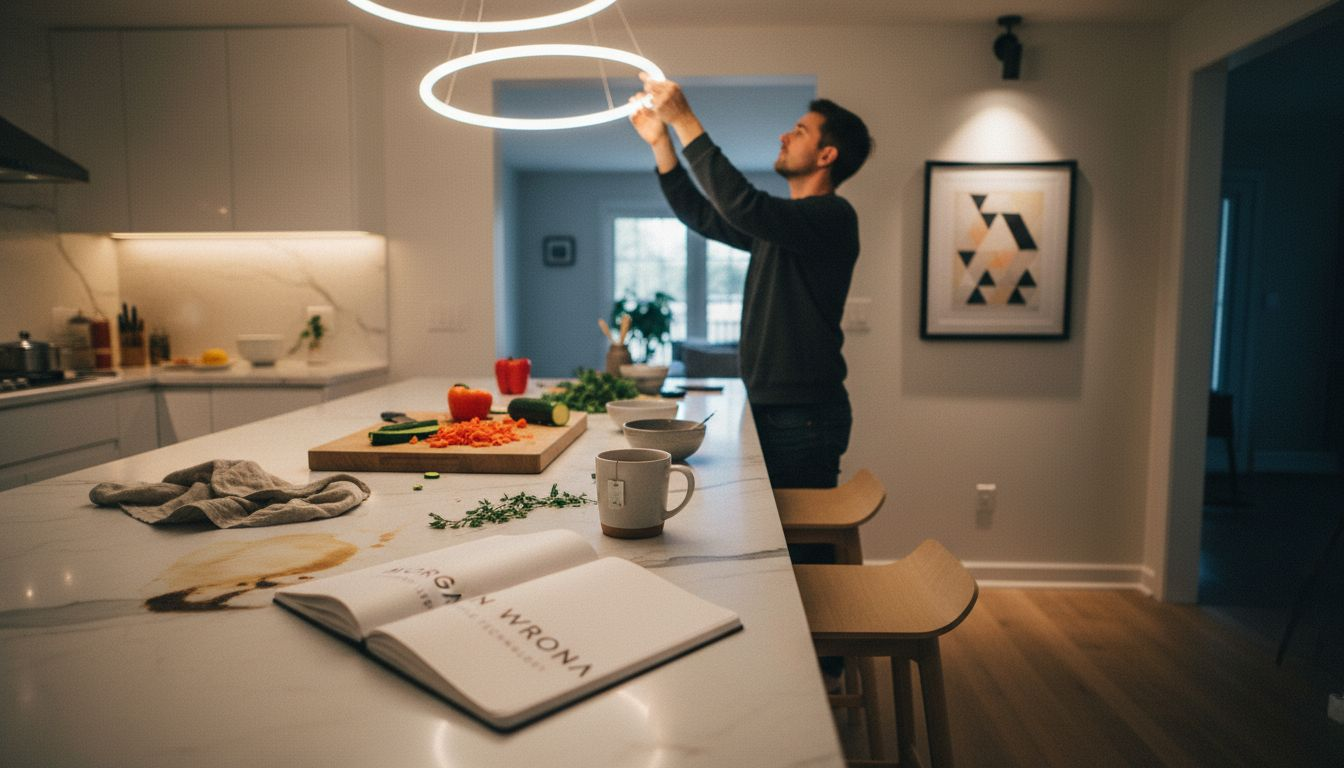
Task lighting addresses specific functional needs. Positioned where activities happen, this focused illumination supports reading, food preparation, grooming, or detailed work without straining eyes. Desk lamps, undercabinet kitchen lighting, and bathroom mirror lights exemplify task sources.
Accent lighting adds drama and visual interest. Directed at architectural features, art, or decorative objects, this layer highlights what makes your home special. Picture lights, uplighters on columns, and narrow-beam spots create focal points that guide attention.
The difference between single-source and layered approaches becomes clear when compared:
| Approach | Effect | Flexibility | Atmosphere |
|---|---|---|---|
| Downlighting only | Harsh shadows, flat appearance | Limited mood options | Clinical, unwelcoming |
| Layered lighting | Depth, visual interest, balanced illumination | Multiple scenes for different needs | Warm, architecturally aware |
Applying lighting design principles means combining these layers thoughtfully. In a living room, ceiling fixtures provide ambient light, table lamps offer task lighting for reading, and wall-mounted uplighters accent architectural details.
Pro Tip: Install dimmers on every circuit and consider multi-zone controls. This allows you to adjust each lighting layer independently, creating different scenes for entertaining, relaxing, or concentrating. The flexibility proves invaluable as your needs change throughout the day.
Colour Temperature and Atmosphere
Colour temperature, measured in Kelvins, dramatically influences how comfortable and inviting your home feels. Understanding this spectrum helps you avoid the common mistake of installing bulbs that create cold, unwelcoming spaces despite having adequate brightness.
The Kelvin scale runs from warm (lower numbers) to cool (higher numbers). Candlelight measures around 1800K, giving that familiar warm glow. Daylight sits near 5500K, appearing much cooler and bluer. Warm white bulbs around 2700K create a cosy, welcoming atmosphere suitable for living rooms and bedrooms in UK homes.
Cool white or daylight bulbs above 4000K produce harsh, clinical environments that work against relaxation. These temperatures suit workshops, garages, or utility spaces where accurate colour rendering matters more than ambience. In living areas, they make spaces feel institutional rather than homely.
Expert interior designers consistently recommend warm lighting for residential spaces. As Kate Watson-Smyth notes, warm white bulbs support the relaxing atmosphere most homeowners seek in their main living areas. This simple choice makes rooms feel instantly more inviting.
Room-specific colour temperature guidance:
- Living rooms: 2700K for cosy, relaxing evenings
- Bedrooms: 2400K to 2700K to promote restful sleep
- Kitchens: 2700K to 3000K balancing warmth with task visibility
- Bathrooms: 3000K for accurate grooming while maintaining warmth
- Home offices: 3000K to 3500K for alertness without harshness
The lighting control workflow becomes simpler when all bulbs within open-plan areas share consistent colour temperature. Mixing temperatures creates visual discomfort and disrupts the cohesive atmosphere you’re trying to achieve.
“Warm white lighting around 2700 Kelvin transforms how your home feels, creating the welcoming atmosphere essential for comfortable daily living in architect-designed spaces.”
Integrating Natural Light with Artificial Lighting
Natural daylight profoundly affects how spacious and comfortable your home feels. Natural daylight significantly improves perceived space size and mood, and should be optimally integrated with artificial lighting. Planning artificial sources to complement rather than compete with daylight creates harmonious illumination throughout the day.
Architect-designed homes often feature generous windows and skylights that flood interiors with natural light. Your artificial lighting plan should acknowledge these patterns, placing fixtures where daylight diminishes rather than where it already reaches. This prevents wasting energy and avoids conflicting light sources that create visual confusion.
Observe how daylight moves through your rooms across different times and seasons. Morning sun might fill an east-facing kitchen, while evening light bathes a west-facing living room. Position artificial lighting to fill gaps when natural light fades, maintaining consistent ambience as the day progresses.
Practical strategies for balancing natural and artificial light:
- Install daylight sensors that automatically adjust artificial lighting levels based on available natural light
- Position task lighting away from windows to avoid glare and screen reflections
- Use warm white bulbs that complement natural daylight’s colour rather than competing with cooler tones
- Plan accent lighting for architectural features that daylight already highlights during the day
- Consider blackout solutions for bedrooms where morning sun might disrupt sleep
The relationship between natural and artificial light extends beyond functionality. Daylight’s dynamic quality, changing with weather and seasons, connects you to the outside world. Artificial lighting that respects this rhythm rather than fighting it supports your natural circadian patterns and overall wellbeing.
Avoiding Common Lighting Mistakes
Many architect homes suffer from preventable lighting errors that diminish comfort and fail to showcase architectural investment. Understanding these pitfalls helps you create balanced illumination that enhances rather than detracts from your living experience.
Excessive downlighting creates harsh lighting; single-source ceiling lights flatten room appearance; balance with layered lighting for warmth and interest. Rows of recessed downlights might seem practical, but they cast unflattering shadows on faces, create glare, and make rooms feel like commercial spaces rather than homes.
Relying on a single central ceiling fixture represents another common error. This approach provides adequate brightness for safety but produces monotonous, flat illumination that offers no flexibility for different moods or activities. Every room appears the same regardless of whether you’re entertaining, working, or relaxing.
Poor lighting reduces architectural impact. Features you’ve carefully specified, sculptural staircases, textured walls, or beautiful joinery disappear under uniform downlighting. Without accent lighting to create shadows and highlights, architectural depth vanishes.
The role of lighting control becomes critical in remedying these issues. Even if existing lighting lacks proper layering, intelligent control systems can group circuits creatively, dim excessive downlights, and create scenes that add visual interest.
Common mistakes to avoid:
- Installing too many recessed downlights spaced evenly across ceilings
- Choosing cool white bulbs for living areas and bedrooms
- Neglecting dimmer switches on all circuits
- Positioning task lighting poorly for work surfaces
- Ignoring accent lighting opportunities for architectural features
- Installing switches in inconvenient locations
- Forgetting exterior lighting until construction completes
Room-Specific Lighting Tips for Architect Homes
Tailoring lighting to how you actually use each room ensures both functionality and atmosphere. These practical recommendations address the specific needs of different spaces within architect-designed homes.
Kitchens demand excellent task lighting for food preparation safety and efficiency. Undercabinet lighting improves task lighting for food preparation and adds atmosphere when dimmable. Combine this with ceiling-mounted downlights positioned directly over work surfaces, not in the middle of walkways.
Living rooms benefit from flexibility. Dimmable ceiling fixtures provide ambient light, while table and floor lamps create pools of warmth for reading or conversation. Accent lighting directed at artwork, shelving, or architectural features adds visual layers that transform atmosphere.
Bedrooms require soft, relaxing lighting that promotes restful sleep. Bedside lamps with warm white bulbs offer task lighting for reading without disturbing partners. Avoid overhead fixtures directly above the bed, which cast unflattering light and create harsh shadows.
| Room | Ambient Lighting | Task Lighting | Accent Lighting |
|---|---|---|---|
| Kitchen | Dimmable ceiling downlights | Undercabinet LED strips | Pendant over island |
| Living Room | Ceiling fixtures | Table/floor lamps | Uplighters, picture lights |
| Bedroom | Soft ceiling fixture | Bedside lamps | Wall-mounted reading lights |
| Bathroom | Ceiling downlights | Mirror lighting | LED strip under vanity |
Applying step by step lighting design room by room ensures you address specific needs systematically rather than making rushed decisions during construction.
Pro Tip: Create lighting zones that group fixtures by function rather than by room. This allows independent control of ambient, task, and accent layers across open-plan spaces, giving you precise atmosphere control throughout connected living areas.
Fixture Scale and Placement Considerations
Appropriately sized and positioned fixtures complement architectural proportions while providing effective illumination. This balance proves especially important in larger architect homes where undersized lighting disappears visually.
Lighting fixture scale is important; larger fixtures create balance in bigger rooms typical in architect homes than undersized options. A single small pendant in a generous ceiling height looks lost and fails to anchor the space visually.
For dining areas, pendant diameter should measure roughly half the table width. In double-height spaces, consider multiple pendants or larger statement pieces that fill the vertical volume. Scale fixtures to room proportions, not to what might work in typical homes.
Placement determines how effectively lighting serves its purpose. Position downlights 90 to 120 centimetres from walls to graze surfaces and reveal texture. Space them based on beam angle and ceiling height, not arbitrary grid patterns. Task lighting should illuminate work surfaces without casting your shadow onto the area.
Strategic placement highlights architectural intentions:
- Uplight structural columns or beams to emphasise vertical elements
- Graze textured walls at acute angles to reveal surface depth
- Position spots to wash feature walls without visible fixtures
- Layer multiple smaller fixtures rather than single large sources
- Maintain symmetry where architecture demands it, break it deliberately where appropriate
- Consider sight lines from adjacent rooms in open-plan layouts
Fixture placement interacts with furniture arrangement. Planning large scale fixtures requires knowing where sofas, tables, and artwork will sit. This coordination between lighting and interior design happens most effectively when both disciplines collaborate early.
Planning and Consultation
Successful lighting emerges from careful planning and professional collaboration rather than last-minute decisions made under construction pressure. Engaging specialists early prevents expensive mistakes and ensures lighting infrastructure integrates seamlessly with architectural design.
Lighting designers should be consulted early after floorplans are agreed for optimal fixture positioning and budget planning. This timing allows proper coordination between electrical roughing-in, architectural details, and control system requirements. Waiting until plastering begins forces compromises that undermine the final result.
Discussing your lifestyle with lighting professionals helps them design systems that support how you actually live. Share daily routines, entertaining habits, and specific concerns like glare sensitivity or preference for warm atmospheres. The more context they understand, the better they can tailor recommendations.
Furniture placement significantly affects lighting requirements. Knowing where sofas, dining tables, and beds will sit determines ideal task lighting positions and avoids placing downlights directly over seating. If furniture plans remain uncertain, design flexibility through multiple circuits and strategic junction box placement.
“Engaging lighting specialists after floorplans are finalised but before construction begins represents the ideal timing. This window allows coordinated planning between architecture, electrical, and lighting design, preventing the costly retrofits that result from late-stage decisions.”
Planning steps for homeowners:
- Schedule lighting consultation once floorplans are agreed but before construction starts
- Share detailed furniture layouts and room usage intentions
- Discuss budget allocation between fixtures, control systems, and installation
- Review lighting plans alongside electrical drawings for coordination
- Specify dimming and control requirements circuit by circuit
- Plan for future flexibility through spare capacity and accessible junction boxes
Summary Comparison: Lighting Design Factors
Reviewing core lighting concepts side by side clarifies how different approaches affect your home’s atmosphere and functionality.
| Factor | Recommended Approach | Common Mistake | Impact |
|---|---|---|---|
| Lighting layers | Ambient + task + accent combined | Downlighting only | Creates depth vs. flat appearance |
| Colour temperature | Warm white 2700K | Cool white 4000K+ | Cosy vs. clinical atmosphere |
| Natural light integration | Complement daylight patterns | Ignore daylight variation | Harmonious vs. competing sources |
| Fixture scale | Proportional to room size | Undersized selections | Architectural balance vs. visual weakness |
| Common errors | Layered, dimmable design | Excessive single-source downlights | Flexible ambience vs. harsh glare |
This comparison highlights why layered lighting using warm white bulbs, properly scaled fixtures, and thoughtful placement creates more comfortable, adaptable homes than conventional approaches relying on recessed downlights alone.
Situational Recommendations for Lighting Choices
Applying lighting principles to specific situations helps translate concepts into practical implementation for your architect home.
-
Open-plan living areas: Install separately dimmable circuits for ambient ceiling fixtures, task lighting near seating, and accent lighting on features. This three-layer approach allows different zones within connected spaces to function independently while maintaining visual cohesion.
-
Kitchen work zones: Combine dimmable undercabinet LED strips for task lighting with ceiling downlights positioned over islands and preparation areas. Add pendant fixtures over dining areas within kitchen spaces to define zones and create focal points.
-
Bedroom relaxation: Use warm white bedside lamps as primary lighting, supplemented by soft ceiling fixtures on dimmers for general illumination. Avoid bright overhead lighting and cool colour temperatures that interfere with sleep preparation.
-
Flexible entertaining spaces: Implement multi-zone control systems that allow preset scenes for different activities. Bright, even lighting for cleaning, medium ambient with accent highlights for dining, and low atmospheric lighting for conversation.
-
Architectural feature emphasis: Position narrow-beam accent fixtures to uplight columns, graze textured walls, or highlight sculptural elements. Use warm white sources to maintain atmosphere while drawing attention to design details.
-
Transitional spaces: Treat hallways and staircases as opportunities for dramatic lighting rather than purely functional areas. Wall-washing techniques and carefully positioned downlights create welcoming circulation paths that connect living spaces cohesively.
Discover Expert Home Lighting Solutions
Applying these lighting principles in your architect home becomes simpler with professional guidance tailored to your specific needs. Morgan Wrona specialises in lighting control and automation systems that bring flexibility and sophistication to how you experience your home daily.

Our home lighting workflow guide walks you through creating adaptable atmospheres that respond to different times of day and activities. We focus on integrating lighting automation solutions that feel intuitive rather than complicated, supporting how you naturally use your spaces.
The lighting control workflow we develop with clients ensures every room offers the atmosphere you need when you need it. If you would like to discuss how this could work in your home, call 01793 315930 or download our brochure.
Frequently Asked Questions
What is layered lighting and why is it important?
Layered lighting combines ambient, task, and accent sources to create flexible illumination that adapts to different activities and moods. This approach prevents the harsh, flat appearance that results from relying on single ceiling fixtures or excessive downlights alone.
How does colour temperature affect my home’s ambience?
Colour temperature measured in Kelvins determines whether light feels warm or cool. Warm white bulbs around 2700K create cosy, relaxing atmospheres suitable for living rooms and bedrooms, while cool white above 4000K produces clinical, unwelcoming environments that work against comfortable living.
When should I involve a lighting designer in my home project?
Engage lighting specialists after floorplans are agreed but before construction begins. Early consultation prevents costly installation mistakes, ensures proper coordination with electrical infrastructure, and allows lighting to integrate seamlessly with furniture placement and architectural features.
What are common lighting mistakes to avoid in architect homes?
Excessive downlighting creates harsh glare and unflattering shadows. Single central ceiling fixtures produce monotonous, flat illumination without flexibility. Both approaches fail to showcase architectural detail and lack the layered depth that makes homes feel warm and inviting.