When your architect mentions ‘ambient layers’ or your designer specifies ‘beam angles’, do you find yourself nodding politely whilst feeling uncertain? You’re not alone. Many homeowners with architect-designed properties encounter unfamiliar lighting terminology during planning discussions, which can make confident decision-making difficult. Understanding these essential terms transforms confusion into clarity, empowering you to communicate effectively with design professionals and make informed choices that enhance how light shapes your daily living. This guide unpacks the vocabulary of architectural lighting in straightforward language, helping you navigate lighting conversations with confidence and create spaces that truly work for your home.
Table of Contents
- Key takeaways
- Understanding key architectural lighting terms
- Comparing lighting types and their architectural roles
- Essential terminology for lighting controls and automation
- Applying architectural lighting terminology to enhance your home
- Enhance your home lighting with expert solutions
- Frequently asked questions
Key Takeaways
| Point | Details |
|---|---|
| Clear lighting terminology aids communication | Understanding essential lighting terms improves dialogue with architects and designers. |
| Lighting types explained | Ambient, task and accent lighting each serve a distinct architectural function. |
| Fixture options described | Recessed, pendants, wall sconces and uplights influence both appearance and distribution of light. |
| Technical metrics matter | Beam angle colour temperature and lumen output guide design decisions and comfort. |
Understanding key architectural lighting terms
Architectural lighting terminology forms the foundation for meaningful conversations with designers. When you grasp these essential terms, you can articulate what you want and understand what professionals propose. Let’s clarify the vocabulary that matters most for your home.
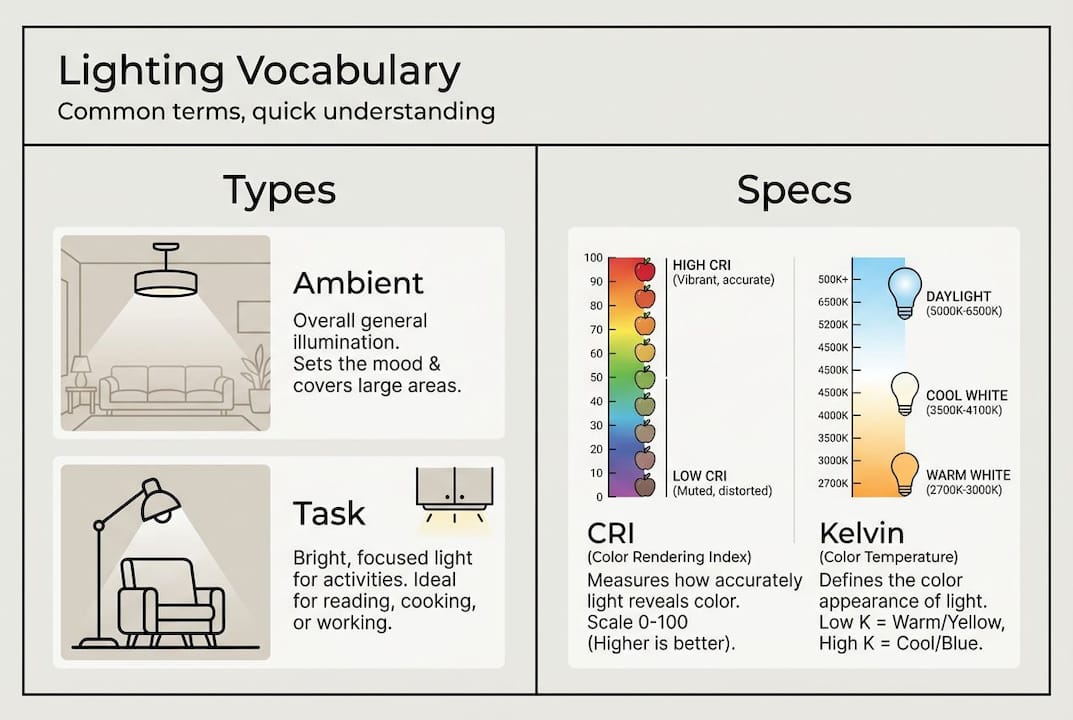
Three primary lighting types define how spaces function. Ambient lighting provides overall illumination, filling rooms with general light. Task lighting focuses on specific activities like reading or food preparation. Accent lighting highlights architectural features or artwork, adding visual interest. Each serves a distinct purpose in creating balanced, functional spaces.
Fixture types describe the physical form lighting takes. Recessed fixtures sit flush with ceilings, creating clean lines. Pendants hang downward, making design statements whilst directing light. Wall sconces mount to vertical surfaces, providing layered illumination. Uplights direct beams upward, washing ceilings and walls with indirect glow. Understanding these options helps you visualise how light will physically appear in your rooms.
Lighting controls determine how you interact with your system. Dimmers adjust brightness levels, allowing you to shift ambience throughout the day. Sensors detect occupancy or daylight, automatically adjusting output for efficiency. Smart integrations connect lighting to home automation systems, enabling scenes and schedules. These controls transform static lighting into responsive systems that adapt to your needs.
Technical specifications shape how light appears and performs. Beam angle describes how widely or narrowly light spreads from a fixture. Colour temperature measures the warmth or coolness of light, expressed in Kelvin. Lumen output quantifies brightness, replacing the familiar wattage metric. When you understand these measurements, you can specify exactly how you want spaces to feel. Research shows that understanding architectural lighting terminology helps reduce eye strain and improve comfort by up to 40%, making this knowledge directly beneficial to your daily experience.
Exploring types of home lighting and reviewing lighting design tips for modern homes provides additional context for applying these terms in real situations.
Comparing lighting types and their architectural roles
Each lighting type serves specific architectural purposes. Understanding their distinct roles helps you plan balanced schemes that support both function and atmosphere. The differences matter because combining types creates versatile spaces that adapt to changing needs throughout the day.
Ambient lighting establishes the baseline illumination level in any room. It fills space with general light, allowing safe movement and basic visibility. In architectural contexts, ambient sources often include recessed ceiling fixtures, cove lighting, or large pendants that distribute light broadly. This layer forms the foundation upon which other lighting builds.
Task lighting concentrates brightness where activities occur. Kitchen worktops, reading chairs, and bathroom mirrors all benefit from focused illumination that prevents eye strain during detailed work. Architectural task lighting integrates seamlessly into cabinetry, shelving, or furniture, providing light exactly where needed without visual clutter.

Accent lighting introduces drama and emphasis. It directs attention to artwork, architectural details, or textural surfaces, creating visual hierarchy within rooms. This layer operates at higher intensity ratios compared to ambient levels, typically three to five times brighter than surrounding light, ensuring features stand out effectively.
| Lighting type | Primary purpose | Typical fixtures | Key benefit | Ideal application |
|---|---|---|---|---|
| Ambient | Overall illumination | Recessed downlights, cove lighting, large pendants | Creates baseline visibility | Living rooms, bedrooms, hallways |
| Task | Focused work light | Under-cabinet strips, reading lamps, mirror lighting | Reduces eye strain during activities | Kitchens, studies, bathrooms |
| Accent | Highlighting features | Track spots, picture lights, wall washers | Adds visual interest and depth | Galleries, feature walls, architectural details |
Balancing these layers requires thoughtful planning. Consider how rooms function at different times. Morning kitchens need bright task lighting for meal preparation, but evening dining benefits from dimmed ambient warmth. Bedrooms require soft ambient light for relaxation yet focused task lighting for reading. Hallways combine ambient safety lighting with accent features that guide movement.
Pro Tip: Layer all three types in main living spaces to create versatile ambience that adapts throughout the day, whilst single-purpose rooms like utility areas may only require ambient and task lighting.
The architectural lighting types influence eye strain reduction and atmosphere significantly. Learning about home lighting design layers and fundamental lighting design principles helps you apply this knowledge when planning your spaces.
Essential terminology for lighting controls and automation
Controls transform static lighting into responsive systems that adapt to your lifestyle. Understanding control terminology helps you specify systems that enhance comfort whilst improving energy efficiency. These concepts matter because they determine how intuitively your lighting responds to daily patterns.
Dimming adjusts light output from full brightness to subtle glow. Modern LED dimmers operate smoothly without flicker, allowing you to fine-tune ambience for any activity. Dimming extends lamp life and reduces energy consumption, making it both practical and economical.
Zoning divides lighting into controllable groups. Rather than switching entire rooms on or off, zoning lets you activate specific areas independently. A large kitchen might have separate zones for worktops, dining, and ambient ceiling lights, each controlled individually to match how you use the space.
Timers and schedules automate lighting based on time of day. Morning routines might gradually increase brightness to ease waking, whilst evening schedules dim lights progressively as bedtime approaches. These automated patterns reduce the need for manual adjustment, making lighting feel effortless.
Sensors detect conditions and respond accordingly. Occupancy sensors switch lights on when you enter rooms and off when spaces empty, preventing wasted energy. Daylight sensors measure natural light levels and adjust artificial output to maintain consistent brightness, compensating for changing weather and seasons.
Automation concepts extend control capabilities further. Scenes combine multiple lighting zones into single-button presets. A ‘dinner party’ scene might dim dining pendants, accent feature walls, and soften ambient levels simultaneously. Schedules run scenes automatically at set times. Integration with smart home systems allows voice control, smartphone adjustment, and coordination with other home functions like heating or security.
Common control systems in architect-designed homes include:
- Lutron systems offering refined dimming and extensive zoning capabilities
- Control4 platforms integrating lighting with whole-home automation
- Rako wireless controls providing flexible retrofit solutions
- KNX protocols supporting complex, scalable installations
- Simple smart switches and hubs for straightforward automation needs
Pro Tip: Specify controls during the design phase rather than retrofitting later, as integrated systems require planning for wiring, switch locations, and central processors.
Research confirms that lighting control plays a crucial role in shaping daily living comfort in smart homes. Exploring smart home lighting for architect homes and lighting automation home experience provides deeper insight into how these systems function in practice.
Applying architectural lighting terminology to enhance your home
Knowing lighting terminology means little without understanding how to apply it. This practical guidance helps you use your vocabulary during planning, ensuring lighting outcomes match your expectations. The goal is confident communication that leads to spaces you genuinely enjoy living in.
Follow this workflow when planning lighting:
- Identify how each room functions throughout the day, noting activities and mood requirements
- Specify which lighting types you need in each space using correct terminology
- Discuss control requirements, explaining desired dimming, zoning, and automation features
- Review fixture proposals, asking about beam angles, colour temperatures, and lumen outputs
- Confirm placement locations, ensuring task lighting aligns with work surfaces and accent lighting highlights intended features
- Request lighting scenes that match your lifestyle, describing how you want spaces to feel at different times
- Verify commissioning includes programming and adjustment to achieve specified outcomes
This structured approach, supported by evidence that a structured lighting workflow helps achieve seamless ambience, ensures nothing gets overlooked during design discussions.
| Common term | Your action | Questions to ask designers |
|---|---|---|
| Ambient lighting | Define overall brightness preferences | What lumen output will provide comfortable baseline illumination without glare? |
| Task lighting | Identify work surfaces needing focus | How will you ensure adequate brightness for detailed activities without shadows? |
| Colour temperature | Specify warmth or coolness desired | Which Kelvin values create the atmosphere I want in different rooms? |
| Dimming | Explain flexibility needed | What dimming range will the specified fixtures achieve smoothly? |
| Zoning | Map independent control areas | How many zones do you recommend for intuitive control in this space? |
| Scenes | Describe lifestyle patterns | Can we programme scenes for morning routines, evening relaxation, and entertaining? |
When reviewing lighting proposals, use terminology to ask precise questions. Rather than saying “I want it brighter,” specify “Can we increase the lumen output in the task lighting zone?” Instead of “warmer light,” request “a colour temperature around 2700K for relaxed ambience.” This precision eliminates guesswork and ensures your vision translates accurately.
Understanding terms also helps you evaluate trade-offs. If a designer suggests 3000K instead of your preferred 2700K, you can discuss how that 300-degree shift affects warmth. When beam angles come up, you’ll grasp why narrow spots suit accent lighting whilst wide floods work better for ambient coverage. This knowledge makes you an informed collaborator rather than a passive recipient of design decisions.
The lighting design workflow guide and lighting design checklist for homeowners provide additional frameworks for applying terminology systematically throughout your project.
Enhance your home lighting with expert solutions
Understanding architectural lighting terminology empowers you to articulate what you want, but implementing sophisticated lighting systems requires specialist knowledge. Morgan Wrona designs tailored smart lighting solutions for architect-designed homes, integrating automation that responds to how you actually live. Our approach combines architectural sensitivity with technical expertise, ensuring lighting enhances both aesthetics and daily comfort whilst improving energy efficiency.

We work alongside your architects and designers, translating lighting concepts into fully integrated systems. From initial consultation through commissioning and aftercare, our process ensures lighting terminology becomes reality. Early involvement allows us to plan infrastructure, specify appropriate controls, and programme scenes that match your lifestyle patterns seamlessly.
Exploring our resources on smart home lighting for architect homes, lighting automation home experience, and the home lighting workflow guide provides deeper insight into how we approach lighting design. If you would like to discuss how expert lighting solutions could work in your home, call 01793 315930 or download our brochure.
Frequently asked questions
What is architectural lighting terminology?
Architectural lighting terminology refers to the specialised vocabulary professionals use to describe lighting design concepts, fixture types, control systems, and technical specifications in architect-designed homes. These terms enable precise communication between homeowners, architects, lighting designers, and installers, ensuring everyone shares a common understanding of project requirements and outcomes.
Why does understanding lighting terminology matter for homeowners?
Clear lighting terminology understanding empowers you to articulate preferences accurately and comprehend technical proposals without confusion. When you know what terms mean, you can ask informed questions, evaluate design options confidently, and ensure the lighting you receive matches your expectations. This knowledge prevents costly misunderstandings and results in spaces that genuinely support how you live.
What does CRI mean in lighting specifications?
CRI stands for Colour Rendering Index, measuring how accurately light sources reveal true colours compared to natural daylight. Higher CRI values, typically 90 or above in quality residential installations, ensure colours appear natural and vibrant. Lower CRI can make spaces feel dull or cause colours to look distorted, particularly noticeable in kitchens, wardrobes, and areas where colour accuracy matters.
How does correlated colour temperature affect room ambience?
Correlated colour temperature, measured in Kelvin, describes whether light appears warm or cool. Lower values around 2700K produce warm, amber tones suited to relaxation spaces like bedrooms and living rooms. Higher values near 4000K create crisp, energising light appropriate for task-focused areas like studies or bathrooms. Choosing appropriate colour temperatures for each space significantly influences how comfortable and functional rooms feel.
Can learning lighting terms really improve my home’s comfort?
Absolutely. When you understand terminology, you can specify lighting that reduces eye strain, supports activities effectively, and creates ambience that enhances wellbeing. Studies demonstrate that appropriate architectural lighting reduces eye strain by up to 40%, directly improving daily comfort. Knowledge transforms lighting from an afterthought into a designed element that actively supports how you live, making your home more enjoyable and functional.
How does architectural lighting terminology improve my home design?
Correct term usage improves specification accuracy, ensuring designers understand exactly what you want and can deliver lighting that matches your vision. When you specify “3000K recessed downlights with 40-degree beam angles for ambient lighting” rather than “some ceiling lights,” you eliminate ambiguity and receive precisely what you intended. This clarity prevents redesigns, reduces installation errors, and results in lighting that truly enhances your spaces.
What benefits come from understanding lighting terminology?
Benefits include enhanced ambience tailored to your preferences, reduced energy consumption through appropriate specification, and improved eye comfort from properly planned lighting levels. Understanding terms also supports customised lighting plans that fit architect-designed homes, where generic solutions rarely work well. You gain confidence during design discussions and avoid the frustration of lighting that doesn’t meet your needs.
How does Lighting terminology knowledge support collaboration with designers?
Shared vocabulary creates productive dialogue where you and your designer speak the same language. Rather than vague descriptions like “brighter” or “more atmospheric,” you can discuss specific lumen outputs, colour temperatures, and control capabilities. This precision accelerates decision-making, reduces misunderstandings, and ensures your lighting reflects your lifestyle rather than generic assumptions. The lighting design principles guide explores this collaborative approach further.
Where can I learn more about architectural lighting for my home?
Comprehensive guides and articles on lighting design workflows, smart home integration, and practical application provide trustworthy starting points. The lighting design workflow guide offers systematic frameworks, whilst resources on smart home lighting for architect homes explain how technology enhances lighting outcomes. Consulting lighting professionals who specialise in architectural homes provides personalised advice tailored to your specific project and requirements.