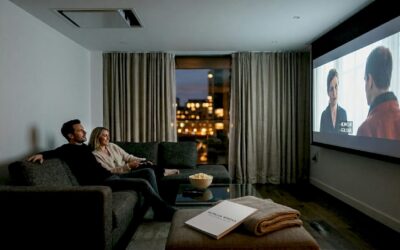
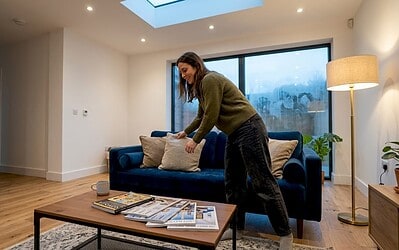
Many architecturally designed homes are fitted with beautiful fixtures that never quite fulfil their potential. The lighting works, but it does not work together. Rooms feel inconsistent, routines feel manual, and the architecture itself is left underserved. What integrated lighting offers is something quite different: a considered system where every source of light, natural and artificial, is designed to function as one. Laboratory tests show that integrated systems with smart controls and daylight dimming achieve between 20 and 70 per cent energy savings, yet most homeowners are still relying on conventional setups that leave both comfort and efficiency on the table.
Table of Contents
- What is integrated lighting and how does it work?
- Key benefits of integrated lighting for architect-designed homes
- Integrated lighting versus traditional lighting: What’s the difference?
- Energy efficiency and sustainability: How integrated lighting changes the game
- Common pitfalls and expert tips for integrated lighting
- Applying integrated lighting in your project: Steps for a seamless experience
- How Morgan Wrona can help you realise your vision
- Frequently asked questions
Key Takeaways
| Point | Details |
|---|---|
| Boosts energy efficiency | Integrated lighting with smart controls and daylight dimming can cut your energy use by up to 70 percent. |
| Enhances home design | Fixtures blend into architecture, creating a sleek, uninterrupted visual flow in modern homes. |
| Simplifies daily living | Scenes, automation, and voice controls let you adjust your lighting effortlessly for any situation. |
| Adds resale value | Homes with integrated lighting are more appealing to buyers seeking luxury, comfort, and sustainability features. |
What is integrated lighting and how does it work?
Integrated lighting is not simply a collection of well-chosen fixtures. It is a system, built into the fabric of a home, where ambient, task, and accent lighting work in coordination. Each layer serves a purpose. Ambient light fills a room evenly. Task lighting focuses where you need it. Accent lighting draws attention to architectural details, artwork, or texture.
The components that make this possible include recessed ceiling fixtures, hidden cove lighting, under-cabinet LED strips, and integrated pendants, all connected through smart controls and sensors. These sensors respond to occupancy, time of day, and natural light levels, adjusting automatically so you rarely need to think about it. A seamless lighting workflow is what separates a system that feels effortless from one that simply looks good on paper.
Key components of an integrated lighting system include:
- Recessed and cove fixtures that disappear into the architecture
- Smart dimmers and scene controllers for one-touch ambience changes
- Daylight sensors that balance natural and artificial light automatically
- Occupancy sensors that reduce waste in unoccupied spaces
- Home automation integration for app and voice control
As layered lighting design shows, this approach highlights architectural details, creates mood flexibility, and integrates with smart controls for simplified daily use. A well-considered bespoke lighting scheme begins with understanding how each room is used, not just how it looks.
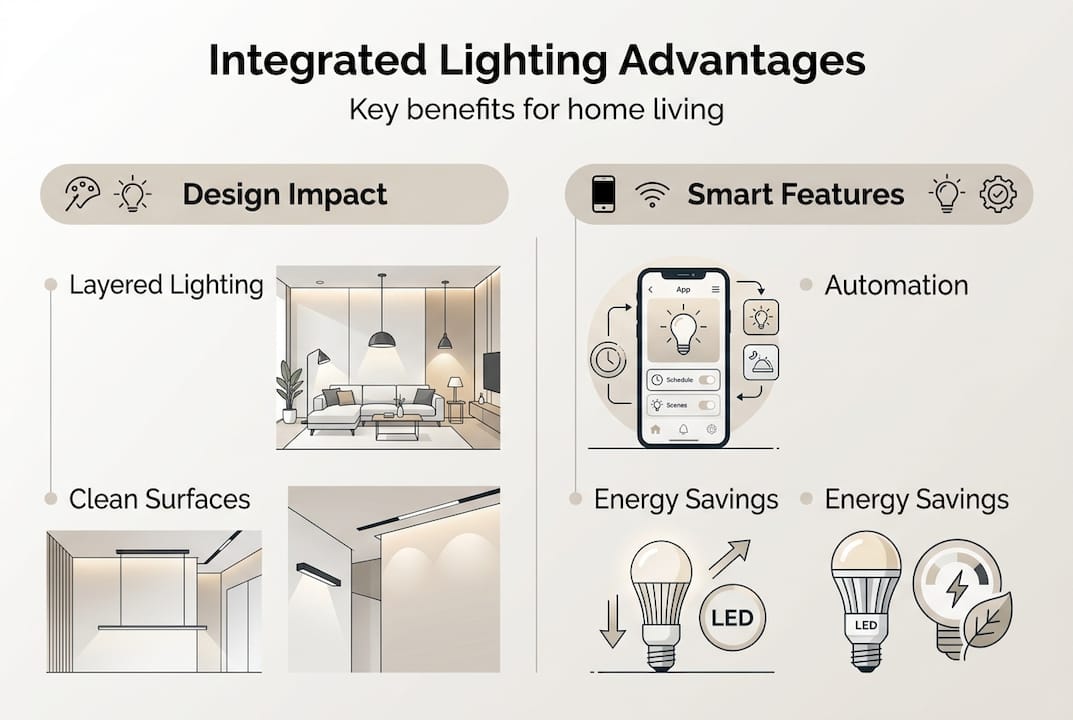
Key benefits of integrated lighting for architect-designed homes
For homes where design decisions are deliberate and considered, integrated lighting offers benefits that go well beyond convenience. It supports the architecture rather than competing with it.
| Benefit | What it means for your home |
|---|---|
| Design cohesion | Fixtures blend into surfaces, preserving clean lines |
| Layered ambience | Shift from bright task light to soft evening mood instantly |
| Simplified routines | Preset scenes activate with one tap or a voice command |
| Energy efficiency | Smart controls reduce unnecessary consumption automatically |
| Long-term value | Thoughtful lighting enhances the appeal of the property |
The benefits of automated lighting are particularly evident in open-plan spaces, where a single scene can transform the feel of an entire floor. Rather than adjusting multiple switches, one preset handles everything.
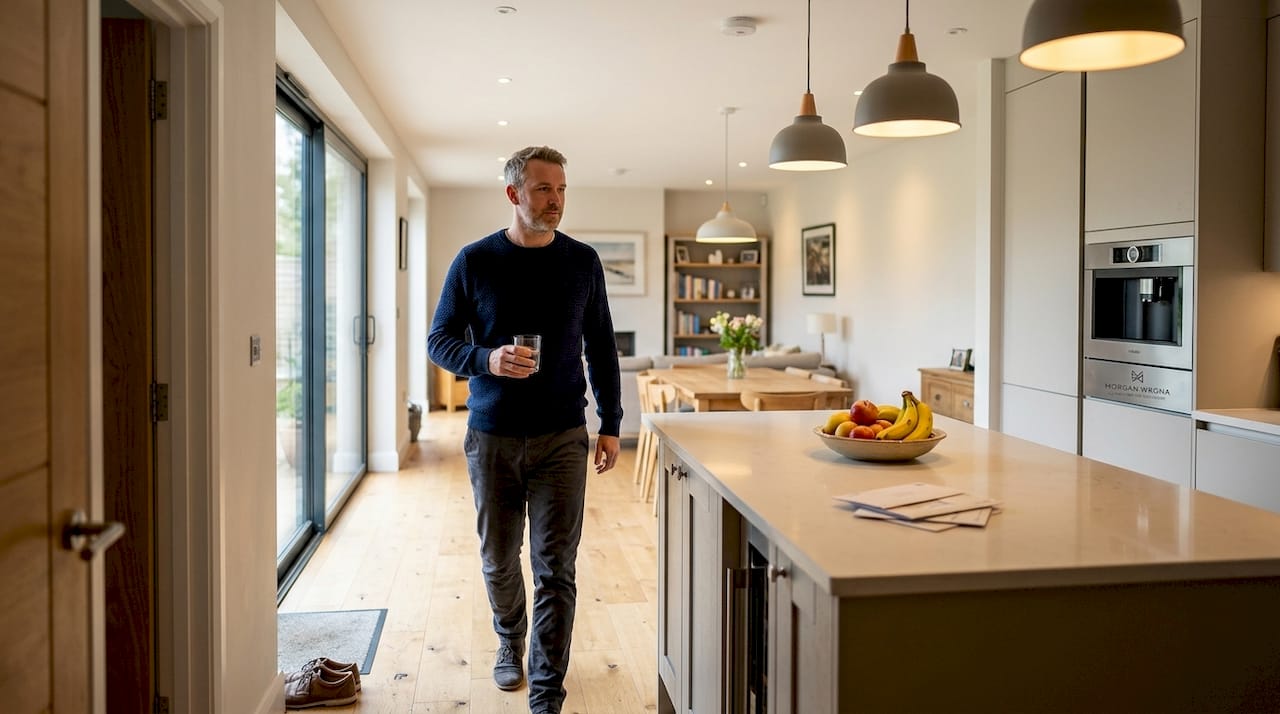
For homeowners with architecturally designed properties, smart home lighting simplifies life through automation, aligns aesthetics by concealing fixtures, and enhances value through layered, human-centric design.
Pro Tip: Involve your lighting designer and architect at the earliest possible stage, ideally at floor-plan level. Decisions made early about ceiling depths, wall construction, and natural light sources will shape every lighting choice that follows. Retrofitting is possible, but early collaboration produces far better results with far less compromise.
The design principles for lighting that work best in architecturally sensitive homes always begin with the architecture itself, not the product catalogue.
Integrated lighting versus traditional lighting: What’s the difference?
Conventional lighting tends to be additive. A pendant here, a floor lamp there, a ceiling rose in the centre. Each decision is made independently, and the result is often a room that functions adequately but lacks coherence. Integrated lighting takes the opposite approach: the system is designed first, and the fixtures follow.
| Feature | Traditional lighting | Integrated lighting |
|---|---|---|
| Aesthetics | Visible fixtures, mixed styles | Concealed or architectural fixtures |
| Control | Individual switches | Centralised scenes and automation |
| Flexibility | Fixed output | Adjustable colour temperature and intensity |
| Energy use | Often unmanaged | Sensor and schedule-driven efficiency |
| Installation | Added after build | Designed into the structure |
Moving from traditional to integrated involves a clear sequence:
- Audit your current setup to identify what can be retained and what needs replacing
- Define lighting zones based on how each space is used throughout the day
- Select a control platform that suits your home automation preferences
- Commission a lighting designer to produce a scheme that works with your architecture
- Plan infrastructure early including conduit runs, ceiling voids, and switch positions
Evidence supports that layered, integrated design with smart controls delivers improved efficiency and greater usability across different activities. One common pitfall in retrofits is underestimating the structural changes required. If lighting is considered late in a renovation, options narrow considerably. Exploring the latest integrated lighting trends early in your project helps you make informed decisions before walls are closed.
For those concerned about eye comfort and visual fatigue, integrated systems with tunable white light can reduce eye strain by adjusting colour temperature to match the time of day.
Energy efficiency and sustainability: How integrated lighting changes the game
This is where the numbers become genuinely compelling. Integrated systems with daylight dimming achieve between 20 and 70 per cent energy savings compared to conventional setups. Without daylight integration, over-reliance on electric light for non-visual needs can actually increase energy use by up to 300 per cent.
Daylight dimming works by measuring the natural light entering a room and reducing artificial output accordingly. On a bright afternoon, your lights may dim to almost nothing. As evening falls, they gradually increase. You notice the comfort. You do not notice the adjustment.
Practical steps to maximise sustainability in your lighting scheme:
- Specify LED sources throughout, prioritising those with high colour rendering for true-to-life appearance
- Install daylight sensors in rooms with significant glazing or roof lights
- Use occupancy detection in corridors, utility rooms, and bathrooms
- Programme time-based scenes that shift automatically from morning to evening
- Review energy data through your control platform to identify inefficiencies
Pro Tip: Prioritise daylight integration from the very beginning of your project. The position of windows, roof lights, and glazed doors will determine how much natural light your system can harvest. Changing these elements later is costly. Getting them right at design stage costs nothing extra.
The relationship between lighting automation and home comfort is most evident in how little you have to think about it once the system is properly commissioned.
Common pitfalls and expert tips for integrated lighting
Even well-intentioned projects can fall short when certain decisions are left too late or overlooked entirely. Understanding where things typically go wrong helps you avoid the same outcome.
The most common mistakes include:
- Leaving lighting decisions until after construction begins, which limits structural options
- Choosing fixtures before defining zones, leading to mismatched output and aesthetics
- Ignoring natural light as a primary source, resulting in over-specified artificial systems
- Selecting a control system in isolation, without considering how it integrates with other home systems
- Skipping commissioning, which means scenes and sensors are never properly calibrated
“Prioritise daylight integration and early design collaboration to maximise efficiency and avoid energy pitfalls.” Laboratory validation of integrated lighting
Pro Tip: Book a lighting consultation before your architect finalises the floor plan. Even a single session can identify opportunities for natural light harvesting, ceiling void requirements, and control infrastructure that would otherwise be missed.
For further reading on getting the details right, our lighting design tips for modern homes covers the decisions that matter most at each stage. Understanding the role of lighting control in daily living also helps frame why these decisions deserve early attention.
Applying integrated lighting in your project: Steps for a seamless experience
A clear process removes uncertainty and keeps your project on track. Here is how a well-managed integrated lighting project typically unfolds:
- Initial consultation with a lighting specialist to understand your home, lifestyle, and design intent
- Lighting design brief produced in collaboration with your architect or interior designer
- Zone mapping to define which areas need which type of light and at what times
- Product selection based on the design brief, architectural constraints, and control requirements
- Infrastructure planning covering cable routes, ceiling voids, switch positions, and control panel location
- Installation carried out in coordination with other trades to avoid rework
- Commissioning where scenes, sensors, and schedules are programmed and tested
- Handover and training so you understand how to use and adapt your system
Following a structured lighting design workflow ensures nothing is left to chance. As integrated lighting design demonstrates, the homes that benefit most are those where the system is treated as a core element of the design, not an afterthought.
How Morgan Wrona can help you realise your vision
If you are planning a new build, a significant renovation, or simply want to understand what a properly integrated lighting scheme could offer your home, we are here to help. Morgan Wrona works with homeowners and their design teams to create architectural smart lighting solutions that are considered, cohesive, and genuinely easy to live with.
Our approach spans the full process, from early design consultancy through to installation, commissioning, and aftercare. We work alongside architects and interior designers to ensure the lighting serves the architecture, not the other way around. Whether your interest is in lighting automation for home comfort or in addressing practical concerns such as reducing eye strain through tunable light, we can guide you through every decision. To begin a conversation, contact us or call [01793 315930](tel:01793 315930). You are also welcome to download our brochure to explore our work in more detail.
Frequently asked questions
Is integrated lighting suitable for renovation projects, or only for new builds?
Integrated lighting can be retrofitted into existing homes, though it works best when planned alongside major renovations. Recessed and integrated LEDs are well suited to retrofit applications and can still achieve significant energy savings when properly specified.
Do integrated systems always save energy compared to traditional setups?
When designed with smart controls and daylight dimming, integrated lighting achieves between 20 and 70 per cent energy savings over conventional systems. The key is ensuring the system is commissioned correctly so sensors and schedules function as intended.
Can integrated lighting be controlled by smartphones and voice assistants?
Yes. Integrated systems pair seamlessly with modern home automation platforms, allowing full control via app or voice assistant. Scenes can be adjusted remotely, scheduled in advance, or triggered automatically by occupancy.
What is the most common mistake when adding integrated lighting?
The most frequent issue is leaving lighting decisions too late in the design process. Early design collaboration is essential to maximise both efficiency and aesthetic outcomes, as structural changes become far more disruptive once construction is underway.