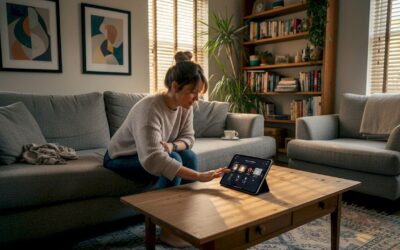
Many homeowners assume integrated control systems conflict with heritage architecture, risking planning violations or damaging original features. This misconception overlooks how modern wireless technology and sensor-based automation can enhance daily living whilst preserving architectural integrity. From reducing energy costs by 25% through smart zoning to meeting evolving UK regulations, these control systems offer practical solutions tailored to sensitive properties. You will learn how to assess your home’s needs, choose minimally invasive installations, and future-proof your property without compromising its character.
Table of Contents
- Key takeaways
- Understanding home control systems in heritage homes
- Benefits of home control systems for operational efficiency and preservation
- Aligning with UK future regulations and preserving heritage value
- Practical steps to integrate home control systems sensitively
- Explore our tailored home control solutions for sensitive architecture
- Frequently asked questions about home control systems in heritage homes
Key Takeaways
| Point | Details |
|---|---|
| Energy saving potential | Smart zoning and sensor based automation can cut operating costs by about 25 percent while protecting heritage features. |
| Wireless minimally invasive | Wireless protocols and surface mounted components avoid intrusive cabling and preserve original plasterwork. |
| Future proofing alignment | Future proofing aligns with evolving UK energy efficiency regulations and helps properties stay compliant. |
| Thorough pre survey | Commission a detailed survey mapping original fabric and service routes to guide installers and support sympathetic planning. |
Understanding home control systems in heritage homes
A home control system coordinates lighting, heating, audio, and visual elements through centralised interfaces, typically managed via wall panels or mobile devices. For architecturally sensitive properties, the challenge lies in installing technology without disturbing original plasterwork, listed features, or protected surfaces. Traditional wired installations require extensive cable runs through walls, creating potential conflicts with conservation requirements.
Wireless protocols and surface-mount components solve this. Battery-powered sensors communicate via radio frequency, eliminating the need for invasive cable routing. Retrofit solutions place control modules in discrete locations like utility cupboards or roof spaces, keeping visible elements minimal. This approach matters because it allows you to enjoy automated convenience without triggering planning permission requirements or damaging irreplaceable architectural details.
Practitioner guides stress heritage-specific adaptations like wireless and minimally invasive installs to avoid planning violations. These methods recognise that sensitive properties demand different technical strategies compared to new builds. Your home benefits from technology designed around its constraints rather than forcing incompatible solutions.
Key considerations for heritage installations include:
- Assessing which areas permit surface wiring versus requiring wireless solutions
- Identifying existing service routes that can accommodate additional cabling without new penetrations
- Selecting control panels and switches that complement period aesthetics
- Planning sensor placement to monitor environmental conditions without visual intrusion
- Ensuring all interventions remain reversible should future owners wish to remove systems
Pro Tip: Before any installation, commission a detailed survey mapping original fabric, protected features, and existing service routes. This documentation guides installers and provides evidence of sympathetic approach should planning queries arise.
The compatibility between modern control systems and architectural preservation stems from technological advances in low-voltage components and wireless communication. Where previous generations required extensive infrastructure, current solutions work within existing constraints. This evolution means your home can incorporate smart home lighting for architecturally designed homes without the invasive work that once made such projects impractical for sensitive properties.
Benefits of home control systems for operational efficiency and preservation
Empirical evidence from heritage properties demonstrates substantial operational improvements. Kenwood House, a Grade I listed property managed by English Heritage, implemented sensor networks and automated environmental controls. The installation achieved 25% reduction in operational costs through predictive maintenance alerts and optimised heating schedules. Sensors detected moisture levels and temperature fluctuations before they caused structural damage, allowing preventive interventions rather than reactive repairs.

Energy reduction through smart zoning represents another measurable benefit. Traditional whole-house heating systems waste energy warming unused spaces. Intelligent controls divide your home into zones, each with independent scheduling and temperature targets. You heat only occupied rooms during active hours, reducing consumption without sacrificing comfort. Lighting circuits follow similar logic, dimming or switching off automatically when spaces remain unoccupied.
| Efficiency Measure | Traditional Approach | Smart Control Approach | Typical Saving |
|---|---|---|---|
| Heating management | Single thermostat for entire property | Zone-based scheduling with occupancy sensing | 20-30% energy reduction |
| Lighting operation | Manual switches, often left on | Automated dimming and presence detection | 15-25% consumption decrease |
| Maintenance scheduling | Reactive repairs after failures | Predictive alerts from sensor monitoring | 25% lower operational costs |
| Environmental monitoring | Periodic manual checks | Continuous sensor data with alerts | Early damage prevention |
These improvements directly affect your monthly running costs and long-term preservation. Automated home control systems respond faster than manual intervention, catching problems like failing heating zones or excessive humidity before they escalate. This matters particularly for sensitive architecture where environmental stability protects original materials.
Pro Tip: Configure your system to log environmental data over time. This historical record proves invaluable when diagnosing recurring issues or demonstrating stable conditions to conservation officers during planning reviews.
“Intelligent environmental control protects heritage fabric more effectively than periodic manual monitoring. Continuous sensor data enables interventions measured in hours rather than weeks, preventing the cumulative damage that degrades sensitive materials.” — Historic England, Kenwood House case study
The role of lighting control in smart homes extends beyond energy savings. Automated dimming reduces UV exposure on fabrics and artwork, whilst scene programming ensures appropriate illumination for different activities. Your home becomes easier to live in daily, with automated control systems that adapt to how you actually use each space rather than requiring constant manual adjustment.
Preservation benefits emerge from the non-invasive monitoring these home control systems enable. Rather than opening walls for periodic inspections, sensors track conditions continuously. You gain real-time awareness of environmental factors affecting your property, allowing informed decisions about when intervention proves necessary versus when conditions remain stable.
Aligning with UK future regulations and preserving heritage value
The UK Future Homes Standard, introduced through 2023 consultations and being implemented progressively, mandates significant energy efficiency improvements for residential properties. Whilst heritage buildings often receive exemptions from the strictest requirements, future-proofing aligns with policy direction pushing all properties towards lower carbon operation. Digital twins and sensor networks offer heritage-appropriate pathways to meet these goals without compromising protected fabric.
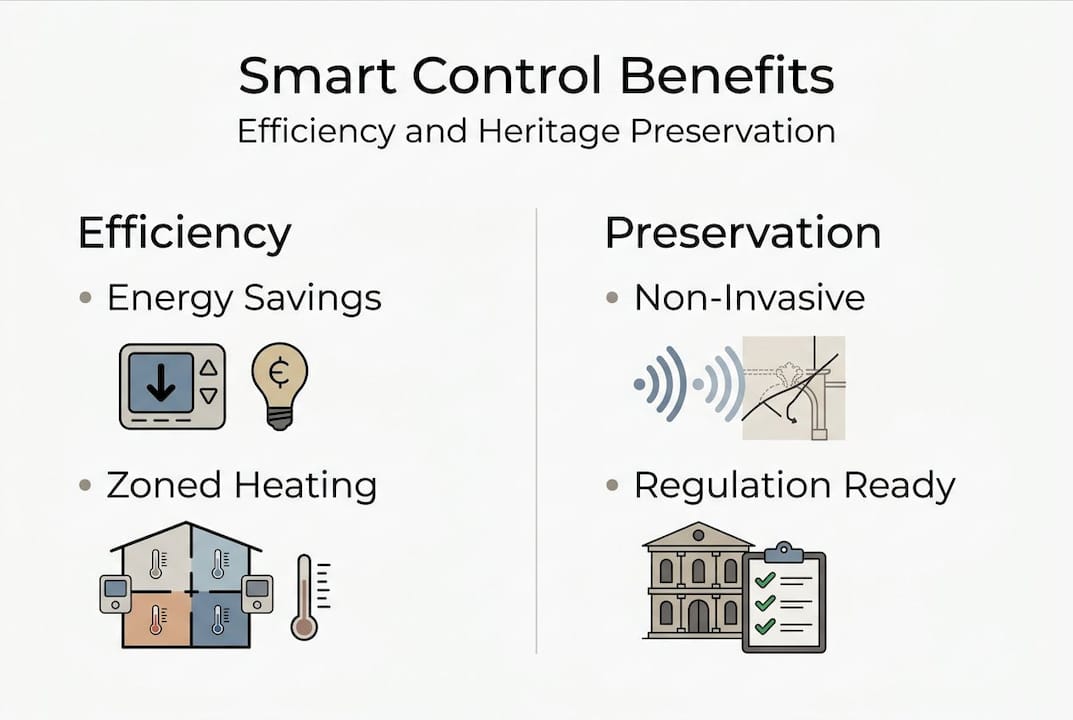
A digital twin creates a virtual model of your property, integrating sensor data to simulate how changes affect energy performance. This allows testing different control strategies virtually before implementation, reducing trial-and-error adjustments that might stress sensitive home control systems. For heritage homes, this approach identifies efficiency gains achievable within conservation constraints.
| Approach | Traditional Method | Future-Proof Smart Control |
|---|---|---|
| Regulatory compliance | Minimal efficiency measures, relying on exemptions | Proactive efficiency within heritage constraints |
| System adaptability | Fixed installations requiring replacement for upgrades | Modular platforms accepting software and hardware updates |
| Energy monitoring | Annual utility bills provide only aggregate data | Real-time consumption tracking per zone and system |
| Property value impact | Baseline market value for period properties | Enhanced appeal through demonstrable efficiency and modern convenience |
| Planning considerations | Reactive responses to changing regulations | Established home control systems simplifying future compliance demonstrations |
These distinctions matter because regulations continue evolving towards stricter efficiency standards. Properties with established monitoring and control infrastructure adapt more easily to new requirements. Your investment in thoughtful automation today reduces future compliance costs and potential conflicts with conservation officers.
Best practices for avoiding heritage planning conflicts include:
- Documenting all installations with photographs and specifications for planning records
- Choosing reversible interventions that future owners can remove without trace
- Consulting conservation officers early when systems might affect listed features
- Prioritising wireless and surface-mount solutions in protected areas
- Maintaining original switches and controls as backup systems where practical
Property value benefits extend beyond regulatory compliance. Prospective buyers increasingly expect integrated control systems, particularly for larger architect-designed homes. Demonstrating that your property combines period character with modern convenience broadens market appeal. The lighting design workflow for UK architect homes shows how thoughtful integration enhances rather than detracts from architectural quality.
Future-proofing also addresses the reality that technology evolves rapidly. Modular control platforms allow component upgrades without replacing entire home control systems. You might update a lighting controller to support newer LED drivers whilst retaining existing wiring and sensors. This incremental approach spreads costs over time and avoids the disruption of complete home control system replacements.
The connection between smart controls and property value appears in design-led home cinema concepts boost property value, where integrated audio-visual systems enhance lifestyle appeal. For sensitive architecture, the key lies in systems that serve daily living without overwhelming the property’s character. Buyers recognise this balance, valuing homes where technology integration respects architectural integrity.
Practical steps to integrate home control systems sensitively
Successful integration begins with thorough assessment of your property’s architectural sensitivities and existing infrastructure. Document protected features, original fabric requiring preservation, and areas where interventions prove acceptable. This survey informs every subsequent decision, ensuring technology serves your home rather than compromising it.
-
Engage specialists with demonstrated heritage installation experience early in your planning process. Their familiarity with conservation requirements and wireless technologies prevents costly mistakes and planning conflicts.
-
Prioritise wireless or surface-mount systems in areas with protected plasterwork, listed features, or restricted access. Reserve any invasive work for service areas and modern additions where impact remains minimal.
-
Develop a phased implementation plan that addresses highest-priority needs first. You might begin with lighting control in principal rooms, then expand to heating management and audio-visual integration as budget and experience allow.
-
Specify modular platforms that accept future upgrades without replacing foundational infrastructure. This approach protects your investment whilst maintaining flexibility as technology evolves.
-
Commission detailed documentation of all installations, including cable routes, component specifications, and control programming. This record proves invaluable for maintenance, future modifications, and planning compliance demonstrations.
-
Test systems thoroughly during commissioning, adjusting programming to match your actual usage patterns rather than generic presets. Effective automation feels invisible because it anticipates your needs.
Pro Tip: Request that installers photograph all work in progress, particularly cable routes and connection points hidden after completion. This visual record simplifies future troubleshooting and modifications.
Practitioner guides stress heritage-specific adaptations like wireless and minimally invasive installs to avoid planning violations. These methods recognise that your home’s architectural value depends on preserving original fabric whilst accommodating modern living requirements. The balance comes from choosing appropriate technologies and installation techniques for each specific context.
Phased implementation reduces disruption and allows you to evaluate each system before expanding further. You might discover that automated lighting in living areas transforms daily convenience more than anticipated, justifying earlier investment in bedroom and circulation spaces. Alternatively, you may find certain areas benefit from simpler manual controls, avoiding unnecessary complexity.
Compatibility with lifestyle goals matters as much as preservation requirements. Your control system should simplify daily routines, not create new complications requiring technical expertise. Intuitive interfaces, reliable operation, and responsive support services ensure technology enhances rather than frustrates your experience. The lighting automation home experience demonstrates how thoughtful programming creates seamless interaction.
For properties combining heritage elements with modern extensions, consider how systems bridge these different contexts. You might use wireless controls in original rooms whilst running conventional wiring through new construction. Unified interfaces ensure consistent operation throughout your home despite varying installation methods. This hybrid approach respects architectural constraints whilst maximising system capability.
The home cinema automation architectural impact illustrates how integrated systems enhance specific lifestyle functions. Whether your priorities involve entertaining, family living, or quiet enjoyment of architectural spaces, control systems adapt to support those activities. The key lies in defining your requirements clearly before design begins, ensuring technology serves your actual needs.
Explore our tailored home control solutions for sensitive architecture
If you are considering how integrated systems might enhance your architecturally sensitive home, we would welcome the opportunity to discuss your specific requirements. Our approach begins with understanding your property’s character and your daily living patterns, then developing solutions that respect both.
We specialise in smart home lighting for architecturally designed homes, where control systems enhance rather than compromise architectural quality. Our installations prioritise minimally invasive techniques and reversible interventions, ensuring your home’s integrity remains intact whilst gaining the convenience of modern automation.
For those interested in integrated entertainment spaces, our home cinema automation architectural impact page explores how audio-visual systems can be incorporated sympathetically. We also offer detailed guidance on lighting automation home experience, showing how thoughtful programming creates seamless daily interaction.
If you would like to discuss how this could work in your home, contact us or call 01793 315930.
Frequently asked questions about home control systems in heritage homes
How can home control systems avoid damaging historic features?
Wireless protocols and surface-mount components eliminate the need for invasive cable runs through protected plasterwork. Installers place control modules in discrete locations like utility spaces, keeping visible elements minimal and all interventions reversible. This approach allows full automation whilst preserving original fabric.
Are wireless systems reliable for heritage homes?
Modern wireless protocols operate on dedicated frequencies with robust error correction, providing reliability comparable to wired installations. Battery-powered sensors typically run for years before requiring replacement, and systems alert you well before power depletion. Thick walls may require additional signal repeaters, but these install without structural modifications.
What are the energy savings potential?
Empirical data from heritage properties shows 20-30% heating reductions through smart zoning and 15-25% lighting savings via automated dimming and presence detection. Your actual savings depend on current consumption patterns and system configuration, but most installations achieve payback within five to seven years through reduced utility costs.
Do such systems affect planning permissions?
Properly designed installations using wireless technology and reversible interventions typically avoid planning permission requirements. However, listed buildings and conservation areas have specific regulations, so consult your local planning authority early if your property has protected status. Documentation showing sympathetic approach helps demonstrate compliance.
Can systems be upgraded as technology evolves?
Modular platforms allow component upgrades without replacing entire infrastructure. You might update controllers to support newer devices whilst retaining existing sensors and wiring. This incremental approach spreads costs over time and ensures your system remains current without repeated major installations. Choose platforms with established upgrade paths and manufacturer support commitments.
Recommended
- Smart home cinema systems guide for architect-designed homes 2026
- Lighting Automation: Shaping Home Experience and Comfort
- Smart home lighting for architecturally designed homes
- Defining Home Cinema Automation: Architectural Impact