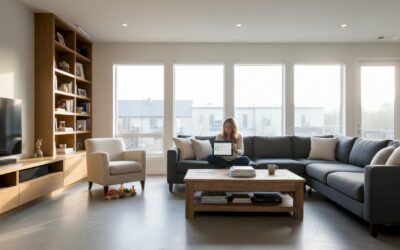
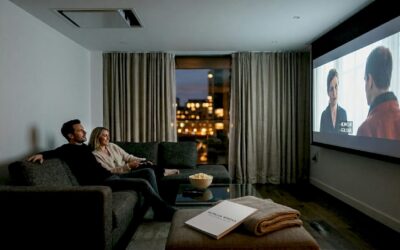
Most homeowners assume that once the architecture is right, the lighting will take care of itself. It rarely does. A single overhead fitting, however well chosen, flattens a room and erases the very details your architect worked hard to create. Thoughtful residential lighting design does something quite different: it shapes how a space feels at different times of day, supports how you actually use each room, and draws attention to the features that make your home distinctive. This guide walks through the principles, standards, and practical decisions that make residential lighting genuinely work.
Table of Contents
- Core principles of residential lighting design
- Integrating natural daylight: strategies and standards
- Navigating UK regulations and safety for lighting
- Choosing the right colour temperatures and fixtures
- Smart controls and automation: enhancing comfort and efficiency
- Avoiding common pitfalls: lessons from expert projects
- Elevate your home with expert lighting solutions
- Frequently asked questions
Key Takeaways
| Point | Details |
|---|---|
| Layered design essentials | Combining ambient, task, and accent layers transforms spaces and reveals architectural beauty. |
| Daylight integration standards | Adhering to UK daylight benchmarks reduces artificial lighting needs and supports a healthier environment. |
| Regulatory and safety compliance | Following Part L and Part P ensures efficient, legally sound lighting schemes for your home. |
| Smart controls for flexibility | Automated zoning, dimmers, and sensors enhance comfort and cut energy use in everyday living. |
| Avoid common pitfalls | Early planning, circuit zoning, and fixture choice prevent flat or harsh results and maximise your home’s value. |
Core principles of residential lighting design
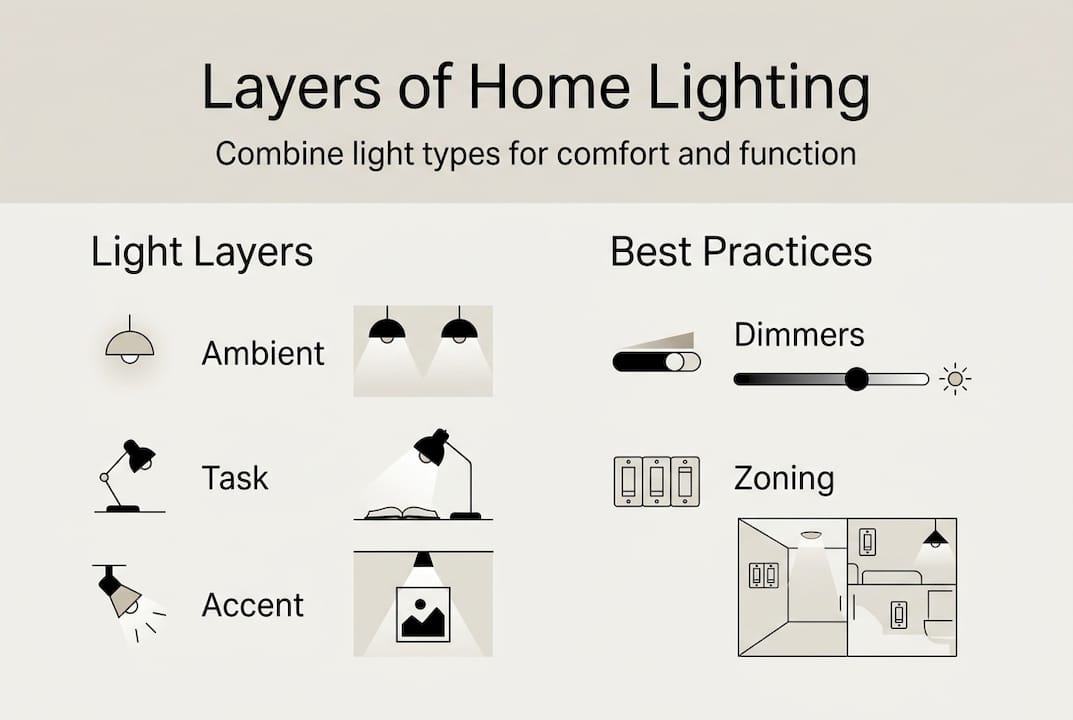
The foundation of any well-lit home is a three-layer lighting approach. Layered lighting is the core methodology for residential design, built from three distinct layers: ambient, task, and accent. Each layer has a specific role, and together they give you control over how a room looks and feels at any given moment.
Ambient lighting provides the general illumination that fills a space. Task lighting focuses on specific activities, reading, cooking, or working at a desk. Accent lighting draws the eye to architectural features, artwork, or materials worth celebrating. When all three are present and independently controllable, you can shift a room from a bright, practical environment in the morning to something far more considered in the evening.
‘Layered residential lighting creates both function and atmosphere, revealing architecture rather than masking it.’
The contrast with a single pendant or a uniform grid of downlights is significant. Those approaches deliver light, but they offer no flexibility and no depth. A bespoke lighting scheme treats each room as a composition, with light placed deliberately rather than distributed evenly.
| Approach | Flexibility | Mood control | Architectural emphasis |
|---|---|---|---|
| Single overhead fitting | None | None | Minimal |
| Uniform downlight grid | Low | Low | Low |
| Layered lighting scheme | High | High | Strong |
Key benefits of layered residential lighting include:
- Adaptability: each layer can be adjusted independently to suit different activities
- Mood setting: dimmed accent lighting in the evening creates a very different atmosphere to full ambient output
- Architectural enhancement: well-placed accent and wall-wash lighting reveals texture, depth, and form
- Energy efficiency: using only the layers you need reduces overall consumption
Pro Tip: Fit dimmers to every circuit from the outset. Retrofitting them later is straightforward, but planning for them at the design stage costs almost nothing and gives you far greater control over the finished result. You can find further lighting tips for modern homes that complement this layered approach.
Integrating natural daylight: strategies and standards
Artificial lighting works best when it complements natural daylight rather than compensating for its absence. The way your home is oriented, the size of its windows, and the presence of roof lights all determine how much daylight reaches each room throughout the day. Getting this right reduces your reliance on artificial light and creates spaces that feel genuinely alive.
UK guidance on daylight integration points to several practical measures: optimising window-to-wall ratios, introducing roof skylights where possible, and favouring north-facing glazing for consistent, glare-free light. The target is straightforward: daylight in more than 50% of rooms during 50% of daylight hours meets current UK benchmarks.
Different rooms have different lux requirements for comfortable use:
| Room | Recommended lux level |
|---|---|
| Bedroom | 100 lux |
| Living room | 150 lux |
| Kitchen | 200 lux |
| Home office | 300 lux |
Practical strategies for improving daylight in your home include:
- Positioning primary seating areas close to window walls
- Using light-reflective finishes on walls and ceilings to distribute daylight further into a room
- Installing roof lights in single-storey extensions or deep-plan spaces where windows alone are insufficient
- Considering solar shading to manage glare without blocking useful daylight
The relationship between daylight and artificial lighting is worth planning carefully. Sustainable lighting solutions that respond to available daylight, using sensors to dim artificial sources when natural light is sufficient, can reduce energy use meaningfully while maintaining consistent comfort throughout the day.
Navigating UK regulations and safety for Residential lighting
Lighting in UK homes is subject to two key areas of Building Regulations, and understanding both protects you from costly problems later. Part L and Part P address energy efficiency and electrical safety respectively, and both apply to new builds and significant renovations.
Part L sets minimum standards for the efficiency of fixed residential lighting fittings. In practice, this means:
- Fittings must achieve more than 75 lumens per watt
- Automatic controls, such as occupancy sensors or daylight-linked dimmers, are required in certain areas
- Compliance is assessed as part of the SAP (Standard Assessment Procedure) energy calculation for the whole home
Part P requires that electrical installation work is carried out by a certified competent person. This matters for insurance as much as safety. If work is completed by someone without the appropriate certification, your buildings insurance may be invalidated in the event of a claim.
A practical compliance checklist:
- Verify your installer holds a recognised Part P competent person scheme registration
- Request a completion certificate for all electrical work
- Confirm that all fixed fittings meet the 75 lumens per watt threshold
- Check that automatic controls are specified where required
- Review compliance tips for UK homeowners before finalising your scheme
For ongoing maintenance, particularly for decorative or statement fittings, regular upkeep ensures both performance and appearance are preserved over time.
Pro Tip: Schedule a compliance review at the design stage, before any first fix work begins. Identifying issues early is far less disruptive than addressing them once walls are plastered and ceilings are finished.
Choosing the right colour temperatures and fixtures
Colour temperature, measured in Kelvin, determines whether a light source feels warm and inviting or cool and clinical. Getting this right for each space is one of the most consequential decisions in a residential lighting scheme, and it is often underestimated.
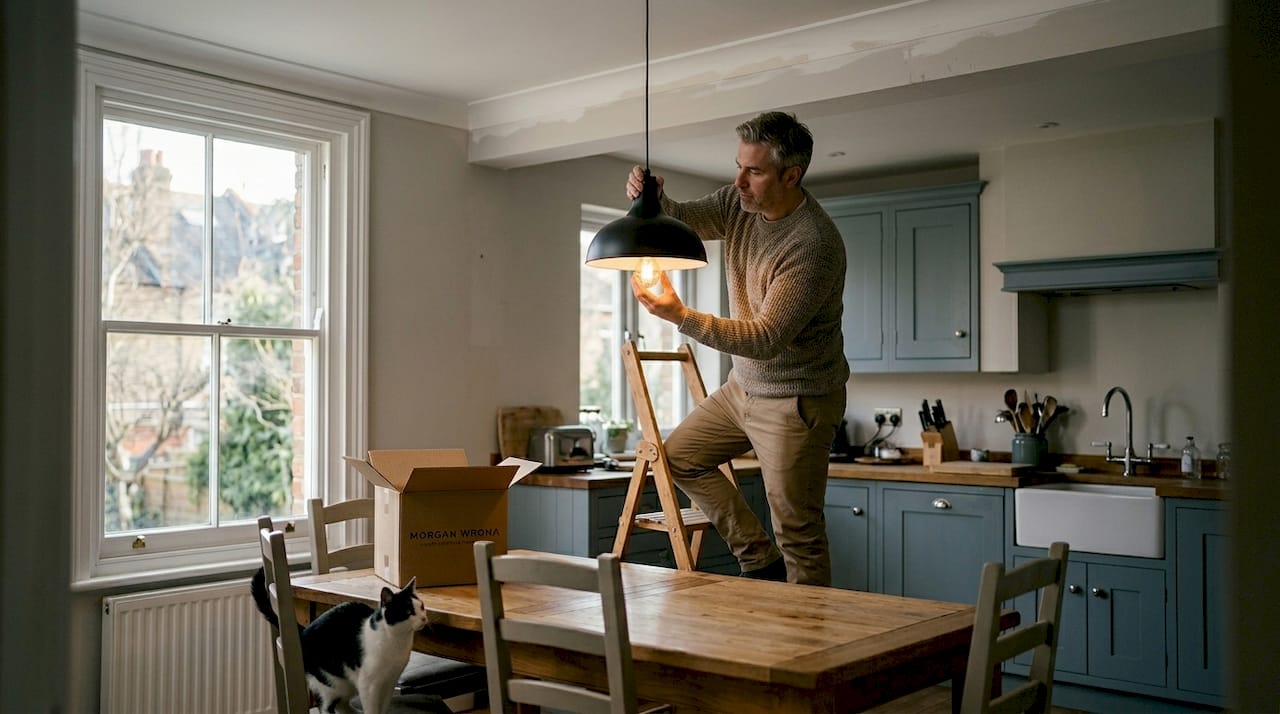
Warm white at 2700 to 3000K is the recommended range for living areas. It creates an atmosphere that feels settled and comfortable, particularly in the evening. Cooler whites above 4000K can feel harsh in domestic settings and are generally better suited to utility spaces or home offices where alertness matters more than comfort. For guidance on how lighting warmth choices interact with different finishes and materials, it is worth considering the full palette of a room before specifying fittings.
Fixture selection should respond to the architecture of each space:
- Low ceilings: uplights or wall-mounted fittings create a sense of height without drawing attention downward
- Small rooms: perimeter downlights placed close to walls wash the surfaces and make the space feel larger
- Stairs and corridors: floor-level LED strips or low-mounted wall lights provide safe, considered illumination without harsh overhead glare
- Double-height spaces: pendant fittings at mid-height anchor the room and prevent the ceiling from feeling remote
Two common pitfalls are worth avoiding. A uniform grid of downlights, however efficient, produces flat, undifferentiated light that reveals nothing of the room’s character. Central-only residential lighting creates a pool of brightness in the middle of a space and leaves the edges, where texture and detail live, in relative shadow.
Pro Tip: Where a room has a specific architectural feature, a textured wall, an exposed structural element, or a carefully detailed joinery piece, position a fitting to graze that surface with light. The result is far more interesting than any amount of general illumination. Explore smart home lighting options and lighting trends 2026 for further inspiration.
Smart controls and automation: enhancing comfort and efficiency
A well-designed residential lighting scheme is only as good as the controls that operate it. Smart controls give you the ability to adjust your lighting to suit different moments in the day without having to think about it consciously. Over time, this makes a genuine difference to how comfortable and energy-efficient your home feels.
Smart controls and zoning are now considered essential for net zero compliance and adaptable living. The practical options available include:
- Dimming: the single most effective way to extend the range of any residential lighting scheme, allowing the same fittings to serve very different moods
- Zoning: grouping fittings by area or function so that different parts of a room can be controlled independently
- Occupancy sensors: fittings that respond to presence, useful in corridors, utility rooms, and garages
- Daylight-linked controls: sensors that dim artificial lighting automatically when natural light is sufficient
- Scene setting: pre-programmed combinations of dimming levels across multiple zones, activated with a single control
Planning scenes to match the rhythm of the day, morning, working hours, evening, and night, means your home responds to how you live rather than requiring constant manual adjustment. The role of lighting control in smart homes is increasingly central to both comfort and efficiency.
Pro Tip: Integrate your residential lighting controls with a broader home automation system from the outset. This allows lighting scenes to be triggered by other events, arrival home, a film starting, or the sun setting, without any additional effort on your part. Well-designed automation can cut energy use by 30% compared to manually operated schemes.
Avoiding common pitfalls: lessons from expert projects
Even well-intentioned residential lighting schemes can fall short when certain decisions are left too late or overlooked entirely. The lessons from expert projects are consistent, and most of them point to the same root cause: residential lighting treated as an afterthought rather than a design discipline in its own right.
‘Thoughtful lighting planning magnifies architectural beauty while supporting daily life.’
The most common mistakes observed in residential lighting projects include:
- Relying on a single overhead light: this is the most frequent error, and the hardest to correct once a room is finished
- Ignoring wall washing: walls are the largest visible surface in any room; residential lighting them well transforms the perceived quality of the space
- Poor circuit planning: single-circuit rooms mean all fittings operate together, removing any possibility of flexibility or mood adjustment
- Late-stage residential lighting decisions: specifying fittings after walls are plastered means conduit routes, back boxes, and structural fixings may not be in the right positions
- Uniform brightness: treating all areas of a room as equally important produces a flat, institutional feel
The Leaf House project by John Cullen demonstrates how combining natural and artificial light creates spaces that shift in character through the day, responding to the architecture rather than overriding it. The principle applies to any well-designed home: light should reveal, not compete.
Pro Tip: Zone your circuits so that at minimum, perimeter fittings, central fittings, and accent fittings are on separate circuits. This single decision gives you the flexibility to create genuinely different atmospheres without any additional investment. A clear lighting design workflow guide for uk architect homes from the outset makes this straightforward to implement.
Elevate your home with expert Residential lighting solutions
Understanding the principles is one thing. Applying them well, across a whole home, within budget, and in compliance with current regulations, is where specialist guidance makes a real difference.

At Morgan Wrona, we work with homeowners of architect-designed properties to develop residential lighting schemes that are layered, compliant, and genuinely responsive to how each home is used. From initial consultation through to commissioning and aftercare, the process is designed to be straightforward and collaborative. Explore how effortless home ambience is achieved through considered control design, discover the practical benefits of automated lighting for homes like yours, and see how lighting automation shapes the daily experience of a well-designed home. If you would like to discuss how this could work in your home, contact us or call [01793 315930](tel:01793 315930).
Frequently asked questions
What is layered lighting and why does it matter?
Layered lighting is the core methodology for residential design, using ambient, task, and accent layers to give you control over flexibility, mood, and how your home’s architecture is perceived.
How can I meet UK lighting regulations during renovations?
Use fittings that exceed 75 lumens per watt, include automatic controls where required, and appoint a certified installer to satisfy both Part L and Part P requirements.
Which colour temperature suits living spaces best?
Warm white at 2700 to 3000K is the recommended range for living rooms and reception spaces; cooler temperatures above 4000K tend to feel clinical in domestic settings.
What are best practices for integrating daylight?
Optimise window-to-wall ratios, introduce skylights in deep-plan areas, and ensure rooms meet UK lux benchmarks so natural light does the work before artificial sources are needed.
Do smart controls really reduce energy use?
Smart controls and zoning can reduce lighting energy use by up to 30%, while also supporting net zero compliance and making daily living more comfortable.
Recommended
- Architectural lighting guide for UK homeowners: design tips
- Lighting design workflow guide for UK architect homes
- Smart home lighting for architecturally designed homes
- Benefits of Automated Lighting in Architect-Designed Homes
<script type="application/ld+json">
{
  "@context": "https://schema.org",
  "@type": "FAQPage",
  "mainEntity": [
    {
      "@type": "Question",
      "name": "What is layered lighting and why does it matter?",
      "acceptedAnswer": {
        "@type": "Answer",
        "text": "Layered lighting is the core methodology for residential design, using ambient, task, and accent layers to give you control over flexibility, mood, and how your home’s architecture is perceived."
      }
    },
    {
      "@type": "Question",
      "name": "How can I meet UK lighting regulations during renovations?",
      "acceptedAnswer": {
        "@type": "Answer",
        "text": "Use fittings that exceed 75 lumens per watt, include automatic controls where required, and appoint a certified installer to satisfy both Part L and Part P requirements."
      }
    },
    {
      "@type": "Question",
      "name": "Which colour temperature suits living spaces best?",
      "acceptedAnswer": {
        "@type": "Answer",
        "text": "Warm white at 2700 to 3000K is the recommended range for living rooms and reception spaces; cooler temperatures above 4000K tend to feel clinical in domestic settings."
      }
    },
    {
      "@type": "Question",
      "name": "What are best practices for integrating daylight?",
      "acceptedAnswer": {
        "@type": "Answer",
        "text": "Optimise window-to-wall ratios, introduce skylights in deep-plan areas, and ensure rooms meet UK lux benchmarks so natural light does the work before artificial sources are needed."
      }
    },
    {
      "@type": "Question",
      "name": "Do smart controls really reduce energy use?",
      "acceptedAnswer": {
        "@type": "Answer",
        "text": "Smart controls and zoning can reduce lighting energy use by up to 30%, while also supporting net zero compliance and making daily living more comfortable."
      }
    }
  ]
}
</script>