Finding the perfect lighting for a cinema room in a British architect-designed home often feels more complex than selecting the right screen or sound system. Lighting design is not just about brightness, but about shaping mood and personal experience throughout the day. By looking at cinematic lighting principles that guide homeowners can discover how thoughtful illumination truly transforms both atmosphere and architectural beauty in their cinema spaces.
Table of Contents
- Defining Lighting In Cinema Rooms
- Types Of Lighting For Cinema Spaces
- Balancing Functionality And Aesthetic Integration
- Smart Lighting Controls And Adaptability
- Common Pitfalls In Cinema Room Lighting
Key Takeaways
| Point | Details |
|---|---|
| Lighting Design is Essential | Effective cinema room lighting involves more than illumination; it enhances atmosphere and viewer experience. |
| Types of Lighting Matter | Different lighting styles serve unique purposes, impacting the emotional response and comfort of viewers. |
| Smart Controls Enhance Experience | Integrating smart lighting systems allows for adaptable environments that respond to viewer preferences. |
| Avoid Common Pitfalls | Poor lighting choices can detract from the cinematic experience; careful planning is essential for optimal results. |
Defining Lighting in Cinema Rooms
Creating an exceptional cinema room requires understanding lighting as more than simple illumination. Lighting design is a sophisticated art form that transforms spaces, influencing atmosphere, visual comfort, and emotional experience. Cinematic lighting principles demonstrate how strategic illumination can dramatically reshape architectural environments.
At its core, cinema room lighting involves multiple sophisticated elements that work harmoniously to create immersive experiences. These critical components include:
- Ambient lighting: Soft, background illumination providing overall room visibility
- Accent lighting: Targeted illumination highlighting architectural features or equipment
- Functional lighting: Practical solutions for task-specific areas like control panels or seating
- Mood lighting: Adjustable colour temperatures and intensities that transform room atmospheres
Three-point lighting techniques traditionally used in film production offer remarkable insights for home cinema environments. By understanding how professional cinematographers manipulate light, homeowners can create nuanced, adaptable spaces that respond dynamically to different viewing experiences.
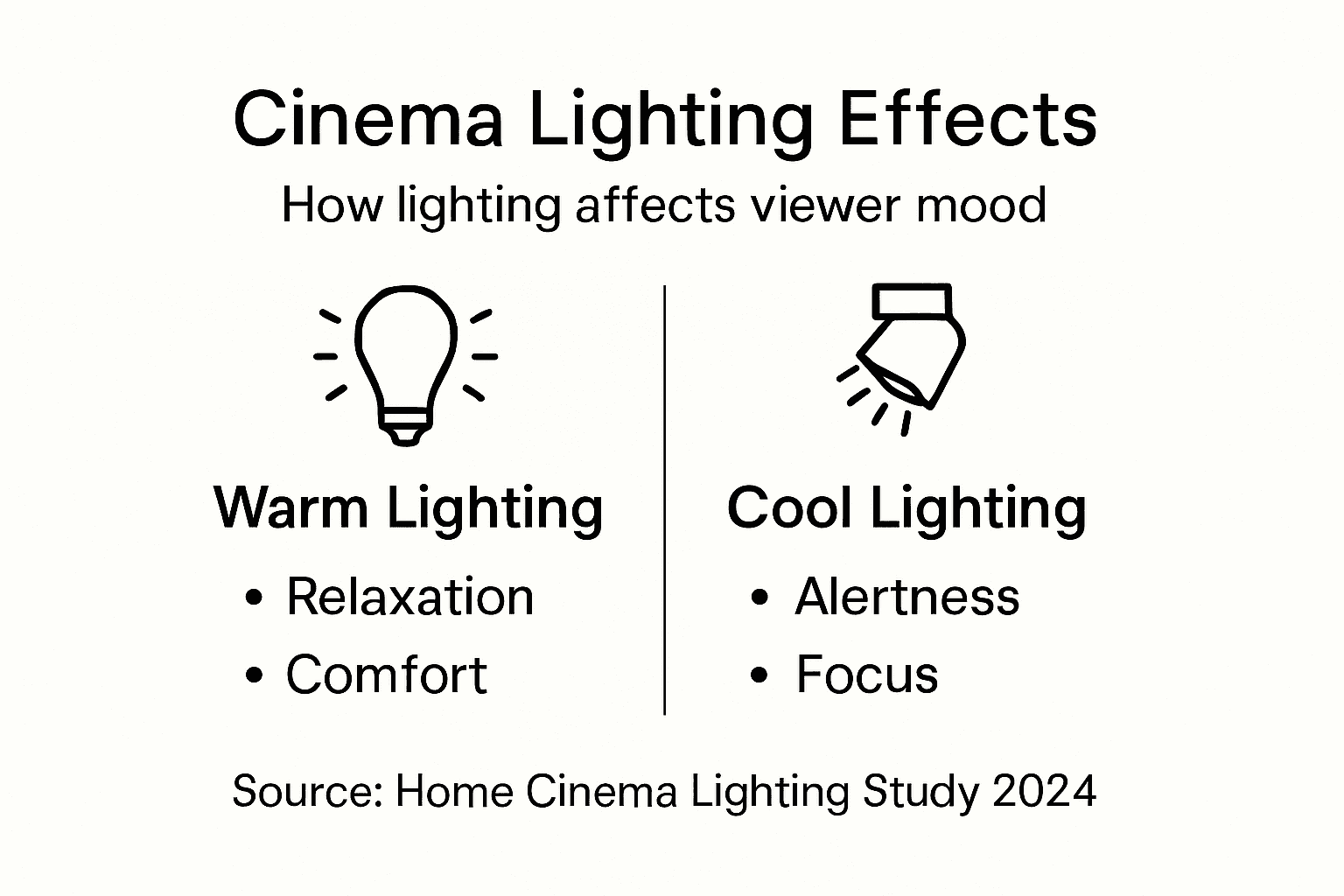
The psychological impact of lighting cannot be understated. Colour temperatures ranging from warm amber tones to cool blue hues can profoundly influence viewer perception, emotional engagement, and overall spatial comfort. Architectural lighting design transforms cinema rooms from mere viewing spaces into immersive sensory environments that adapt and respond to individual preferences.
Pro tip: Consider installing dimmable, colour-adjustable LED systems that allow seamless transitions between different lighting modes for maximum flexibility and atmosphere control.
Types of Lighting for Cinema Spaces
Understanding the nuanced world of cinema room lighting requires exploring various illumination techniques that transform spatial experiences. Cinematic lighting types offer homeowners sophisticated strategies for creating immersive environments that adapt to different viewing scenarios and emotional states.
Cinema room lighting can be categorised into several distinct styles, each serving unique aesthetic and functional purposes:
- High-key lighting: Bright, evenly distributed illumination creating an open, welcoming atmosphere
- Low-key lighting: Dramatic, shadowy effect ideal for creating intimate or suspenseful environments
- Natural lighting: Soft, diffused illumination mimicking daylight or ambient conditions
- Chiaroscuro lighting: High-contrast technique emphasising depth and architectural features
- Backlighting: Strategic illumination from behind to create depth and visual separation
Modern lighting techniques demonstrate how professional designers manipulate light to craft precise emotional landscapes. By understanding these principles, homeowners can design cinema spaces that dynamically respond to different viewing experiences, transforming rooms from mere screening areas into immersive sensory environments.
The psychological impact of lighting extends beyond mere visibility. Colour temperatures ranging from warm amber tones to cool blue hues can profoundly influence viewer perception, emotional engagement, and overall spatial comfort. Architectural lighting design allows cinema rooms to become adaptive environments that reflect individual preferences and viewing moods.
To clarify how lighting styles influence cinema room atmospheres, here’s a comparison of key cinematic lighting approaches:
| Lighting Style | Typical Effect | Best Use Case |
|---|---|---|
| High-key | Bright, open ambience | Family film or group viewing |
| Low-key | Dramatic, intimate mood | Thriller or suspense films |
| Natural | Soft daylight simulation | Documentary or daytime scenes |
| Chiaroscuro | Strong contrasts, depth | Art films, architectural focus |
| Backlighting | Creates visual separation | 3D content, immersive drama |
Pro tip: Invest in programmable LED systems with multiple colour temperature options to create seamless transitions between different lighting modes and viewing experiences.
Balancing Functionality and Aesthetic Integration
Creating a cinema room that seamlessly blends technical performance with visual elegance requires a nuanced approach to lighting design. Stage lighting principles reveal that successful spatial illumination is an art form balancing precise functionality with sophisticated aesthetic expression.
The integration of lighting in cinema spaces demands careful consideration of multiple design elements:
- Architectural harmony: Ensuring lighting systems complement existing room design
- Technical performance: Maintaining optimal illumination for viewing experiences
- Visual flexibility: Creating adaptable lighting configurations
- Aesthetic coherence: Maintaining a refined, sophisticated visual language
- Technological integration: Seamlessly embedding control systems within room design
Cinema lighting control techniques demonstrate that modern homeowners can achieve remarkable spatial transformations through intelligent design strategies. By understanding how light interacts with architectural elements, designers can create environments that feel simultaneously functional and emotionally resonant.
The most successful cinema room lighting designs transcend mere illumination, becoming dynamic interactive elements that respond to viewer preferences and content requirements. Colour temperature, intensity, and directional control allow homeowners to craft precise atmospheric experiences that adapt instantaneously to different viewing scenarios, from intimate documentary screenings to immersive blockbuster experiences.
Pro tip: Invest in programmable lighting systems with multiple preset configurations that can be easily adjusted through intuitive smartphone or touchpanel interfaces.
Smart Lighting Controls and Adaptability
The evolution of smart lighting technologies has transformed cinema rooms from static environments into dynamic, responsive spaces that anticipate and adapt to viewer preferences. Advanced lighting control systems represent a sophisticated intersection of technological innovation and personalised design, enabling unprecedented levels of spatial customisation.
Smart lighting controls offer multiple sophisticated features that enhance cinema room experiences:
- Scene programming: Creating preset lighting configurations for different viewing scenarios
- Automated transitions: Seamless lighting shifts between movie modes
- Colour temperature adjustment: Dynamic range of warm to cool illumination
- Intensity management: Precise control over light levels
- Sensor-based responsiveness: Automatic lighting adjustments based on room occupancy
Modern lighting control technologies go beyond traditional on-off switches, providing homeowners with intuitive interfaces that transform spatial experiences. These systems enable instantaneous modifications, allowing cinema rooms to shift between intimate documentary screenings and immersive blockbuster experiences with minimal manual intervention.
The psychological impact of adaptive lighting cannot be overstated. By creating environments that respond dynamically to content and viewer mood, smart lighting systems transcend mere illumination, becoming interactive elements that enhance emotional engagement and visual comfort. Intelligent design allows lighting to become a narrative tool, subtly supporting and enhancing the viewing experience.
To provide a quick overview of advanced smart lighting controls, the following table summarises their main functions and the benefits offered for cinema rooms:
| Feature | Function | Viewer Benefit |
|---|---|---|
| Scene Programming | Custom preset lighting modes | Effortless atmosphere changes |
| Automated Transitions | Lights shift with content | Seamless mood adaptation |
| Colour Temperature Adjust | Switch between warm and cool tones | Enhanced emotional immersion |
| Intensity Management | Fine-tune brightness levels | Improved visual comfort |
| Sensor-based Responsiveness | Adjusts to room occupancy | Energy savings and convenience |
Pro tip: Select lighting control systems with smartphone integration to enable seamless, personalised adjustments from anywhere in your home.
Common Pitfalls in Cinema Room Lighting
Designing a cinema room’s lighting requires a sophisticated understanding to avoid potential design compromises that can significantly diminish viewing experiences. Cinema lighting design techniques reveal numerous critical challenges that homeowners must navigate carefully to create truly exceptional spatial environments.
The most prevalent pitfalls in cinema room lighting include:
- Glare management: Poorly positioned lights causing visual discomfort
- Contrast inconsistencies: Uneven illumination across viewing areas
- Limited dimming capabilities: Inability to create nuanced lighting scenarios
- Colour temperature mismatches: Lighting that conflicts with screen dynamics
- Acoustic interference: Lighting fixtures disrupting room sound qualities
Technical lighting considerations demonstrate that successful cinema room design requires meticulous attention to complex interactions between light, visual perception, and spatial acoustics. Homeowners must understand that lighting is not merely about brightness, but about creating holistic sensory experiences.
Many design failures stem from treating lighting as an afterthought rather than an integral component of spatial design. Harsh shadows, inadequate light control, and improper fixture placement can transform potentially immersive environments into visually jarring spaces that detract from cinematic enjoyment. Sophisticated design demands understanding how light interacts with architectural elements, screen surfaces, and viewer psychology.
Pro tip: Consult professional lighting designers who specialise in home cinema environments to conduct comprehensive illumination assessments before finalising your room configuration.
Thoughtful Lighting Solutions Tailored to Your Home Cinema
The article highlights how balanced, adaptable lighting is essential to creating immersive cinema rooms that truly respond to how you live and enjoy your space. Challenges such as glare management, colour temperature mismatches, and lack of dimming flexibility often affect comfort and viewing quality. With intelligent lighting design, each element like ambient, accent, and mood lighting, can harmonise to create an environment that evolves with your preferences and the content you watch.
At Morgan Wrona, we understand that lighting is a vital architectural component, not an afterthought. Our approach works closely with homeowners and designers to ensure lighting integrates seamlessly within your existing structure, offering practical control through bespoke programmable systems. This means your cinema room can transform effortlessly from intimate, low-key settings to bright environments for different uses, enhancing emotional engagement while optimising comfort and visual clarity.
If you would like to explore how carefully planned lighting can enrich your home cinema experience, visit our homepage for more details on our consultation and system design services.
Please contact us or call 01793 315930 to discuss how we could collaborate on creating a cinema lighting scheme that reflects your personal style and everyday needs.
Frequently Asked Questions
What types of lighting are best for cinema rooms?
Cinema rooms benefit from a combination of ambient, accent, functional, and mood lighting. Ambient lighting provides overall visibility, accent lighting highlights features, functional lighting aids specific tasks, and mood lighting sets the desired atmosphere.
How can I create different lighting moods in my cinema room?
Consider installing dimmable, colour-adjustable LED systems. These allow you to change light temperatures and intensities easily, enabling transitions between various lighting modes to suit different viewing experiences.
What should I avoid when designing lighting for a cinema room?
Common pitfalls include glare from poorly positioned lights, uneven illumination, limited dimming capabilities, and mismatches in colour temperature with the screen, all of which can detract from the viewing experience.
How does smart lighting technology enhance cinema room experiences?
Smart lighting allows for programmable scene settings, automated transitions, and responsiveness to room occupancy. This technology helps create a more dynamic and immersive viewing environment by adjusting lighting to match the content and viewer preferences.