Many homeowners believe home automation means juggling multiple apps, devices that stop working, and systems that add complexity rather than remove it. Modern home automation, when designed properly, does the opposite. It integrates seamlessly into your architect-designed home, creating environments that respond to how you live without demanding constant attention. This guide explains the core components, design principles, common challenges, and practical applications that make home automation work reliably in architecturally sensitive spaces.
Table of Contents
- Understanding The Core Components Of Home Automation
- Designing Reliable And Intuitive Home Automation Systems
- Common Challenges And How To Avoid Automation Pitfalls
- Applying Home Automation For Energy Efficiency And Wellness
- Discover Expert Home Automation Solutions For Architectural Homes
- Frequently Asked Questions
Key takeaways
| Point | Details |
|---|---|
| Core components | Home automation systems consist of smart devices, networks/protocols (Wi-Fi, Zigbee, Z-Wave, Matter, Thread, KNX), and hubs/controllers issuing commands via schedules and scenes. |
| Design methodology | Scene-based design integrating HVAC, shading, and lighting improves reliability and reduces complexity. |
| Energy performance | Proper configuration delivers 10-20% heating/cooling savings, but poor setup can increase consumption. |
| Architectural integration | Invisible automation enhances wellness through circadian lighting and predictive climate without disrupting aesthetics. |
| Reliability strategy | Single-ecosystem commitment with physical overrides prevents silent failures and connectivity issues. |
Understanding the core components of home automation
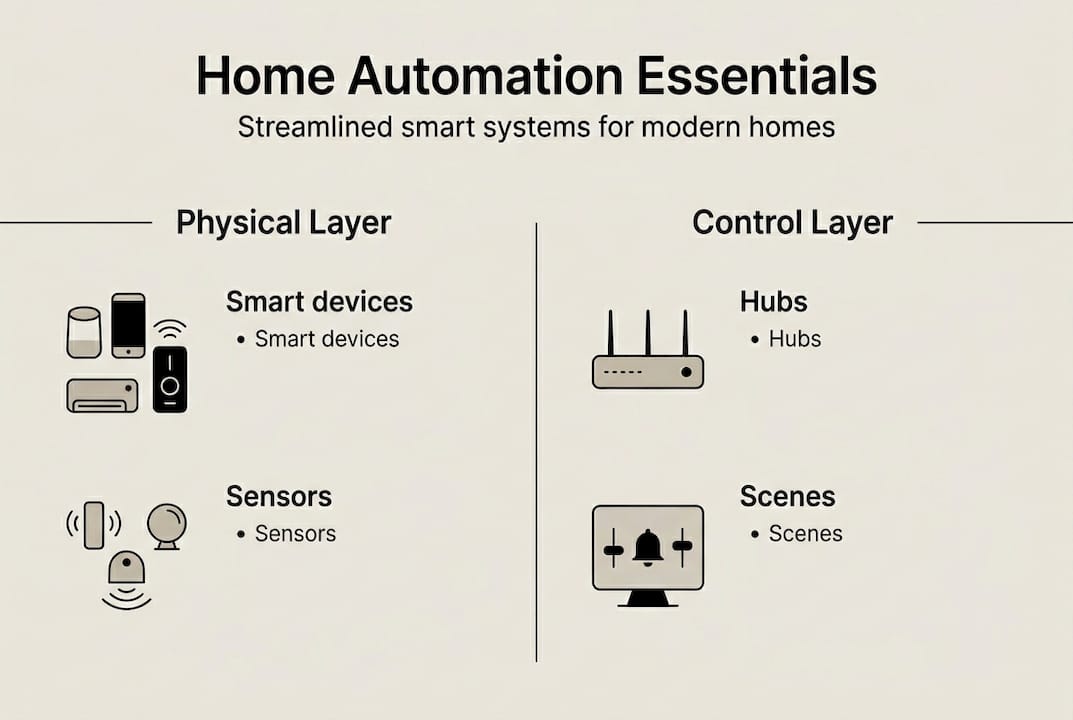
Home automation relies on three fundamental elements working together. Smart devices form the physical layer: lights, thermostats, sensors, motorised blinds, and door locks. Each device performs a specific function, but their real value emerges when they coordinate.
The network layer connects these devices. Wi-Fi offers high bandwidth and works well for devices needing internet access, like cameras or voice assistants. Zigbee and Z-Wave create mesh networks where each device extends signal range, improving reliability throughout your home. Newer protocols like Matter enhance interoperability between manufacturers, whilst Thread provides low-power mesh networking. For architecturally designed homes, wired protocols like KNX offer exceptional reliability and are best installed during construction.
Hubs and controllers form the brain of your system. They centralise commands, run schedules, and execute scenes. A scene is a coordinated action across multiple devices: “Good Morning” might raise blinds, adjust lighting to 40%, and set the thermostat to 21°C, all triggered by a single button or schedule. This coordination transforms individual devices into a cohesive system.
Hybrid systems combine wired and wireless networks. Wired connections handle critical functions like lighting automation, where reliability matters most. Wireless protocols add flexibility for sensors and portable devices. This layered approach balances architectural integration with practical adaptability.
Key network characteristics:
- Wi-Fi: High bandwidth, broad device support, requires strong coverage throughout the home
- Zigbee/Z-Wave: Mesh reliability, lower power consumption, limited to compatible devices
- Matter/Thread: Cross-manufacturer compatibility, emerging standard with growing device support
- KNX: Wired reliability, preferred for architectural installations, requires professional design and commissioning
The choice of network affects how your system performs daily. Mesh protocols self-heal when devices go offline. Wired systems eliminate wireless interference. Understanding these differences helps you build a foundation that matches your home’s architecture and your expectations for reliability.
Designing reliable and intuitive home automation systems
Effective home automation starts with scenes, not devices. Methodologies prioritise scene-based design integrating HVAC, shading, lighting for efficiency, with local control preferred for reliability. Instead of thinking “I need smart lights,” consider “I want the living room to adapt from bright daytime working light to warm evening ambience.” This shift creates systems that feel intuitive.
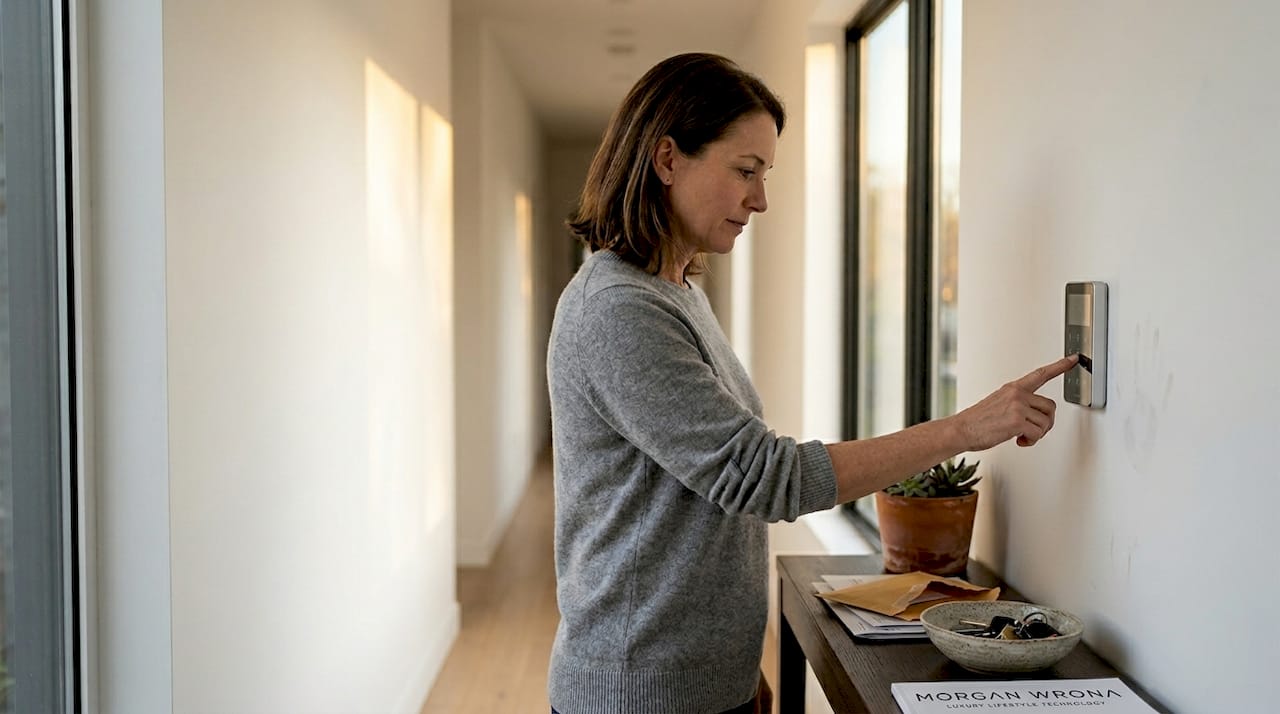
Local processing keeps critical functions working even when internet connectivity fails. Your heating, lighting, and security should operate independently of cloud services. Controllers that run locally ensure your home responds immediately, without the latency of sending commands to remote servers and waiting for responses.
Phased implementation reduces complexity and allows adjustment. Start with key living areas: bedrooms benefit from circadian lighting and automated blinds; kitchens need task lighting that adapts throughout the day. Once these spaces work reliably, expand to secondary areas. This approach also spreads costs and lets you refine your preferences before committing to whole-home coverage.
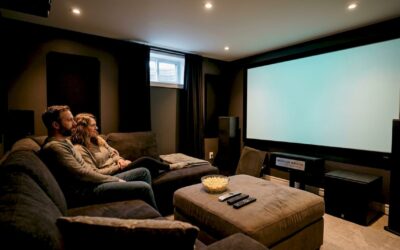
For architecturally designed homes, integrate wired standards during construction or renovation. KNX and similar protocols hide within walls, preserving clean lines whilst delivering exceptional reliability. Home cinema automation particularly benefits from wired infrastructure, where consistent performance matters for immersive experiences.
Design sequence for reliable automation:
- Define scenes for each space based on actual daily activities
- Select devices that support your chosen protocol and offer local processing
- Install wired infrastructure for critical functions during construction phases
- Commission each space fully before expanding to additional areas
- Document configurations and test fallback behaviours
Invisible automation supports wellness without disrupting design aesthetics. Smart home lighting that follows circadian rhythms adjusts colour temperature throughout the day, promoting better sleep and alertness. Predictive climate control learns your patterns and adjusts before you notice discomfort. These systems work quietly in the background, enhancing your environment without demanding interaction.
Pro Tip: Create a “manual mode” scene for each automated space. When guests visit or you want direct control, a single button press disables automation temporarily, preventing confusion whilst maintaining the option to resume automated operation later.
Architectural sensitivity guides every decision. Sensors mount discreetly. Keypads match wall finishes. Motorised blinds integrate with window treatments designed by your architect. The technology serves the space, never dominates it.
Common challenges and how to avoid automation pitfalls
Silent failures frustrate homeowners more than obvious errors. A light that doesn’t turn on is immediately noticeable. An automation that should trigger at sunset but doesn’t leaves you wondering whether it ran or you simply didn’t notice. Automation systems suffer silent failures, 50% connectivity failure rates, cloud outages, and protocol mismatches causing unreliability. This ambiguity erodes trust in your system.
Connectivity disruptions plague Wi-Fi dependent systems. Wireless interference from neighbouring networks, physical obstructions, and router placement all affect reliability. A device that works perfectly one day may struggle the next as conditions change. Mesh protocols help, but they’re not immune to interference.
Cloud dependency introduces latency and outage risks. When your lighting commands travel to a server hundreds of miles away before returning to your home, response times suffer. Worse, when that service experiences downtime, your entire system becomes unresponsive. This is why fallback local controls are vital for critical functions.
Multi-vendor setups risk protocol mismatches. A Zigbee device from one manufacturer may not communicate reliably with a hub from another, even though both claim Zigbee compatibility. These incompatibilities create frustrating edge cases where devices work in isolation but fail when integrated.
Common failure modes and solutions:
- Silent automation failures: Implement status notifications and visual confirmations for critical scenes
- Wireless connectivity issues: Use wired protocols for fixed devices, reserve wireless for portable items
- Cloud service outages: Prioritise systems with local processing and offline operation capabilities
- Protocol incompatibility: Commit to a single ecosystem or use certified Matter devices for cross-compatibility
Physical overrides reduce friction and enhance reliability. Every automated light should have a physical switch. Every motorised blind needs a manual override. When automation fails or guests need simple control, these physical interfaces provide immediate, intuitive alternatives.
Single-ecosystem commitment simplifies troubleshooting and improves reliability. Choose a platform, commit to it, and build your system entirely within that ecosystem. This approach limits device choices but eliminates compatibility concerns. Your lighting control workflow becomes predictable and maintainable.
Pro Tip: Test your automation during power outages and internet failures. Many systems behave differently when connectivity is lost. Understanding these failure modes before they occur lets you design appropriate fallbacks and set realistic expectations.
Reliability challenges persist even as technology advances. The key is designing systems that degrade gracefully, maintaining core functionality even when advanced features fail. Your home should always be operable, whether automation works perfectly or not at all.
Applying home automation for energy efficiency and wellness
Configuration determines whether home automation saves energy or wastes it. Energy savings of 10-20% on heating/cooling and up to 26.6% household electricity reduction are achievable, but poor configuration can increase consumption. Occupancy-based logic and local execution are key factors. A thermostat that learns your schedule and reduces heating when you’re away delivers real savings. One set to maintain constant temperature regardless of occupancy wastes energy.
Circadian lighting enhances wellness by aligning indoor illumination with natural rhythms. Cooler, brighter light in the morning promotes alertness. Warmer, dimmer light in the evening supports melatonin production and better sleep. The role of lighting control extends beyond convenience to measurable health benefits.
Automated shading prevents energy waste and improves comfort. Blinds that close during peak summer sun reduce cooling loads. Those that open on winter mornings capture passive solar heating. These actions happen automatically, optimising your home’s thermal performance without conscious effort.
Typical energy savings by system type:
| System | Potential Saving | Key Requirements |
|---|---|---|
| Heating/cooling automation | 10-20% | Occupancy detection, schedule learning, zone control |
| Lighting automation | 15-25% | Daylight harvesting, occupancy sensors, scene-based dimming |
| Automated shading | 5-15% | Solar position tracking, thermal sensors, seasonal adjustment |
| Whole-home integration | Up to 26.6% | Coordinated systems, monitoring, regular optimisation |
Documentation and monitoring help avoid rebound effects. When you automate heating, you might unconsciously raise target temperatures because adjustment feels effortless. Monitoring consumption reveals these patterns. Step-by-step lighting design includes measurement points that track performance over time.
Empirical benchmarks show wide variation in actual savings. Homes with thoughtful configuration and occupancy logic achieve the upper range. Those with automation enabled but not properly configured often see minimal benefit or even increased consumption. The technology enables efficiency; proper implementation delivers it.
Predictive climate control learns your patterns and adjusts before you notice discomfort. Rather than reacting to temperature changes, the system anticipates them based on weather forecasts, time of day, and historical data. Your home reaches comfortable temperature exactly when you need it, using less energy than reactive systems.
Wellness automation works invisibly. You don’t think about circadian lighting or predictive climate. Your home simply feels right throughout the day. This seamless integration is the goal: technology that improves your living environment without demanding attention or creating new tasks.
Discover expert home automation solutions for architectural homes
Creating home automation that truly simplifies your architect-designed property requires expertise in both technology and architectural integration. Morgan Wrona specialises in systems that complement your home’s design whilst delivering reliable, intuitive control.
Our approach begins with understanding how you live. We design lighting automation that enhances your daily routines, home cinema systems that integrate seamlessly with your interiors, and smart lighting that supports wellness through thoughtful design. Every system is commissioned thoroughly, documented clearly, and supported long term.
If you would like to discuss how this could work in your home, contact us or call 01793 315930.
Frequently asked questions
What is the simplest way to start home automation in an architect-designed home?
Begin with key rooms like your bedroom or kitchen using scene-based approaches. Focus on wired protocols like KNX where possible during construction or renovation, as these ensure reliability from the start. Phased implementation allows you to adjust gradually and optimise each space before expanding. This approach builds confidence in the system whilst spreading costs over time.
How can I ensure home automation reliability and avoid glitches?
Use local processing for critical functions and hybrid wired-wireless networks to prevent outages. Commit to a single ecosystem rather than mixing multiple platforms, as this eliminates compatibility issues. Include physical manual overrides for every automated device so you always have direct control. Test your system during internet failures to understand how it behaves when connectivity is lost.
What kinds of energy savings can I realistically expect?
Expect 10-20% savings on heating and cooling, with up to 26% reduction in overall electricity consumption when systems are configured properly. Poor setup can actually increase consumption, so monitoring and occupancy-based logic are crucial. Regular optimisation and seasonal adjustments help maintain savings over time. The key is thoughtful configuration, not simply installing smart devices.
How does home automation integrate with architectural design?
Proper integration means technology serves the space without disrupting aesthetics. Wired systems hide within walls during construction. Sensors mount discreetly. Keypads match wall finishes and architectural details. Motorised elements integrate with window treatments and built-in joinery. The goal is invisible automation that enhances your environment whilst respecting the architectural vision.
What happens when home automation systems fail or lose connectivity?
Well-designed systems degrade gracefully, maintaining core functionality even when advanced features fail. Local processing keeps essential functions like lighting and heating operational during internet outages. Physical overrides provide immediate manual control. Status notifications alert you to issues before they become problems. Your home remains fully operable whether automation works perfectly or not at all.